




বাংলাদেশি HSC (Class 11–12) শিক্ষার্থীদের জন্য এই Terrorism Paragraph বোর্ড পরীক্ষার মানদণ্ড অনুসরণ করে প্রস্তুত করা হয়েছে। নির্ধারিত ৩৫০–৫০০ শব্দে এখানে Easy, Standard ও Advanced সংস্করণ সংযোজন করা হয়েছে, যাতে তোমরা তোমাদের প্রয়োজন ও দক্ষতা অনুযায়ী উপযুক্ত অংশ নির্বাচন করে শিখতে পারো।
প্যারাগ্রাফটি স্পষ্ট, পরিমিত ও পরীক্ষোপযোগী ভাষায় রচিত। গুরুত্বপূর্ণ শব্দগুলো Bold করে শব্দার্থসহ দেওয়া হয়েছে। পাশাপাশি 📝 How to Learn and Write This Paragraph in Exam এবং Key Points to Remember & Memory Trick (Mnemonic) অংশ যুক্ত করা হয়েছে, যা প্যারাগ্রাফটি সহজে মনে রাখতে সাহায্য করবে 😊
Terrorism Paragraph for HSC (Class 11–12) – 365Words (Easy)
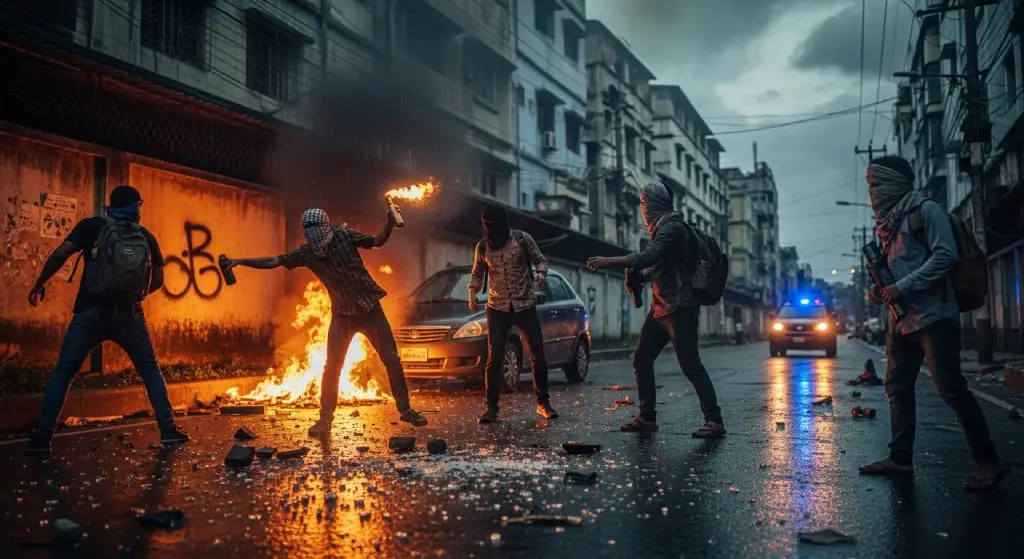
Terrorism is among the most serious and far-reaching problems that modern societies must confront today. It is the deliberate use of violence, threats, and systematic terror to intimidate civilian populations and challenge the authority of governments, usually in the service of extreme political or religious goals. Terrorist groups exploit the fears, frustrations, and vulnerabilities of ordinary people to recruit members and plan devastating attacks. Bangladesh has experienced this threat in a very direct and painful way.
The 2016 Holey Artisan Bakery attack in Dhaka’s Gulshan area remains the most horrifying single act of terrorism in the country’s recent history. Twenty-two lives, including those of several foreign nationals, were lost in that brutal siege. Because of this attack, Bangladesh’s carefully built international image was severely damaged. The country’s tourism industry, which had been growing, suffered a major blow. Also, several foreign businesses began reconsidering their investments in Bangladesh, creating economic uncertainty. Moreover, terrorism generates an invisible but lasting damage in the form of social fear and broken community trust. People become afraid of public spaces, and ordinary social life becomes disrupted. Businesses close earlier, families avoid crowded events, and the general atmosphere of society becomes tense.
Also, the government is forced to spend a large portion of the national budget on security infrastructure, counter-terrorism operations, and intelligence networks. This diverts critical resources away from education, healthcare, and poverty reduction programs. But Bangladesh has responded with both strength and wisdom. The Anti-Terrorism Act 2009 gave law enforcement agencies the legal power to pursue, arrest, and prosecute terrorists and their supporters. The formation of the CTTC has given Bangladesh a dedicated and highly trained unit for this specific threat. The country has also strengthened international cooperation with agencies in multiple countries.
But beyond all legal and military responses, the most important long-term solution lies in addressing the root causes of terrorism. Poverty, unemployment, lack of quality education, and the spread of radical ideology through social media are the soil in which terrorism grows. When Bangladesh invests in the youth — through education, skills training, and ethical guidance — the appeal of extremism will naturally diminish. So, defeating terrorism requires not just weapons and laws, but wisdom, investment in people, and a shared national commitment to peace and justice.
Vocabulary Table:
| Word | Meaning (Bangla) |
|---|---|
| Terrorism | সন্ত্রাসবাদ |
| Violence | সহিংসতা |
| Threats | হুমকি |
| Political | রাজনৈতিক |
| Religious | ধর্মীয় |
| Terrorist groups | সন্ত্রাসী দল |
| Vulnerabilities | দুর্বলতাসমূহ |
| International image | আন্তর্জাতিক ভাবমূর্তি |
| Investments | বিনিয়োগ |
| Community trust | সামাজিক আস্থা |
| Security infrastructure | নিরাপত্তা অবকাঠামো |
| Anti-Terrorism Act 2009 | সন্ত্রাসবিরোধী আইন ২০০৯ |
| CTTC | সন্ত্রাসবাদ দমন ও আন্তর্জাতিক অপরাধ ইউনিট |
| Root causes | মূল কারণ |
| Radical ideology | চরমপন্থী মতাদর্শ |
| Peace and justice | শান্তি ও ন্যায়বিচার |
Terrorism Paragraph for HSC (Class 11–12) – 430Words (Standard)
Terrorism constitutes one of the most complex and destructive phenomena confronting governments, civil societies, and international institutions in the twenty-first century. Broadly defined, terrorism is the calculated, premeditated use of violence, coercion, and psychological terror against non-combatant populations and state structures to achieve political, ideological, or extremist religious objectives. Unlike conventional warfare, terrorism deliberately targets civilians to maximize psychological impact and erode public confidence in the state’s ability to provide security.
Terrorist organizations such as ISIS, Al-Qaeda, and homegrown militant outfits exploit socioeconomic marginalization, geopolitical grievances, and distorted religious narratives to recruit vulnerable individuals, particularly disaffected youth. Bangladesh has faced this grim reality with painful directness. The 2016 Holey Artisan Bakery massacre in Gulshan, Dhaka — executed by the domestic jihadist group JMB — brutally killed twenty-two people from multiple nations and sent shockwaves through Bangladesh and the international community. Because of this attack, Bangladesh’s hard-earned reputation as a stable, development-oriented nation was severely shaken.
The garments industry, the backbone of Bangladesh’s economy, faced scrutiny from international buyers. Foreign direct investment flows were disrupted, and the tourism sector suffered a prolonged setback. Moreover, terrorism inflicts devastating sociological damage that extends far beyond the physical. The destruction of social capital — the web of trust, relationships, and shared values that hold communities together — is perhaps the most insidious cost. Communities become fractured by fear and mutual suspicion, and the psychological trauma sustained by survivors, families, and witness communities is profound and enduring. The fiscal burden of counter-terrorism is equally staggering: maintaining intelligence systems, equipping special forces, reinforcing border security, and prosecuting complex terrorism cases demands resources that would otherwise address Bangladesh’s development priorities.
Nevertheless, Bangladesh has mounted a sophisticated and multi-layered response. The Anti-Terrorism Act 2009 and its subsequent amendments established a robust legal framework for prosecuting perpetrators, financiers, and ideological supporters of terrorism. The police’s specialized CTTC unit has dismantled dozens of militant networks, while RAB conducts regular operations to neutralize emerging threats. Bangladesh actively participates in the UN Global Counter-Terrorism Strategy and maintains bilateral security cooperation with numerous partner nations.
But perhaps most critically, Bangladesh recognizes that durable victory over terrorism requires addressing its structural root causes: pervasive poverty, educational inequality, unemployment, social exclusion, and the unchecked proliferation of radical ideology across digital platforms. Comprehensive youth empowerment programs, interfaith dialogue, media literacy campaigns, and the cultivation of a culture of critical thinking and civic responsibility are indispensable tools in this long-term struggle.
When Bangladesh’s citizens — particularly its young people — are equipped with education, economic opportunity, and strong moral values, the ideological soil of terrorism becomes barren. So, the definitive defeat of terrorism demands not only a powerful state but an enlightened, engaged, and resilient society.
Vocabulary Table:
| Word | Meaning (Bangla) |
|---|---|
| Terrorism | সন্ত্রাসবাদ |
| Violence | সহিংসতা |
| Coercion | জবরদস্তি |
| Psychological terror | মানসিক আতঙ্ক |
| Political | রাজনৈতিক |
| Ideological | মতাদর্শগত |
| Extremist religious | চরমপন্থী ধর্মীয় |
| Terrorist organizations | সন্ত্রাসী সংগঠন |
| Militant | জঙ্গি |
| Marginalization | প্রান্তিকীকরণ |
| Massacre | নৃশংস হত্যাকাণ্ড |
| Garments industry | পোশাক শিল্প |
| Direct investment | প্রত্যক্ষ বিনিয়োগ |
| Social capital | সামাজিক পুঁজি |
| Mutual suspicion | পারস্পরিক সন্দেহ |
| Trauma | মানসিক আঘাত |
| Fiscal burden | আর্থিক বোঝা |
| Anti-Terrorism Act 2009 | সন্ত্রাসবিরোধী আইন ২০০৯ |
| CTTC unit | সন্ত্রাসবাদ দমন ইউনিট |
| Root causes | মূল কারণ |
| Radical ideology | চরমপন্থী মতাদর্শ |
| Critical thinking | সমালোচনামূলক চিন্তাভাবনা |
| Ideological soil | মতাদর্শগত ভূমি |
Terrorism Paragraph for HSC (Class 11–12) – 490Words (Advanced)
Terrorism stands as one of the most formidable, morally indefensible, and structurally complex challenges to human civilization, international order, and the dignity of individual life in the modern era. Academically defined, terrorism is the premeditated, politically or ideologically motivated use of violence and psychological coercion against non-combatant civilians and state institutions, with the strategic intent of destabilizing governments, paralyzing social systems, and coercing populations into submission.
Unlike organized state warfare, the defining characteristic of terrorism is its deliberate targeting of the innocent to maximize psychological devastation and erode the fundamental compact between citizens and their governments. Transnational terrorist organizations like ISIS and Al-Qaeda, along with indigenous militant networks, deploy sophisticated radicalization pipelines — leveraging social media, encrypted communication channels, and exploiting grievances of poverty, political exclusion, and identity crises — to systematically recruit and indoctrinate vulnerable populations, especially disconnected youth. Bangladesh has experienced the harrowing consequences of domestic terrorism in ways that have deeply scarred the national consciousness.
The July 2016 Holey Artisan Bakery massacre in Gulshan, Dhaka — the deadliest terrorist attack in Bangladesh’s independent history — was executed by trained operatives of JMB (Jamaat-ul-Mujahideen Bangladesh), claiming twenty-two lives from seven nations. This single attack exposed the deeply uncomfortable reality that radicalization had penetrated educated, urban, middle-class segments of Bangladeshi society, not merely the rural poor. Because of this, Bangladesh’s carefully constructed narrative of moderate Islamic identity and stable development was severely disrupted. The ready-made garments (RMG) sector — contributing over 80% of export earnings — faced heightened scrutiny from international buyers. Foreign direct investment confidence declined noticeably, and the nascent tourism industry suffered a prolonged contraction.
Furthermore, terrorism inflicts deep and lasting sociological wounds that transcend economic metrics. The systematic erosion of social cohesion, the fracturing of inter-community trust, and the enduring psychological trauma inflicted on survivors and communities constitute forms of social damage that persist for generations. The opportunity cost of counter-terrorism — the billions of taka redirected from education, healthcare, and infrastructure toward intelligence operations, military equipment, and judicial processes — represents a profound developmental loss.
Despite these challenges, Bangladesh has pursued a determined, multi-dimensional counter-terrorism strategy. The Anti-Terrorism Act 2009, progressively strengthened through amendments, provides a comprehensive legal framework enabling prosecution of perpetrators, financiers, ideological supporters, and online propagandists of terrorism. The elite CTTC unit and RAB have dismantled numerous militant cells and foiled multiple large-scale attacks. Bangladesh’s engagement with the UN Global Counter-Terrorism Strategy, INTERPOL, and bilateral security frameworks with partner nations has substantially enhanced its counter-terrorism intelligence capabilities.
However, true and enduring victory over terrorism necessitates confronting its structural root causes: entrenched poverty, educational marginalization, social inequality, digital radicalization, and the systematic absence of youth empowerment. Investing in universal quality education, expanding economic opportunity, promoting interfaith dialogue, cultivating media literacy, and embedding critical civic values in school curricula represent the most powerful long-term antidotes to the extremist worldview.
When Bangladesh’s youth possess the intellectual tools, economic agency, and moral clarity to critically reject extremist narratives, terrorism will lose the ideological oxygen it needs to survive. Therefore, the definitive defeat of terrorism demands not merely a powerful security state, but a deeply enlightened, educationally empowered, and collectively resilient civil society — one united in its commitment to human dignity, justice, and enduring peace.
Vocabulary Table:
| Word | Meaning (Bangla) |
|---|---|
| Terrorism | সন্ত্রাসবাদ |
| Ideologically motivated | মতাদর্শগতভাবে উদ্বুদ্ধ |
| Violence | সহিংসতা |
| Psychological coercion | মানসিক জবরদস্তি |
| Transnational terrorist organizations | আন্তর্জাতিক সন্ত্রাসী সংগঠন |
| Militant | জঙ্গি |
| Radicalization pipelines | চরমপন্থায় দীক্ষিত করার পদ্ধতি |
| Domestic terrorism | অভ্যন্তরীণ সন্ত্রাসবাদ |
| Massacre | নৃশংস হত্যাকাণ্ড |
| Radicalization | চরমপন্থায় দীক্ষিত হওয়া |
| Ready-made garments (RMG) | তৈরি পোশাক শিল্প |
| Foreign direct investment | প্রত্যক্ষ বিদেশি বিনিয়োগ |
| Social cohesion | সামাজিক সংহতি |
| Inter-community trust | আন্তঃসম্প্রদায় আস্থা |
| Psychological trauma | মানসিক আঘাত |
| Opportunity cost | সুযোগ ব্যয় |
| Anti-Terrorism Act 2009 | সন্ত্রাসবিরোধী আইন ২০০৯ |
| CTTC unit | সন্ত্রাসবাদ দমন ইউনিট |
| Counter-terrorism intelligence capabilities | সন্ত্রাসবাদ দমন গোয়েন্দা সক্ষমতা |
| Structural root causes | কাঠামোগত মূল কারণ |
| Critical civic values | গুরুত্বপূর্ণ নাগরিক মূল্যবোধ |
| Ideological oxygen | মতাদর্শগত পুষ্টি |
| Human dignity, justice, and enduring peace | মানবিক মর্যাদা, ন্যায়বিচার ও স্থায়ী শান্তি |
📝 How to Learn and Write This Paragraph in Exam – For Class 11 & 12
1. Key Points to Remember:
- Academic definition: premeditated, ideologically motivated violence against non-combatants to destabilize governments
- Radicalization pipelines: social media, encrypted apps, exploitation of poverty and identity crises
- 2016 Holey Artisan massacre: executed by JMB, 22 lives from 7 nations — radicalization reached educated urban youth
- Multi-dimensional damage: erosion of social cohesion, inter-community trust, psychological trauma, opportunity cost of counter-terrorism spending
- RMG sector (80%+ of export earnings) and FDI were directly threatened by the attack
- Legal arsenal: Anti-Terrorism Act 2009, CTTC unit, RAB operations, INTERPOL and UN cooperation
- True solution: structural root causes — poverty, educational marginalization, digital radicalization, absence of youth empowerment
2. Memory Trick: Use the thesis framework D-I-R-E to build your academic paragraph:
- D = Definition (premeditated ideologically motivated violence against civilians)
- I = Impact (social cohesion, FDI, RMG, psychological trauma, opportunity cost)
- R = Response (Anti-Terrorism Act 2009, CTTC, RAB, UN strategy, INTERPOL)
- E = Eradication (structural root causes: education, employment, media literacy, civic values)
3. Exam Writing Checklist:
- Did I open with an academic-level definition that includes “non-combatants,” “ideological motivation,” and “state destabilization”?
- Did I reference the 2016 Holey Artisan massacre and mention that radicalization reached educated middle-class youth — not just the rural poor?
- Did I discuss the opportunity cost of counter-terrorism and its impact on development spending?
- Did I mention the RMG sector’s vulnerability and the decline in foreign direct investment following the attack?
- Did I argue philosophically or analytically that structural root causes — not just military force — are the only path to enduring peace?
4. One-Line Summary: Terrorism is a premeditated, ideologically driven assault on human civilization that Bangladesh has confronted through a multi-layered strategy of legal action, intelligence cooperation, and youth empowerment — recognizing that lasting peace can only be built by eliminating the structural conditions that allow extremism to survive.
FAQ Section on Terrorism Paragraph for HSC (Class 11–12)
Q1: What is terrorism? Answer: Terrorism is the deliberate use of violence and fear to harm innocent people and challenge governments for political or ideological reasons. It is considered a serious crime under the laws of all countries.
Q2: What are the main causes of terrorism? Answer: The main causes include poverty, lack of education, social injustice, political grievances, and the spread of extremist ideologies through media and online platforms. Unemployment and identity crises among youth also play a major role.
Q3: How has Bangladesh been affected by terrorism? Answer: Bangladesh suffered its worst attack during the 2016 Holey Artisan Bakery massacre in Dhaka, where 22 lives were lost. This damaged the country’s economy, tourism, and international image severely.
Q4: What steps has Bangladesh taken to fight terrorism? Answer: Bangladesh enacted the Anti-Terrorism Act 2009 and established the specialized CTTC unit within the police force. Regular operations by RAB and international cooperation have significantly reduced terrorist activity.
Q5: How does terrorism affect the economy of a country? Answer: Terrorism reduces foreign investment, damages tourism, and forces governments to spend huge sums on security instead of development. It also disrupts trade and business confidence significantly.
Q6: What is radicalization and how can it be prevented? Answer: Radicalization is the process by which a person adopts extreme violent beliefs, often through extremist groups or online propaganda. It can be prevented through quality education, family support, and community awareness programs.
Q7: What role does education play in fighting terrorism? Answer: Education helps young people develop critical thinking skills and understand the true values of peace, tolerance, and coexistence. Educated youth are far less likely to be attracted to extremist ideologies.
Q8: Is terrorism linked to any particular religion? Answer: No, terrorism is not linked to any single religion; it misuses and distorts religious teachings for violent purposes. Scholars and religious leaders worldwide agree that all major religions promote peace and reject violence.
Q9: What is the role of ordinary citizens in preventing terrorism? Answer: Citizens can help by staying alert, reporting suspicious activity to authorities, and refusing to spread extremist content online. Community awareness and social vigilance are powerful tools against terrorism.
Q10: Can terrorism ever be fully eliminated? Answer: While it is difficult to eliminate terrorism completely, it can be significantly reduced through strong laws, effective security forces, international cooperation, and long-term investment in education and social justice. A united society is the strongest defense.
প্রিয় শিক্ষার্থীবৃন্দ
আমরা আশা করি এই Paragraph গুলো তোমাদের HSC বোর্ড পরীক্ষায় ভালো নম্বর অর্জনে সহায়ক হবে। যদি কন্টেন্টটি উপকারী মনে হয়, তাহলে তোমাদের মতামত ও প্রয়োজনীয় টপিক কমেন্ট সেকশনে জানাও।
নিয়মিত পরীক্ষার প্রস্তুতি ও গুরুত্বপূর্ণ আপডেট পেতে আমাদের
▶️YouTube Channel সাবস্ক্রাইব করো এবং
ⓕ Facebook Page লাইক দিয়ে আমাদের সাথে যুক্ত থাকো 🚀
তোমাদের সফল প্রস্তুতিই আমাদের মূল লক্ষ্য 💪
🔗 Explore More for Preparation
📚 পরীক্ষার জন্য আরও প্রস্তুতি নাও
-
📌 Stories