



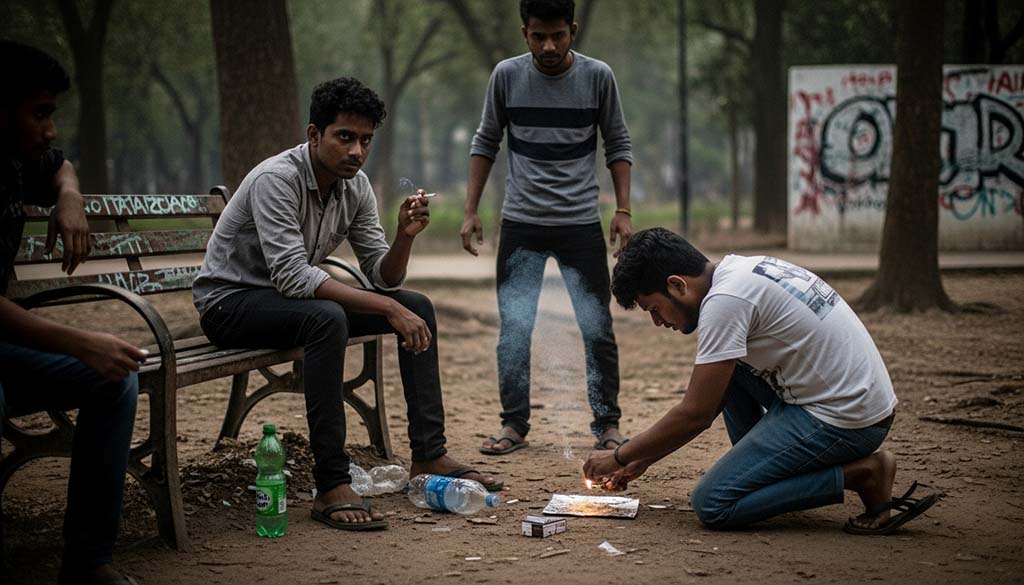
বাংলাদেশি শিক্ষার্থীদের Drug Addiction Paragraph টি খুব সহজ ভাষায় প্রস্তুত করা হয়েছে। গুরুত্বপূর্ণ শব্দগুলো Bold করে প্রতিটি Paragraph এর পরে শব্দার্থসহ হয়েছে, যাতে শিক্ষার্থীরা সহজে বুঝে শিখতে পারে। এখানে ক্লাস স্ট্যান্ডার্ড অনুযায়ী প্যারাগ্রাফগুলো লেখা হয়েছে। তবে শিক্ষার্থী তার চাহিদা ও সক্ষমতা অনুযায়ী ছোট বা বড় যেকোনো প্যারাগ্রাফ বেছে নিয়ে শিখতে পারে। প্রতিটি Paragraph মানসম্মত ও শেখার জন্য উপযোগী।
Drug Addiction Paragraph – For Class 6 & 7 (150+ words)
Drug addiction is a serious problem that affects many people in our society. It means becoming dependent on harmful substances like drugs and not being able to stop using them. When someone takes drugs regularly, their body and mind become used to it. Then they cannot live without drugs. Addiction destroys health, education, and family life. Young people sometimes try drugs because of bad friends or curiosity. Also, some take drugs to forget their problems or stress. However, drugs never solve problems; they create more troubles instead. For example, drug addicts lose interest in studies and work. They become weak and sick very quickly. Moreover, they may steal money to buy drugs. Their families suffer a lot because of this behavior. Furthermore, drug addiction can lead to serious diseases and even death. So, we must stay away from drugs and bad company. We should focus on studies, sports, and good activities. Prevention is better than cure, and saying no to drugs keeps us safe and healthy.
Vocabulary Table:
| Word | Bangla Meaning |
|---|---|
| Drug addiction | মাদকাসক্তি |
| Problem | সমস্যা |
| Substances | পদার্থ |
| Addiction | আসক্তি |
| Curiosity | কৌতূহল |
| Behavior | আচরণ |
| Prevention | প্রতিরোধ |
Drug Addiction Paragraph – For Class 7 & 8 (250+ words)
Drug addiction is one of the most dangerous social problems facing our country today. It refers to the harmful habit of taking intoxicating substances that damage both physical and mental health. When a person becomes addicted, they lose control over their life and cannot stop using drugs even when they want to. There are many types of drugs including marijuana, heroin, cocaine, and various pills that people abuse. In Bangladesh, drug addiction is spreading rapidly among young people, especially students. There are several causes behind this growing problem. First, bad company and peer pressure push teenagers toward drugs. When friends use drugs, others feel tempted to try them too. Second, family problems and lack of parental care make young people vulnerable. Third, easy availability of drugs in certain areas encourages addiction. Also, some people start taking drugs out of curiosity or to look modern and cool. Moreover, stress from studies, unemployment, and personal problems drive people toward drugs as an escape. However, the consequences of drug addiction are terrible and life-destroying. Addicts suffer from serious health issues like liver damage, heart problems, and mental disorders. They lose interest in education and become failures in life. Furthermore, drug addiction leads to crimes like theft, robbery, and violence because addicts need money for drugs. Families break apart when a member becomes addicted. The addict’s parents feel deep shame and sadness. Additionally, society loses productive members who could contribute to national development. Therefore, we must fight against drug addiction through awareness programs, strict law enforcement, and rehabilitation centers. Parents should monitor their children’s activities and provide love and guidance. Together, we can build a drug-free Bangladesh.
Vocabulary Table:
| Word | Bangla Meaning |
|---|---|
| Drug addiction | মাদকাসক্তি |
| Social problems | সামাজিক সমস্যা |
| Harmful habit | ক্ষতিকর অভ্যাস |
| Intoxicating substances | নেশাজাতীয় পদার্থ |
| Marijuana | গাঁজা |
| Heroin | হেরোইন |
| Cocaine | কোকেন |
| Causes | কারণসমূহ |
| Availability | সহজলভ্যতা |
| Consequences | পরিণতি |
| Rehabilitation | পুনর্বাসন |
Drug Addiction Paragraph – For Class 9 & 10 (300+ words)
Drug addiction is a chronic and complex disease that affects the brain and leads to compulsive drug-seeking behavior despite harmful consequences. It is considered one of the most pressing public health issues in Bangladesh and worldwide. When individuals become addicted to drugs, they experience physical and psychological dependence that makes it extremely difficult to quit without proper help and treatment. The problem has reached alarming levels among young people, particularly students and unemployed youth who represent the future of our nation. Various factors contribute to the rise of drug addiction in our society. Socio-economic conditions play a significant role, as poverty and lack of opportunities push people toward drugs. Peer pressure remains the most common reason why teenagers experiment with drugs initially. When young people see their friends using drugs, they feel pressured to join them to fit in. Additionally, dysfunctional families where parents are absent, abusive, or neglectful create emotional voids that children try to fill with drugs. Frustration from academic pressure, unemployment, and relationship problems also drives people toward substance abuse. Moreover, the easy availability of drugs near schools, colleges, and residential areas facilitates addiction. Drug peddlers target young people because they are easier to influence. Furthermore, lack of proper recreation facilities and constructive activities leaves youth with idle time, making them vulnerable to bad influences. The effects of drug addiction are devastating on multiple levels. Physically, addicts suffer from weakened immune systems, organ damage, infectious diseases, and malnutrition. Mentally, they experience depression, anxiety, paranoia, and may develop serious psychiatric disorders. Educationally, student addicts drop out of school and waste their potential. Socially, addiction leads to broken families, domestic violence, and loss of social respect. Economically, addicts become burdens on their families and cannot contribute productively to society. Criminally, drug addiction is linked to increased theft, robbery, and violent crimes. Many addicts resort to illegal activities to fund their habit. Prevention and intervention strategies are crucial to combat this menace. Government should strengthen law enforcement to stop drug trafficking. Schools must include drug education in curricula to raise awareness. Rehabilitation programs should be expanded to help addicts recover. Parents need to maintain open communication with children and monitor their behavior. Media campaigns can spread awareness about the dangers of drugs. Religious and community leaders should guide youth toward positive paths. Only through collective efforts can we protect our younger generation and build a healthy, drug-free nation.
Vocabulary Table:
| Word | Bangla Meaning |
|---|---|
| Drug addiction | মাদকাসক্তি |
| Disease | রোগ |
| Compulsive | বাধ্যতামূলক |
| Public health issues | জনস্বাস্থ্য সমস্যা |
| Psychological dependence | মানসিক নির্ভরতা |
| Socio-economic conditions | আর্থ-সামাজিক অবস্থা |
| Peer pressure | সমবয়সীদের চাপ |
| Dysfunctional families | অকার্যকর পরিবার |
| Frustration | হতাশা |
| Recreation | বিনোদন |
| Malnutrition | অপুষ্টি |
| Prevention | প্রতিরোধ |
| Intervention | হস্তক্ষেপ |
| Rehabilitation programs | পুনর্বাসন কর্মসূচি |
Drug Addiction Paragraph – For Class 11 & 12 (400+ words)
Drug addiction, medically termed as substance use disorder, is a chronic neurological condition characterized by compulsive drug-seeking behavior, continued use despite harmful consequences, and long-lasting changes in brain chemistry. It represents one of the most critical public health crises facing contemporary Bangladesh, affecting individuals across all socio-economic strata but disproportionately impacting young people between ages fifteen and thirty. The problem has evolved from a marginal issue to a mainstream concern that threatens our national development, social fabric, and demographic dividend. Understanding drug addiction requires examining its multifaceted causes that span biological, psychological, and social dimensions. From a biological perspective, genetic predisposition plays a role, as individuals with family histories of addiction are more vulnerable. The brain’s reward system becomes hijacked by drugs, creating powerful cravings that override rational decision-making. Psychologically, underlying mental health issues such as depression, anxiety, trauma, and personality disorders increase susceptibility to addiction. Many people engage in self-medication to cope with emotional pain or psychiatric symptoms. Socially, environmental factors create the context for addiction to flourish. Poverty, unemployment, and lack of educational opportunities generate hopelessness that makes drugs appealing as an escape. Family dysfunction, including parental neglect, abuse, domestic violence, and poor parent-child communication, leaves young people emotionally vulnerable. Peer influence cannot be underestimated, as adolescents are particularly susceptible to group behavior and social acceptance needs. Moreover, cultural factors such as the glorification of drug use in media and entertainment normalize substance abuse. The availability and affordability of drugs have increased dramatically due to porous borders, corruption in law enforcement, and sophisticated drug trafficking networks. Social media has also emerged as a new channel for drug dealers to reach potential customers. The consequences of drug addiction extend far beyond individual health problems to affect families, communities, and the nation. Medically, chronic drug use leads to cardiovascular diseases, liver cirrhosis, kidney failure, respiratory problems, and neurological damage. Infectious diseases like HIV/AIDS and Hepatitis spread rapidly among intravenous drug users who share needles. Cognitive impairment affects memory, judgment, and decision-making abilities permanently. Psychologically, addiction co-occurs with depression, anxiety disorders, and psychosis. The suicide rate among addicts is significantly higher than the general population. Socially, addiction destroys families through financial ruin, domestic violence, divorce, and child neglect. Communities suffer from increased crime rates, property theft, and public safety concerns. Economically, addiction costs billions in lost productivity, healthcare expenses, and law enforcement. Young addicts drop out of education, eliminating opportunities for upward mobility. The stigma associated with addiction prevents many from seeking help, perpetuating the cycle. Addressing drug addiction requires a comprehensive multi-sectoral approach combining prevention, treatment, and harm reduction strategies. Primary prevention through education must start early in schools, teaching children about drug dangers and life skills. Secondary prevention involves early identification and intervention for at-risk individuals. Tertiary prevention focuses on treatment and rehabilitation to prevent relapse. Evidence-based treatment combining medication-assisted therapy, counseling, and psychosocial support offers the best outcomes. Community-based rehabilitation programs help addicts reintegrate into society. Legal reforms should prioritize treatment over punishment for drug users while maintaining strict penalties for traffickers. Family support systems need strengthening through counseling and education. Economic opportunities and youth development programs provide alternatives to drug culture. Religious institutions can offer moral guidance and community support. Public awareness campaigns must destigmatize addiction as a disease requiring treatment, not moral failure deserving punishment. Only through coordinated efforts involving government, civil society, healthcare providers, educators, families, and communities can we effectively combat the drug addiction epidemic and secure a healthy, productive future for Bangladesh.
Vocabulary Table:
| Word | Bangla Meaning |
|---|---|
| Drug addiction | মাদকাসক্তি |
| Substance use disorder | পদার্থ ব্যবহার জনিত ব্যাধি |
| Neurological condition | স্নায়বিক অবস্থা |
| Public health crises | জনস্বাস্থ্য সংকট |
| Biological perspective | জৈবিক দৃষ্টিকোণ |
| Reward system | পুরস্কার ব্যবস্থা |
| Susceptibility | সংবেদনশীলতা |
| Self-medication | স্ব-ঔষধায়ন |
| Poverty | দারিদ্র্য |
| Family dysfunction | পারিবারিক অকার্যকারিতা |
| Peer influence | সমবয়সীদের প্রভাব |
| Cultural factors | সাংস্কৃতিক কারণ |
| Availability | সহজলভ্যতা |
| Affordability | সাধ্যতা |
| Cardiovascular diseases | হৃদরোগ |
| Intravenous drug users | শিরায় মাদক ব্যবহারকারী |
| Cognitive impairment | জ্ঞানীয় দুর্বলতা |
| Suicide rate | আত্মহত্যার হার |
| Stigma | কলঙ্ক |
| Multi-sectoral approach | বহু-খাত দৃষ্টিভঙ্গি |
| Primary prevention | প্রাথমিক প্রতিরোধ |
| Secondary prevention | মাধ্যমিক প্রতিরোধ |
| Tertiary prevention | তৃতীয় পর্যায়ের প্রতিরোধ |
| Evidence-based treatment | প্রমাণ-ভিত্তিক চিকিৎসা |
| Community-based rehabilitation | সম্প্রদায়-ভিত্তিক পুনর্বাসন |
| Public awareness campaigns | জনসচেতনতা প্রচারণা |
FAQ Section on Drug Addiction Paragraph
Q1: What is drug addiction?
Answer: Drug addiction is a chronic disease where a person becomes dependent on harmful substances and cannot stop using them. It affects both the brain and body, causing serious health and social problems.
Q2: Why do young people start taking drugs?
Answer: Young people try drugs due to peer pressure, curiosity, family problems, stress, or unemployment. Bad company and easy availability of drugs near schools also contribute to this problem.
Q3: What are the common types of drugs abused in Bangladesh?
Answer: Common drugs include marijuana (ganja), heroin (brown sugar), yaba (methamphetamine pills), phensedyl (cough syrup), and cocaine. Prescription pills are also abused by some people.
Q4: How does drug addiction affect health?
Answer: Drug addiction causes liver damage, heart disease, lung problems, weakened immunity, and brain damage. It also leads to mental disorders like depression, anxiety, and may cause death.
Q5: Can drug addicts recover completely?
Answer: Yes, with proper treatment, counseling, family support, and strong willpower, addicts can recover. Rehabilitation programs help them rebuild their lives and stay drug-free.
Q6: What role do families play in preventing drug addiction?
Answer: Families should provide love, care, and open communication with children. Parents must monitor activities, guide properly, and create a supportive home environment.
Q7: How does drug addiction lead to crime?
Answer: Addicts need money to buy expensive drugs, so they resort to theft, robbery, and violence. Drug addiction clouds judgment and reduces moral values, encouraging criminal behavior.
Q8: What is the government doing to fight drug addiction?
Answer: The government conducts anti-drug operations, arrests traffickers, establishes rehabilitation centers, and runs awareness campaigns. Laws are enforced to punish drug dealers severely.
Q9: How can schools help prevent drug addiction?
Answer: Schools should include drug education in curricula, organize awareness programs, and counsel vulnerable students. Teachers must watch for warning signs and inform parents immediately.
Q10: What should we do if someone we know is addicted?
Answer: We should offer support without judgment, encourage them to seek professional help, and inform family members. Taking them to rehabilitation centers and showing love can help recovery.