





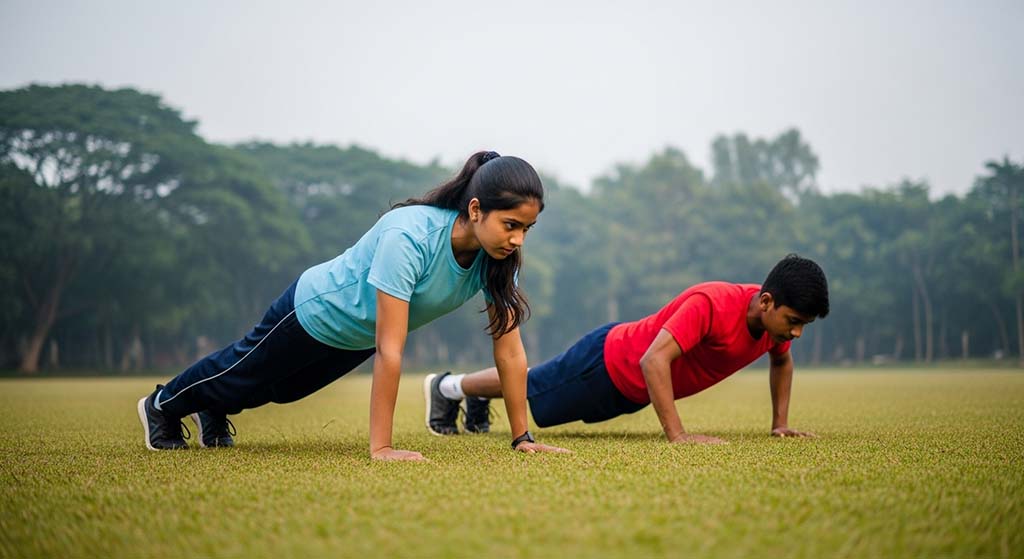
Physical Exercise Paragraph for Class 6 & 7 (150 words)
Physical exercise means doing body movements that keep us healthy and strong. It is very important for everyone, especially for students. Exercise can be simple activities like walking, running, jumping, or playing games. When we do regular exercise, our body becomes fit and our mind stays fresh. Exercise makes our muscles strong and bones healthy. It helps our heart work better. Morning is the best time for exercise because the air is clean and fresh. Students can do simple exercises like running, skipping rope, or playing football. Yoga and free-hand exercises are also very good. Exercise helps students study better because it improves concentration. It also keeps us away from many diseases. People who exercise regularly stay energetic throughout the day. We should spend at least thirty minutes every day doing some kind of physical activity. Schools should have time for sports and exercise. Regular exercise makes our life happy and healthy.
Key Vocabulary:
| English Word | Bangla Meaning |
|---|---|
| Yoga | যোগব্যায়াম |
| Concentration | মনোযোগ |
| Energetic | প্রাণবন্ত |
Physical Exercise Paragraph for Class 7 & 8 (250 words)
Physical exercise refers to any body movement that uses energy and makes our body work harder than usual. It is a crucial part of a healthy lifestyle and is essential for maintaining good physical and mental health. Regular exercise keeps our body systems working properly and helps us live longer, healthier lives.
There are many types of physical exercise. Aerobic exercises like walking, running, swimming, and cycling make our heart and lungs stronger. Strength exercises like push-ups and weight lifting build strong muscles. Flexibility exercises like stretching and yoga keep our body flexible and prevent injuries. Playing sports like cricket, football, and badminton is also great exercise. Even simple activities like climbing stairs, doing household work, and walking to school count as exercise.
The benefits of physical exercise are numerous. It strengthens our heart, improves blood circulation, and reduces the risk of many diseases like diabetes and heart problems. Exercise helps control body weight and prevents obesity. For students, exercise is especially important because it improves memory, concentration, and learning ability. It reduces stress and anxiety, making us feel happier and more confident. Exercise also helps us sleep better at night. People who exercise regularly have more energy and feel less tired during the day.
Despite knowing these benefits, many students do not exercise enough. They spend too much time watching television, playing video games, or using mobile phones. This inactive lifestyle is harmful to health. We should make exercise a daily habit. Schools should encourage sports and physical activities. Parents should support their children in staying active. Even twenty to thirty minutes of daily exercise can make a big difference. By exercising regularly, we can build a strong, healthy body and mind that will help us throughout our life.
Key Vocabulary:
| English Word | Bangla Meaning |
|---|---|
| Crucial | গুরুত্বপূর্ণ |
| Mental | মানসিক |
| Aerobic | অ্যারোবিক |
| Strength | শক্তি |
| Flexibility | নমনীয়তা |
| Stretching | প্রসারণ |
| Injuries | আঘাত |
| Benefits | উপকার |
| Circulation | সঞ্চালন |
| Obesity | স্থূলতা |
| Concentration | মনোযোগ |
| Stress | চাপ |
| Anxiety | উদ্বেগ |
| Confident | আত্মবিশ্বাসী |
| Inactive | নিষ্ক্রিয় |
| Habit | অভ্যাস |
| Encourage | উৎসাহিত করা |
Physical Exercise Paragraph for SSC or Class 9 & 10 (350 words)
Physical exercise encompasses any bodily activity that enhances or maintains physical fitness, overall health, and wellness. It involves planned, structured, and repetitive movements designed to improve various aspects of physical conditioning including cardiovascular endurance, muscular strength, flexibility, and body composition. Regular physical exercise is not merely about building muscles or losing weight; it is a comprehensive approach to maintaining optimal health throughout life.
Physical exercises can be categorized into several types based on their effects and purposes. Aerobic or cardio exercises such as running, swimming, cycling, and dancing increase heart rate and improve the efficiency of the cardiovascular system. Anaerobic exercises like weight lifting, sprinting, and resistance training build muscle strength and power. Flexibility exercises including stretching, yoga, and Pilates improve range of motion and prevent injuries. Balance exercises help maintain stability and prevent falls, especially important as people age. Most health experts recommend a combination of these different types for comprehensive fitness.
The benefits of regular physical exercise are extensive and well-documented. Physically, exercise strengthens the heart, improves blood circulation, and reduces the risk of chronic diseases such as hypertension, diabetes, stroke, and certain cancers. It helps maintain healthy body weight by burning calories and increasing metabolism. Exercise strengthens bones, reducing the risk of osteoporosis, and builds muscle mass, which naturally decreases with age. For young people, exercise promotes proper growth and development.
Mentally and emotionally, exercise has profound positive effects. It stimulates the production of endorphins, chemicals in the brain that act as natural painkillers and mood elevators. Regular exercise reduces symptoms of depression and anxiety, improves self-esteem, and enhances cognitive functions including memory, concentration, and learning ability. Students who exercise regularly often perform better academically because physical activity increases blood flow to the brain, improving mental clarity and focus.
Despite these clear benefits, many young people in Bangladesh lead sedentary lifestyles. The increasing use of technology, lack of safe play areas, and academic pressure reduce physical activity. This contributes to rising rates of childhood obesity and related health problems. Schools should prioritize physical education and sports. Parents should limit screen time and encourage outdoor play. Government should create more parks and sports facilities. Making exercise a daily priority helps build habits that last a lifetime, ensuring a healthier, happier, and more productive future.
Key Vocabulary:
| English Word | Bangla Meaning |
|---|---|
| Encompasses | অন্তর্ভুক্ত করে |
| Bodily | শারীরিক |
| Enhances | বৃদ্ধি করে |
| Fitness | সুস্থতা |
| Wellness | কল্যাণ |
| Repetitive | পুনরাবৃত্তিমূলক |
| Conditioning | অবস্থা |
| Cardiovascular | হৃদরোগ সংক্রান্ত |
| Endurance | সহনশীলতা |
| Flexibility | নমনীয়তা |
| Composition | গঠন |
| Comprehensive | ব্যাপক |
| Optimal | সর্বোত্তম |
| Categorized | শ্রেণীবদ্ধ |
| Aerobic | অ্যারোবিক |
| Cardio | কার্ডিও |
| Efficiency | দক্ষতা |
| Cardiovascular | হৃদযন্ত্র সংক্রান্ত |
| Anaerobic | অ্যানারোবিক |
| Resistance | প্রতিরোধ |
| Stretching | প্রসারণ |
| Pilates | পাইলেটস |
| Balance | ভারসাম্য |
| Stability | স্থিতিশীলতা |
| Combination | সমন্বয় |
| Extensive | ব্যাপক |
| Documented | নথিভুক্ত |
| Physically | শারীরিকভাবে |
| Chronic | দীর্ঘস্থায়ী |
| Hypertension | উচ্চ রক্তচাপ |
| Stroke | স্ট্রোক |
| Calories | ক্যালোরি |
| Metabolism | বিপাক |
| Osteoporosis | অস্টিওপরোসিস |
| Decreases | হ্রাস পায় |
| Promotes | প্রচার করে |
| Mentally | মানসিকভাবে |
| Emotionally | আবেগীয়ভাবে |
| Profound | গভীর |
| Stimulates | উদ্দীপিত করে |
| Endorphins | এন্ডোরফিন |
| Painkillers | ব্যথানাশক |
| Elevators | উন্নতকারী |
| Symptoms | লক্ষণ |
| Depression | হতাশা |
| Self-esteem | আত্মসম্মান |
| Enhances | বৃদ্ধি করে |
| Cognitive | জ্ঞানীয় |
| Concentration | মনোযোগ |
| Academically | শিক্ষাগতভাবে |
| Clarity | স্পষ্টতা |
| Sedentary | বসে থাকা |
| Technology | প্রযুক্তি |
| Academic | শিক্ষাগত |
| Contributes | অবদান রাখে |
| Prioritize | অগ্রাধিকার দেওয়া |
| Encourage | উৎসাহিত করা |
| Facilities | সুবিধা |
| Priority | অগ্রাধিকার |
| Productive | উৎপাদনশীল |
Physical Exercise Paragraph for HSC or Class 11 & 12 (450 words)
Physical exercise constitutes systematic bodily movements designed to enhance and maintain physical fitness, physiological health, and overall well-being. It encompasses a broad spectrum of activities ranging from structured workout regimens to recreational sports, all aimed at improving cardiovascular endurance, muscular strength, flexibility, body composition, and metabolic efficiency. In an era characterized by increasingly sedentary lifestyles and technology-dependent routines, regular physical exercise has become not merely beneficial but imperative for maintaining optimal health and preventing a multitude of chronic diseases that plague modern society.
The physiological benefits of regular exercise are extensively documented and scientifically validated. Cardiovascularly, exercise strengthens the heart muscle, improves circulatory efficiency, reduces resting heart rate, and lowers blood pressure, significantly decreasing risks of heart disease, stroke, and peripheral vascular problems. Metabolically, physical activity enhances insulin sensitivity, helps regulate blood sugar levels, and reduces susceptibility to type 2 diabetes. Exercise increases metabolic rate, facilitating weight management and preventing obesity, a condition associated with numerous health complications. Musculoskeletally, regular physical activity increases bone density, preventing osteoporosis, builds and maintains muscle mass that naturally deteriorates with age, improves joint flexibility and range of motion, and enhances overall physical functionality and independence, particularly important in aging populations.
The psychological and cognitive benefits are equally profound and increasingly recognized in contemporary health discourse. Exercise stimulates neurological processes that produce endorphins and other neurotransmitters like serotonin and dopamine, creating natural mood elevation and stress reduction. Regular physical activity has been shown to be as effective as medication for mild to moderate depression and anxiety. Cognitively, exercise increases blood flow to the brain, promotes neuroplasticity, enhances memory and learning capacity, and may reduce risks of cognitive decline and dementia in later life. For students and young professionals, regular exercise improves concentration, academic performance, problem-solving abilities, and creativity.
Despite overwhelming scientific evidence supporting exercise benefits, contemporary society faces an exercise deficit. Urbanization, technological advancement, and occupational shifts toward desk-based work have created predominantly sedentary lifestyles. In Bangladesh, this trend is particularly concerning among youth who spend excessive time on digital devices while physical education receives inadequate emphasis in educational curricula. This sedentary epidemic contributes to rising rates of childhood obesity, diabetes, cardiovascular disease, and mental health issues emerging at younger ages.
Addressing this requires multi-level interventions. Educational institutions must prioritize physical education and sports, providing adequate facilities and time. Urban planning should incorporate parks, pedestrian pathways, and recreational spaces. Workplaces should encourage movement breaks and provide fitness amenities. Healthcare providers should prescribe exercise as preventive medicine. Most importantly, individuals must recognize exercise as non-negotiable for health, allocating time despite busy schedules.
The prescription for optimal health is clear: engage in at least one hundred and fifty minutes of moderate-intensity aerobic activity or seventy-five minutes of vigorous activity weekly, combined with strength training twice weekly. This investment in physical health yields dividends throughout life: reduced disease risk, enhanced mental health, improved quality of life, and increased longevity. For Bangladesh to develop a healthy, productive population capable of meeting future challenges, cultivating a culture of regular physical exercise must become a national priority, beginning with today’s youth who will shape tomorrow’s society.
Key Vocabulary:
| English Word | Bangla Meaning |
|---|---|
| Constitutes | গঠন করে |
| Enhance | বৃদ্ধি করা |
| Fitness | সুস্থতা |
| Physiological | শারীরবৃত্তীয় |
| Well-being | কল্যাণ |
| Encompasses | অন্তর্ভুক্ত করে |
| Spectrum | বর্ণালী |
| Structured | সংগঠিত |
| Regimens | নিয়মাবলী |
| Recreational | বিনোদনমূলক |
| Cardiovascular | হৃদযন্ত্র সংক্রান্ত |
| Endurance | সহনশীলতা |
| Muscular | পেশীবহুল |
| Flexibility | নমনীয়তা |
| Composition | গঠন |
| Metabolic | বিপাকীয় |
| Efficiency | দক্ষতা |
| Characterized | চিহ্নিত |
| Sedentary | বসে থাকা |
| Technology-dependent | প্রযুক্তি-নির্ভর |
| Beneficial | উপকারী |
| Imperative | অপরিহার্য |
| Optimal | সর্বোত্তম |
| Multitude | অসংখ্য |
| Chronic | দীর্ঘস্থায়ী |
| Plague | জর্জরিত করা |
| Physiological | শারীরবৃত্তীয় |
| Extensively | ব্যাপকভাবে |
| Scientifically | বৈজ্ঞানিকভাবে |
| Validated | প্রমাণিত |
| Cardiovascularly | হৃদযন্ত্র সংক্রান্তভাবে |
| Circulatory | সংবহনতন্ত্র সংক্রান্ত |
| Efficiency | দক্ষতা |
| Decreasing | হ্রাস করা |
| Stroke | স্ট্রোক |
| Peripheral | প্রান্তিক |
| Vascular | রক্তনালী সংক্রান্ত |
| Metabolically | বিপাকীয়ভাবে |
| Enhances | বৃদ্ধি করে |
| Sensitivity | সংবেদনশীলতা |
| Regulate | নিয়ন্ত্রণ করা |
| Susceptibility | সংবেদনশীলতা |
| Metabolic | বিপাকীয় |
| Facilitating | সহজীকরণ |
| Associated | সংশ্লিষ্ট |
| Complications | জটিলতা |
| Musculoskeletally | পেশী-কঙ্কালগতভাবে |
| Density | ঘনত্ব |
| Osteoporosis | অস্টিওপোরোসিস |
| Deteriorates | অবনতি হয় |
| Joint | জয়েন্ট |
| Functionality | কার্যকারিতা |
| Independence | স্বাধীনতা |
| Psychological | মনোবৈজ্ঞানিক |
| Cognitive | জ্ঞানীয় |
| Profound | গভীর |
| Recognized | স্বীকৃত |
| Contemporary | সমসাময়িক |
| Discourse | আলোচনা |
| Stimulates | উদ্দীপিত করে |
| Neurological | স্নায়বিক |
| Endorphins | এন্ডোরফিন |
| Neurotransmitters | নিউরোট্রান্সমিটার |
| Serotonin | সেরোটোনিন |
| Dopamine | ডোপামিন |
| Elevation | উন্নতি |
| Stress | চাপ |
| Effective | কার্যকর |
| Medication | ওষুধ |
| Mild | হালকা |
| Moderate | মাঝারি |
| Cognitively | জ্ঞানীয়ভাবে |
| Promotes | প্রচার করে |
| Neuroplasticity | স্নায়ুনমনীয়তা |
| Decline | পতন |
| Dementia | ডিমেনশিয়া |
| Professionals | পেশাদার |
| Concentration | মনোযোগ |
| Academic | শিক্ষাগত |
| Performance | কর্মক্ষমতা |
| Problem-solving | সমস্যা সমাধান |
| Creativity | সৃজনশীলতা |
| Overwhelming | অপ্রতিরোধ্য |
| Scientific | বৈজ্ঞানিক |
| Evidence | প্রমাণ |
| Deficit | ঘাটতি |
| Urbanization | নগরায়ণ |
| Technological | প্রযুক্তিগত |
| Advancement | অগ্রগতি |
| Occupational | পেশাগত |
| Desk-based | ডেস্ক-ভিত্তিক |
| Predominantly | প্রধানত |
| Particularly | বিশেষভাবে |
| Concerning | উদ্বেগজনক |
| Excessive | অতিরিক্ত |
| Digital | ডিজিটাল |
| Devices | ডিভাইস |
| Physical | শারীরিক |
| Inadequate | অপর্যাপ্ত |
| Emphasis | জোর |
| Educational | শিক্ষাগত |
| Curricula | পাঠ্যক্রম |
| Epidemic | মহামারী |
| Contributes | অবদান রাখে |
| Obesity | স্থূলতা |
| Cardiovascular | হৃদযন্ত্র সংক্রান্ত |
| Mental | মানসিক |
| Emerging | উদ্ভূত |
| Addressing | মোকাবেলা করা |
| Multi-level | বহু-স্তরীয় |
| Interventions | হস্তক্ষেপ |
| Educational | শিক্ষাগত |
| Institutions | প্রতিষ্ঠান |
| Prioritize | অগ্রাধিকার দেওয়া |
| Adequate | পর্যাপ্ত |
| Facilities | সুবিধা |
| Urban | শহুরে |
| Incorporate | অন্তর্ভুক্ত করা |
| Pedestrian | পথচারী |
| Pathways | পথ |
| Recreational | বিনোদনমূলক |
| Workplaces | কর্মক্ষেত্র |
| Encourage | উৎসাহিত করা |
| Amenities | সুযোগ-সুবিধা |
| Healthcare | স্বাস্থ্যসেবা |
| Providers | প্রদানকারী |
| Prescribe | নির্দেশ দেওয়া |
| Preventive | প্রতিরোধমূলক |
| Importantly | গুরুত্বপূর্ণভাবে |
| Non-negotiable | অপরিহার্য |
| Allocating | বরাদ্দ করা |
| Schedules | সময়সূচী |
| Prescription | নির্দেশনা |
| Engage | জড়িত হওয়া |
| Moderate-intensity | মাঝারি-তীব্রতা |
| Aerobic | অ্যারোবিক |
| Vigorous | জোরালো |
| Strength | শক্তি |
| Investment | বিনিয়োগ |
| Yields | উৎপাদন করে |
| Dividends | লভ্যাংশ |
| Enhanced | বর্ধিত |
| Longevity | দীর্ঘায়ু |
| Productive | উৎপাদনশীল |
| Challenges | চ্যালেঞ্জ |
| Cultivating | লালন করা |
| Priority | অগ্রাধিকার |
FAQs on Physical Exercise Paragraph
Q1: What is physical exercise? Answer: Physical exercise is any bodily activity that enhances or maintains physical fitness, health, and wellness through planned movements.
Q2: What are the main types of exercise? Answer: Main types include aerobic exercises for heart health, strength exercises for muscles, flexibility exercises for movement range, and balance exercises for stability.
Q3: What are the health benefits of regular exercise? Answer: Exercise strengthens the heart, prevents chronic diseases, controls weight, builds muscles and bones, improves mental health, and enhances cognitive functions.
Q4: How does exercise affect mental health? Answer: Exercise stimulates endorphin production, reduces depression and anxiety, improves self-esteem, and enhances memory, concentration, and learning ability.
Q5: How much exercise should people do weekly? Answer: People should do at least 150 minutes of moderate-intensity aerobic activity or 75 minutes of vigorous activity weekly, plus strength training twice weekly.
Q6: Why is exercise especially important for students? Answer: Exercise improves students’ concentration, academic performance, memory, and learning ability by increasing blood flow to the brain.
Q7: What problems arise from lack of exercise? Answer: Lack of exercise leads to obesity, chronic diseases like diabetes and heart problems, poor mental health, and reduced cognitive abilities.
Q8: How can Bangladesh encourage more physical exercise? Answer: By prioritizing physical education in schools, creating parks and sports facilities, limiting screen time, and promoting exercise as essential for health.
Q9: What is the connection between exercise and longevity? Answer: Regular exercise reduces disease risk, maintains physical functionality, and improves quality of life, contributing to increased lifespan.
Q10: Why do many young people not exercise enough? Answer: Young people spend excessive time on digital devices, face academic pressure, and have limited access to safe play areas and sports facilities.