


This Importance of Education in the Development of a Nation Dialogue for SSC (Class 09–10) is prepared according to the Bangladesh board exam standard. It includes Easy, Standard, and Advanced story versions (300–600 words) to help students improve writing skills and perform well in exams.
This mobile phone dialogue covers both advantages and disadvantages of mobile phones in a clear, exam-friendly format. Important vocabulary is highlighted with Bangla meanings, and additional sections like
🔐 Key Points to Remember
📝 How to Learn and Write This Dialogue in Exam
🧠 Memory tricks (mnemonics) are included for better understanding and quick revision. 😊
Importance of Education in the Development of a Nation Dialogue for SSC (Class 9–10) – 320 Words (Easy)
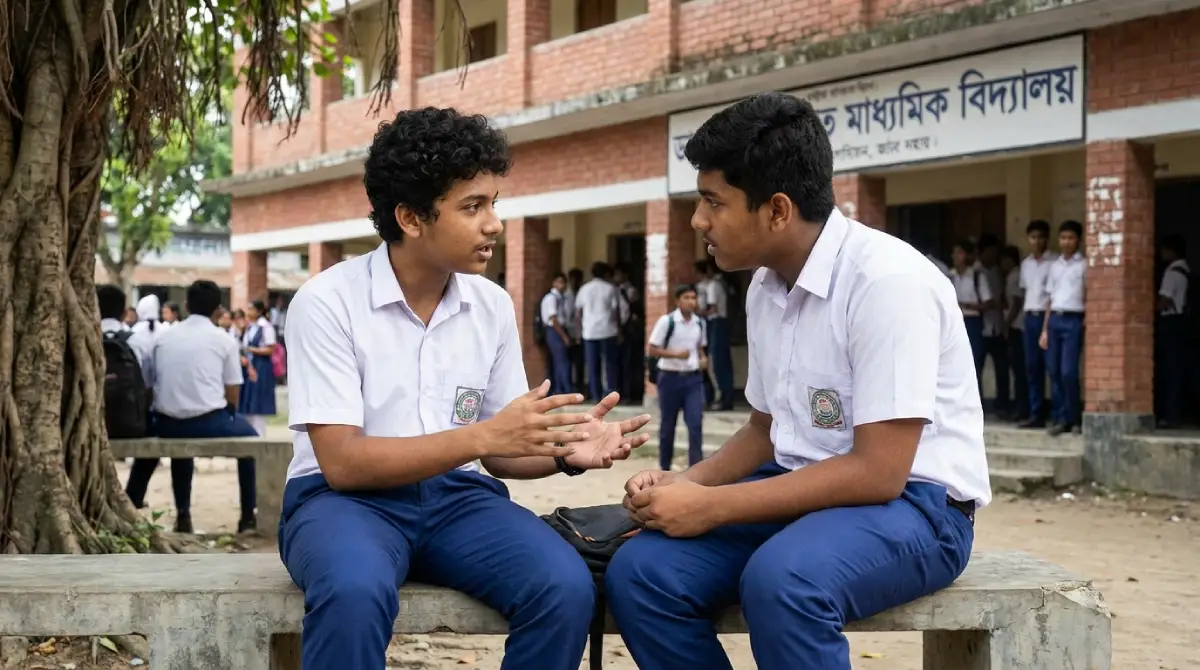
Nadi: Good morning, Adiba! How are you today?
Adiba: Good morning, Nadi! I am fine, thank you. What are you reading?
Nadi: I am reading a book about education and development. Do you know that education is very important for our country?
Adiba: Yes, I know. But why is education so important for national development?
Nadi: Education makes people skilled and knowledgeable. When people are educated, they can work better and earn more money.
Adiba: That is true. Educated people also get good jobs easily, right?
Nadi: Exactly! Education helps people become doctors, engineers, teachers, and many other professionals. These people help our country grow.
Adiba: I see. But what happens if people are not educated?
Nadi: Without education, people cannot understand their rights and duties. They remain poor and cannot improve their lives.
Adiba: That sounds really bad. Does education help only in getting jobs?
Nadi: No, not at all. Education also teaches us good behavior, honesty, and how to live in society. It makes us better citizens.
Adiba: I understand now. Our teachers always say that Bangladesh needs more educated people.
Nadi: Yes, our country is developing very fast. We need educated people in every sector like agriculture, technology, and business.
Adiba: You are right. I have also heard that educated mothers can raise their children better.
Nadi: Absolutely! An educated mother knows about health, nutrition, and proper childcare. This helps the whole family.
Adiba: What about girls’ education? Is it equally important?
Nadi: Of course! When girls get education, they become independent and can support their families. Girl education is very crucial for development.
Adiba: I completely agree with you. We should all study hard and encourage others to get education.
Nadi: Yes, Adiba. If everyone in Bangladesh becomes educated, our nation will become more prosperous and strong.
Adiba: Thank you, Nadi. This discussion was very helpful. I will tell my younger siblings about the importance of education.
Nadi: That is a great idea! Let us promise to always value education and help others understand its importance.
Adiba: I promise! Education is the key to our nation’s progress.
Vocabulary
| Word | Bangla Meaning |
|---|---|
| Education | শিক্ষা |
| Development | উন্নয়ন |
| National development | জাতীয় উন্নয়ন |
| Skilled | দক্ষ |
| Knowledgeable | জ্ঞানী |
| Jobs | চাকরি |
| Engineers | প্রকৌশলী |
| Professionals | পেশাদার |
| Rights | অধিকার |
| Duties | কর্তব্য |
| Poor | দরিদ্র |
| Behavior | আচরণ |
| Honesty | সততা |
| Society | সমাজ |
| Citizens | নাগরিক |
| Developing | উন্নয়নশীল |
| Sector | খাত |
| Agriculture | কৃষি |
| Technology | প্রযুক্তি |
| Business | ব্যবসা |
| Health | স্বাস্থ্য |
| Nutrition | পুষ্টি |
| Childcare | শিশু পরিচর্যা |
| Family | পরিবার |
| Independent | স্বাধীন |
| Crucial | অত্যন্ত গুরুত্বপূর্ণ |
| Prosperous | সমৃদ্ধ |
| Strong | শক্তিশালী |
| Helpful | সহায়ক |
| Progress | অগ্রগতি |
Importance of Education in the Development of a Nation Dialogue for SSC (Class 9–10) – 365 Words (Standard)
Nadi: Hello Adiba! I have been thinking a lot about our country’s future recently.
Adiba: Hello Nadi! That is interesting. What exactly are you thinking about?
Nadi: I am thinking about how education can change Bangladesh. Do you believe education is the foundation of national development?
Adiba: Yes, I do. But can you explain how education actually helps in nation-building?
Nadi: Of course! Education creates human resources which are more valuable than natural resources. Japan and South Korea became developed countries mainly through education.
Adiba: That is a very good example. But what specific benefits does education bring to our country?
Nadi: First, education reduces poverty. Educated people can find better employment and improve their economic condition. This reduces the poverty rate in the country.
Adiba: I understand. What other benefits are there?
Nadi: Education also reduces crime and social problems. When people are educated, they understand the difference between right and wrong. They become responsible citizens.
Adiba: That makes sense. I have noticed that educated people participate more in social activities.
Nadi: Exactly! Education teaches people about their civic responsibilities and democratic rights. This strengthens our democracy.
Adiba: What about scientific and technological progress? Does education help in that area too?
Nadi: Absolutely! All the scientists, researchers, and innovators who develop new technology are highly educated. Without education, there would be no technological advancement.
Adiba: You are right. Our Digital Bangladesh vision also depends on educated people, doesn’t it?
Nadi: Yes! To achieve Digital Bangladesh, we need people who understand information technology, programming, and modern communication systems.
Adiba: I have heard that education also helps in improving health conditions. Is that true?
Nadi: Very true! Educated people know about hygiene, sanitation, and disease prevention. They visit doctors regularly and take care of their families better.
Adiba: What about women’s education specifically? How does it help development?
Nadi: Women’s education is extremely important. When women are educated, they can contribute to the workforce, start businesses, and make their families more financially stable.
Adiba: I see. Educated mothers also raise healthier and smarter children.
Nadi: Correct! Research shows that children of educated mothers perform better in school and have better life outcomes.
Adiba: So education creates a positive cycle that continues for generations.
Nadi: Exactly! That is why the government is investing heavily in primary education, secondary education, and higher education.
Adiba: This conversation has really opened my eyes. We must take our studies seriously and help spread awareness about education in our community.
Nadi: I am glad you understand. If every young person in Bangladesh realizes the importance of education, our nation will achieve great prosperity very soon.
Adiba: Thank you, Nadi. Let us both become ambassadors of education and inspire others!
Vocabulary
| Word | Bangla Meaning |
|---|---|
| Future | ভবিষ্যৎ |
| Foundation | ভিত্তি |
| Nation-building | জাতি গঠন |
| Human resources | মানব সম্পদ |
| Natural resources | প্রাকৃতিক সম্পদ |
| Developed countries | উন্নত দেশ |
| Benefits | সুবিধা |
| Poverty | দারিদ্র্য |
| Employment | কর্মসংস্থান |
| Economic condition | অর্থনৈতিক অবস্থা |
| Poverty rate | দারিদ্র্যের হার |
| Crime | অপরাধ |
| Social problems | সামাজিক সমস্যা |
| Responsible citizens | দায়িত্বশীল নাগরিক |
| Social activities | সামাজিক কার্যক্রম |
| Civic responsibilities | নাগরিক দায়িত্ব |
| Democratic rights | গণতান্ত্রিক অধিকার |
| Democracy | গণতন্ত্র |
| Scientific | বৈজ্ঞানিক |
| Technological progress | প্রযুক্তিগত অগ্রগতি |
| Scientists | বিজ্ঞানী |
| Researchers | গবেষক |
| Innovators | উদ্ভাবক |
| Technological advancement | প্রযুক্তিগত অগ্রগতি |
| Digital Bangladesh | ডিজিটাল বাংলাদেশ |
| Information technology | তথ্য প্রযুক্তি |
| Programming | প্রোগ্রামিং |
| Communication systems | যোগাযোগ ব্যবস্থা |
| Health | স্বাস্থ্য |
| Hygiene | স্বাস্থ্যবিধি |
| Sanitation | পয়ঃনিষ্কাশন |
| Disease prevention | রোগ প্রতিরোধ |
| Workforce | কর্মশক্তি |
| Businesses | ব্যবসা |
| Financially stable | আর্থিকভাবে স্থিতিশীল |
| Life outcomes | জীবন ফলাফল |
| Positive cycle | ইতিবাচক চক্র |
| Generations | প্রজন্ম |
| Primary education | প্রাথমিক শিক্ষা |
| Secondary education | মাধ্যমিক শিক্ষা |
| Higher education | উচ্চ শিক্ষা |
| Awareness | সচেতনতা |
| Community | সম্প্রদায় |
| Prosperity | সমৃদ্ধি |
| Ambassadors | দূত |
Importance of Education in the Development of a Nation Dialogue for SSC (Class 9–10) – 395 Words (Advanced)
Nadi: Good afternoon, Adiba! I was reading the UNESCO report on global education trends. It really made me think deeply about our own country.
Adiba: Good afternoon, Nadi! That sounds fascinating. What did the report say about Bangladesh?
Nadi: The report highlighted that Bangladesh has made remarkable progress in enrollment rates, especially for girls. But we still face challenges in ensuring quality education for all.
Adiba: I see. So you believe that education is the most critical factor for our national transformation?
Nadi: Absolutely! Look at how countries like Singapore and Finland transformed themselves through education reforms. They invested heavily in their education systems and now they are among the most prosperous nations.
Adiba: That is a compelling argument. But what are the specific mechanisms through which education drives development?
Nadi: First, education creates skilled human capital. In today’s knowledge economy, countries compete based on the intellectual capacity of their people, not just their natural resources.
Adiba: That makes sense. I suppose education also contributes to economic growth directly?
Nadi: Yes! Studies show a direct correlation between literacy rates and GDP growth. When more people are educated, productivity increases across all economic sectors.
Adiba: What about social development? Does education play a role beyond economics?
Nadi: Definitely! Education is essential for social cohesion, gender equality, and poverty alleviation. The Sustainable Development Goals emphasize education as a fundamental right and a catalyst for achieving all other goals.
Adiba: I have noticed that our government has launched several initiatives like stipend programs and free textbook distribution. Are these effective?
Nadi: Very effective! These interventions have significantly increased school attendance, especially among girls and children from marginalized communities. The female literacy rate in Bangladesh has improved dramatically.
Adiba: What about the quality aspect? I have heard concerns about our education being too theoretical rather than practical.
Nadi: You raise an important point. We need curriculum reform that emphasizes critical thinking, problem-solving, and vocational skills alongside traditional academic knowledge.
Adiba: Do you think our education system prepares students for the Fourth Industrial Revolution and challenges like artificial intelligence and automation?
Nadi: That is our biggest challenge. We must integrate STEM education (Science, Technology, Engineering, Mathematics) and develop digital literacy from primary level onwards.
Adiba: What role can we, as students, play in promoting education in our society?
Nadi: We can volunteer in community education programs, tutor underprivileged children, and raise awareness about the importance of education among dropout-prone families.
Adiba: I have also read that educated populations are more environmentally conscious and better equipped to handle climate change challenges.
Nadi: Exactly! Bangladesh faces significant environmental threats. Only an educated population can implement sustainable practices and adaptation strategies.
Adiba: Moreover, education strengthens democratic institutions by creating informed citizens who can hold the government accountable.
Nadi: Well said! An educated electorate makes better political decisions and participates more actively in governance.
Adiba: This discussion has been very enlightening. I now understand that education is not just about personal success but about building a better nation and society.
Nadi: I am glad we had this conversation. Let us commit to being lifelong learners and advocates for universal, quality education in Bangladesh.
Adiba: Absolutely! Education truly is the cornerstone of all development.
Vocabulary
| Word | Bangla Meaning |
|---|---|
| UNESCO | ইউনেস্কো |
| Global education | বৈশ্বিক শিক্ষা |
| Remarkable progress | উল্লেখযোগ্য অগ্রগতি |
| Enrollment rates | ভর্তির হার |
| Quality education | মানসম্মত শিক্ষা |
| National transformation | জাতীয় রূপান্তর |
| Transformed | রূপান্তরিত |
| Education reforms | শিক্ষা সংস্কার |
| Education systems | শিক্ষা ব্যবস্থা |
| Prosperous nations | সমৃদ্ধ জাতি |
| Mechanisms | প্রক্রিয়া |
| Skilled human capital | দক্ষ মানব পুঁজি |
| Knowledge economy | জ্ঞান অর্থনীতি |
| Intellectual capacity | বুদ্ধিবৃত্তিক সক্ষমতা |
| Economic growth | অর্থনৈতিক প্রবৃদ্ধি |
| Correlation | সম্পর্ক |
| Literacy rates | সাক্ষরতার হার |
| GDP growth | জিডিপি প্রবৃদ্ধি |
| Productivity | উৎপাদনশীলতা |
| Economic sectors | অর্থনৈতিক খাত |
| Social development | সামাজিক উন্নয়ন |
| Social cohesion | সামাজিক সংহতি |
| Gender equality | লিঙ্গ সমতা |
| Poverty alleviation | দারিদ্র্য বিমোচন |
| Sustainable Development Goals | টেকসই উন্নয়ন লক্ষ্য |
| Fundamental right | মৌলিক অধিকার |
| Catalyst | অনুঘটক |
| Initiatives | উদ্যোগ |
| Stipend programs | বৃত্তি কর্মসূচি |
| Free textbook distribution | বিনামূল্যে পাঠ্যপুস্তক বিতরণ |
| Interventions | হস্তক্ষেপ |
| School attendance | বিদ্যালয়ে উপস্থিতি |
| Marginalized communities | প্রান্তিক সম্প্রদায় |
| Female literacy rate | নারী সাক্ষরতার হার |
| Theoretical | তাত্ত্বিক |
| Practical | ব্যবহারিক |
| Curriculum reform | পাঠ্যক্রম সংস্কার |
| Critical thinking | সমালোচনামূলক চিন্তা |
| Problem-solving | সমস্যা সমাধান |
| Vocational skills | বৃত্তিমূলক দক্ষতা |
| Academic knowledge | একাডেমিক জ্ঞান |
| Fourth Industrial Revolution | চতুর্থ শিল্প বিপ্লব |
| Artificial intelligence | কৃত্রিম বুদ্ধিমত্তা |
| Automation | স্বয়ংক্রিয়করণ |
| STEM education | বিজ্ঞান-প্রযুক্তি-প্রকৌশল-গণিত শিক্ষা |
| Digital literacy | ডিজিটাল সাক্ষরতা |
| Community education programs | সম্প্রদায় শিক্ষা কর্মসূচি |
| Tutor | শিক্ষাদান করা |
| Dropout-prone | ঝরে পড়ার ঝুঁকিপূর্ণ |
| Environmentally conscious | পরিবেশ সচেতন |
| Climate change | জলবায়ু পরিবর্তন |
| Environmental threats | পরিবেশগত হুমকি |
| Sustainable practices | টেকসই চর্চা |
| Adaptation strategies | অভিযোজন কৌশল |
| Democratic institutions | গণতান্ত্রিক প্রতিষ্ঠান |
| Accountable | জবাবদিহিমূলক |
| Electorate | ভোটার সমষ্টি |
| Political decisions | রাজনৈতিক সিদ্ধান্ত |
| Governance | শাসন |
| Nation | জাতি |
| Society | সমাজ |
| Lifelong learners | আজীবন শিক্ষার্থী |
| Advocates | সমর্থক |
| Cornerstone | ভিত্তিপ্রস্তর |
📝 How to Learn and Write This Dialogue in Exam – For SSC (Class 9 & 10)
1. Key Points to Remember
- Definition: Education is the process of gaining knowledge and skills that helps personal and national development
- Economic benefits: Education creates skilled workers, increases employment, improves income, and reduces poverty
- Social benefits: Education teaches rights and duties, good behavior, honesty, and creates responsible citizens
- Specific sectors: Mention how education helps in agriculture, technology, business, and health sectors
- Women’s education: Explain how educating girls leads to independence, better childcare, and family development
- Bangladesh examples: Reference Digital Bangladesh, government stipend programs, and free textbook distribution
- National development: Link education to making Bangladesh prosperous, strong, and developed
2. Memory Trick / Mnemonic
Remember EDUCATE for Importance of Education dialogue:
- E = Economic development (jobs, income, reduces poverty)
- D = Democratic rights (citizens understand rights and duties)
- U = Useful skills (makes people skilled and knowledgeable)
- C = Citizenship (creates responsible, honest citizens)
- A = Agriculture and technology (helps all sectors develop)
- T = Teaching good behavior (honesty, morals, social values)
- E = Empowerment of women (independence, better families)
3. Exam Writing Checklist
✅ Did I mention how education helps people get good jobs as doctors, engineers, teachers, and other professionals?
✅ Did I explain that education reduces poverty by helping people earn more money and improve their economic condition?
✅ Did I include the importance of girls’ education for family health, childcare, nutrition, and women’s independence?
✅ Did I reference at least two Bangladesh-specific examples (Digital Bangladesh, stipend programs, free textbooks, or government education initiatives)?
✅ Did I conclude by stating that education is the key to making Bangladesh prosperous, strong, and developed?
4. One-Line Summary
Education is essential for national development because it creates skilled workers, reduces poverty, teaches civic values, empowers women, and helps Bangladesh become a prosperous and developed nation.
FAQ Section on Importance of Education Dialogue – For Class 9 & 10
Q1: How should I start a dialogue about importance of education?
Answer: Start with a natural greeting and introduce the topic casually, for example: “Hello! I was reading about education and development” or “What do you think about education’s role in our country?” This makes the conversation flow naturally.
Q2: What economic benefits of education should I mention?
Answer: Mention that education helps people get good jobs, earn higher income, and reduces poverty. Also explain that educated people can become doctors, engineers, teachers, and contribute to economic growth.
Q3: How does education help in creating good citizens?
Answer: Education teaches people about their rights and duties, honesty, good behavior, and social responsibility. Educated citizens understand laws, participate in democracy, and contribute positively to society.
Q4: Why is girls’ education particularly important?
Answer: Girls’ education leads to women’s independence, better childcare, improved family health and nutrition. Educated mothers raise healthier and smarter children, creating positive impact for generations.
Q5: What Bangladesh-specific examples should I include?
Answer: Mention Digital Bangladesh vision, government stipend programs for girls, free textbook distribution, primary education initiatives. These show real examples of how education is being promoted in our country.
Q6: How does education help different sectors develop?
Answer: Education provides skilled workers for agriculture (modern farming techniques), technology (IT professionals), business (entrepreneurs), and health (doctors and nurses). Every sector needs educated people to grow.
Q7: What is the link between education and poverty reduction?
Answer: When people get education, they acquire skills that help them find better jobs and earn more money. This improves their economic condition and helps them escape poverty permanently.
Q8: How many exchanges should my dialogue have?
Answer: For SSC level, aim for 12-18 exchanges (6-9 exchanges per person). Each exchange should be 2-4 sentences long, making the dialogue natural and conversational.
Q9: Should I use difficult English words in the dialogue?
Answer: No, use simple everyday English that sounds natural in conversation. Bold important terms like “education,” “development,” “skilled,” “citizens,” but keep sentences short and easy to understand.
Q10: How should I conclude the dialogue effectively?
Answer: End with both speakers agreeing on education’s importance and making a commitment, like “Let us study hard and encourage others” or “Education is the key to our nation’s progress.” This provides a strong, positive ending.
প্রিয় শিক্ষার্থীবৃন্দ
আমরা আশা করি এই Dialogue গুলো তোমাদের পরীক্ষায় ভালো নম্বর অর্জনে সহায়ক হবে। যদি কন্টেন্টটি উপকারী মনে হয়, তাহলে তোমাদের মতামত ও প্রয়োজনীয় টপিক কমেন্ট সেকশনে জানাও।
নিয়মিত পরীক্ষার প্রস্তুতি ও গুরুত্বপূর্ণ আপডেট পেতে আমাদের
▶️ YouTube Channel সাবস্ক্রাইব করো এবং
ⓕ Facebook Page লাইক দিয়ে আমাদের সাথে যুক্ত থাকো 🚀
তোমাদের সফল প্রস্তুতিই আমাদের মূল লক্ষ্য 💪
🔗 Explore More for Preparation
📚 পরীক্ষার জন্য আরও প্রস্তুতি নাও
-
📌 Stories