




Dengue Fever Paragraph for Class 6/7 (150 words)
Dengue fever is a sickness that many people in Bangladesh get, especially during the rainy season. It spreads when a mosquito called Aedes bites a sick person and then bites another healthy person. The mosquito has white marks on its body and usually bites during the day. When someone gets dengue, they feel very hot with high fever, bad headaches, and body pain. Their muscles and joints hurt a lot. Some people also get a red rash on their skin. Most people recover after one or two weeks if they rest and drink plenty of water and eat nutritious food. The best way to prevent dengue is to keep your house clean and remove stagnant water from containers where mosquitoes can lay eggs. We should wear full clothes, use mosquito nets, and apply mosquito spray regularly. If you have dengue symptoms like fever and headache, go to the doctor immediately for proper treatment. Bangladesh has many dengue cases every year, so everyone must stay careful and keep their surroundings clean and hygienic.
Key Vocabulary:
| English Word | Bangla Meaning |
|---|---|
| High fever | উচ্চ জ্বর |
| Rash | লাল দাগ |
| Recover | সুস্থ হওয়া |
| Prevent | রোধ করা |
| Stagnant | পচা, থেমে থাকা জল |
Dengue Fever Paragraph for Class 7/8 (250 words)
Dengue fever is a viral disease that affects millions of people in tropical and subtropical regions, particularly in Bangladesh. The disease is caused by a virus transmitted through the bite of infected Aedes mosquitoes, which are recognized by their distinctive white markings on the body. These mosquitoes are active during daytime hours and breed in stagnant water around our homes, such as flower pots, water tanks, and buckets. When an infected mosquito bites a healthy person, the virus enters the bloodstream and starts multiplying rapidly.
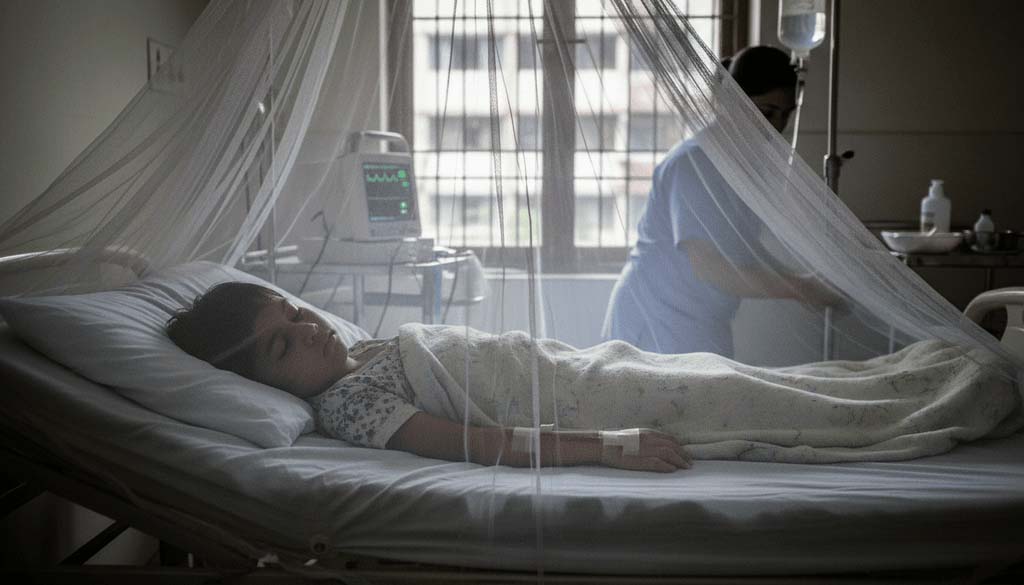
The symptoms of dengue typically appear three to fourteen days after infection. Patients experience high fever, severe headaches, muscle and joint pain, general weakness, and often develop a characteristic rash on the skin and body. In some cases, dengue becomes severe, causing internal bleeding and organ failure. This serious condition is called dengue hemorrhagic fever, which requires immediate medical attention and hospitalization. Children and elderly people face higher risks of complications.
Bangladesh faces recurring dengue outbreaks, especially during monsoon season when mosquitoes breed rapidly in stagnant water. Poor sanitation, overcrowded urban areas, and lack of health awareness make the disease spread quickly through communities. The impact on our healthcare system and economy is significant, with thousands hospitalized annually during peak seasons.
Prevention is better than cure. We can control dengue by eliminating mosquito breeding sites, keeping surroundings clean and dry, and removing stagnant water from all containers regularly. Using mosquito nets, wearing full-sleeved clothes during dawn and dusk, and applying insect repellent provide personal protection. Community awareness campaigns and neighborhood cleanliness drives are essential for disease control. Fighting dengue is a collective responsibility that requires active participation and commitment from every household and citizen.
Key Vocabulary:
| English Word | Bangla Meaning |
|---|---|
| Viral | ভাইরাসজনিত |
| Virus | ভাইরাস (অতি ক্ষুদ্র জীবাণু) |
| Transmitted | ছড়িয়ে পড়া, সংক্রমিত হওয়া |
| Stagnant | পচা, থেমে থাকা জল |
| Multiplying | বৃদ্ধি পাওয়া |
| Infection | সংক্রমণ |
| Characteristic | বৈশিষ্ট্যপূর্ণ |
| Severe | গুরুতর, কঠিন |
| Recurring | বারবার হওয়া |
| Sanitation | স্বাস্থ্যবিধি, পরিচ্ছন্নতা |
| Annually | প্রতি বছর |
| Eliminating | দূর করা |
| Insect repellent | পোকা তাড়ানোর ওষুধ |
| Essential | অপরিহার্য, প্রয়োজনীয় |
| Collective responsibility | সম্মিলিত দায়িত্ব |
Dengue Fever Paragraph for SSC Level (350 words)
Dengue fever is a viral disease caused by a virus transmitted mainly through the bite of Aedes aegypti mosquitoes. Bangladesh, being a tropical country with warm and humid climate throughout the year, provides perfect breeding conditions for these mosquitoes. Aedes aegypti breeds in artificial water collections around homes such as flower pots, buckets, water tanks, and discarded containers, making urban areas particularly vulnerable to dengue outbreaks and recurring cases.
The disease mechanism begins when an infected mosquito injects the dengue virus into the bloodstream during blood feeding. The virus grows and multiplies rapidly in the body, and symptoms appear within three to fourteen days. Common symptoms include sudden onset of high fever lasting for several days, severe headaches, intense muscle and joint pain, weakness and tiredness, loss of appetite, and a characteristic rash on the body and face. In severe cases, dengue hemorrhagic fever can develop, characterized by internal bleeding from nose and gums, blood vessel leakage, and plasma loss, potentially causing organ failure and death if not treated quickly by medical professionals.
The effects of dengue on Bangladesh are substantial and concerning. Every year, especially during monsoon and post-monsoon seasons from June to October when mosquito breeding increases significantly, thousands of people fall seriously ill. The disease puts enormous pressure on our healthcare system, creates financial problems through hospitalization costs for families, and causes significant loss of work productivity in offices and factories. Vulnerable populations including young children, elderly people, and those with weak immunity are at much higher risk of serious outcomes and complications from dengue infection.
Prevention requires a complete and comprehensive approach involving everyone. Individual measures include wearing protective full-sleeved clothing, using mosquito nets while sleeping, applying insect repellent on exposed skin, avoiding stagnant water, and being extra careful during early morning and evening hours. Environmental control is important by removing breeding sites through proper disposal of waste materials and regular cleaning of water containers. Community efforts like public awareness campaigns and neighborhood cleanliness drives are essential for success.
Key Vocabulary:
| English Word | Bangla Meaning |
|---|---|
| Viral | ভাইরাসজনিত |
| Virus | ভাইরাস (অতি ক্ষুদ্র জীবাণু) |
| Transmitted | ছড়িয়ে পড়া |
| Artificial | কৃত্রিম |
| Vulnerable | ঝুঁকিপূর্ণ, আক্রান্ত হওয়ার সম্ভাবনা বেশি |
| Mechanism | প্রক্রিয়া |
| Onset | শুরু |
| Characteristic | বৈশিষ্ট্যপূর্ণ |
| Severe | গুরুতর, কঠিন |
| Characterized | চিহ্নিত, প্রকাশিত |
| Leakage | রিসাব, বেরিয়ে আসা |
| Plasma | রক্তের তরল অংশ |
| Substantial | বিশাল, উল্লেখযোগ্য |
| Productivity | উৎপাদনশীলতা, কাজের দক্ষতা |
| Insect repellent | পোকা তাড়ানোর ওষুধ |
| Environmental | পরিবেশ সংক্রান্ত |
| Essential | অপরিহার্য, প্রয়োজনীয় |
Dengue Fever Paragraph for HSC Level (450 words)
Dengue fever is an important public health problem in Bangladesh and is classified as a re-emerging vector-borne viral disease common in tropical and subtropical regions worldwide. The disease is caused by the dengue virus, of which four distinct types (DENV-1, DENV-2, DENV-3, and DENV-4) infect humans and cause illness. Transmission happens through the bite of infected Aedes aegypti mosquitoes, which are anthropophilic insects that have adapted to urban environments and bite actively during daytime hours, particularly in early morning and evening times.
Bangladesh’s geographical location, warm tropical climate, and rapid urban growth create perfect conditions for Aedes mosquito breeding and multiplication. These mosquitoes breed in artificial water sources including flower pots, buckets, discarded containers, and rooftop water tanks. Urban congestion and overcrowding helps rapid disease spread between people, while poor and wealthy areas have different access to prevention methods and healthcare facilities. Health data shows dengue cases increase significantly during and after monsoon seasons when rain creates stagnant water pools for mosquito breeding in cities and towns.
The way dengue works in the body involves the virus multiplying in body tissues and blood cells, causing the body’s defense system to react strongly. The disease shows as fever appearing in two phases separated by a brief period, severe muscle and joint pain throughout the body, bad headache behind the eyes, and a rash appearing on skin and face. In about five percent of cases, serious dengue develops with internal bleeding from nose and gums, blood vessel problems and leakage, blood cell reduction and low platelet counts, which can cause shock and death if not treated quickly by medical experts.
Early identification of dengue is important through blood tests and special laboratory tests that detect the virus and antibodies. Treatment focuses on giving enough fluids through veins or mouth, bed rest in cool environment, and pain management with safe medicines. Serious cases need hospital care with blood transfusions and careful monitoring of blood conditions and vital signs daily.
Prevention works through different methods at all levels of society. Personal protection includes wearing full sleeves and long pants, using mosquito nets during sleep, and using insect spray and creams. Environmental control means removing breeding places through proper waste removal and regular water tank cleaning and maintenance. Good drainage systems reduce water collection significantly. Community work includes health talks in schools and neighborhoods, awareness programs, and regular cleaning drives. Government programs include mosquito control plans, health monitoring systems, and new vaccine programs. Good sanitation remains very important for reducing mosquito numbers effectively. Bangladesh needs strong and continuous work from government agencies, hospitals, communities, families, and every citizen for good dengue control and better health safety.
Key Vocabulary:
| English Word | Bangla Meaning |
|---|---|
| Re-emerging | পুনরায় আবির্ভূত, আবার ফিরে আসা |
| Vector-borne | বাহক দ্বারা বহনকৃত (পোকা দ্বারা ছড়ানো) |
| Viral | ভাইরাসজনিত |
| Virus | ভাইরাস (অতি ক্ষুদ্র জীবাণু) |
| Transmission | সংক্রমণ, ছড়িয়ে পড়া |
| Anthropophilic | মানুষ খোঁজে এমন |
| Adapted | মানিয়ে নেওয়া |
| Artificial | কৃত্রিম |
| Congestion | ভিড়, ঘনত্ব |
| Identification | চিহ্নিতকরণ, শনাক্তকরণ |
| Environmental | পরিবেশ সংক্রান্ত |
| Sanitation | স্বাস্থ্যবিধি, পরিচ্ছন্নতা |
Exam-Style FAQs on Dengue Fever
Q1: What is dengue fever and how is it transmitted?
Answer: Dengue fever is a viral disease caused by a virus and transmitted through the bite of infected Aedes mosquitoes. These mosquitoes have white markings and bite mainly during daytime hours, spreading the disease from sick people to healthy people.
Key Vocabulary: Transmitted (ছড়িয়ে পড়া), Viral (ভাইরাসজনিত), Virus (ভাইরাস)
Q2: Name the vector mosquito responsible for dengue transmission.
Answer: The main vector is Aedes aegypti, a mosquito that prefers humans and breeds in artificial water collections around homes and offices. It is most active during early morning and evening hours.
Key Vocabulary: Vector (বাহক), Transmission (সংক্রমণ), Artificial (কৃত্রিম)
Q3: What are the main symptoms of dengue fever?
Answer: Main symptoms include sudden high fever, severe headaches, muscle and joint pain, general weakness, loss of appetite, and sometimes a characteristic rash appearing on skin three to fourteen days after infection.
Key Vocabulary: Characteristic (বৈশিষ্ট্যপূর্ণ), Infection (সংক্রমণ)
Q4: What is dengue hemorrhagic fever and why is it dangerous?
Answer: Dengue hemorrhagic fever is a severe form of dengue with internal bleeding from nose and gums, blood vessel problems, low blood platelets, and blood loss. It can cause organ failure and death in about five percent of cases if not treated immediately.
Key Vocabulary: Severe (গুরুতর)
Q5: Why is Bangladesh particularly vulnerable to dengue outbreaks?
Answer: Bangladesh’s tropical climate, warm and humid weather year-round, rapid city growth, poor sanitation systems, and inadequate drainage create ideal breeding conditions for Aedes mosquitoes, especially during monsoon seasons from June to October.
Key Vocabulary: Vulnerable (ঝুঁকিপূর্ণ)
Q6: How can individuals protect themselves from dengue?
Answer: Personal protection includes wearing full-sleeved clothes and long pants, using mosquito nets while sleeping, applying insect repellent on exposed skin, avoiding stagnant water areas, and being careful during early morning and evening.
Key Vocabulary: Insect repellent (পোকা তাড়ানোর ওষুধ), Stagnant (পচা)
Q7: What is the role of environmental sanitation in dengue prevention?
Answer: Environmental sanitation removes mosquito breeding places by removing stagnant water from containers, pots, and tanks. Regular cleaning, proper waste disposal, and maintaining good drainage systems reduce mosquito numbers greatly in neighborhoods.
Key Vocabulary: Environmental (পরিবেশ সংক্রান্ত), Sanitation (স্বাস্থ্যবিধি), Stagnant (পচা)
Q8: What methods are used to identify dengue infection?
Answer: Dengue is identified through blood tests that find antibodies and special protein markers, NS1 antigen tests, and laboratory tests that find viral materials. These tests are most effective during the early illness phase within seven days.
Key Vocabulary: Identify (চিহ্নিত করা), Infection (সংক্রমণ)
Q9: How is dengue managed and treated medically?
Answer: Dengue treatment involves giving plenty of fluids through veins or mouth to prevent dehydration, complete bed rest in a cool environment, pain relief medicines, and monitoring vital signs. Severe cases require hospitalization with blood transfusions and careful medical observation.
Key Vocabulary: Severe (গুরুতর)
Q10: What seasonal pattern does dengue follow in Bangladesh?
Answer: Dengue cases increase significantly during and immediately after monsoon seasons from June to October when rainfall creates stagnant water for mosquito breeding. Cases happen throughout the year in cities, but peak numbers occur during and after the rainy season months.
Key Vocabulary: Stagnant (পচা)