




A Tea Stall Paragraph – For Class 6 & 7 (156 words)
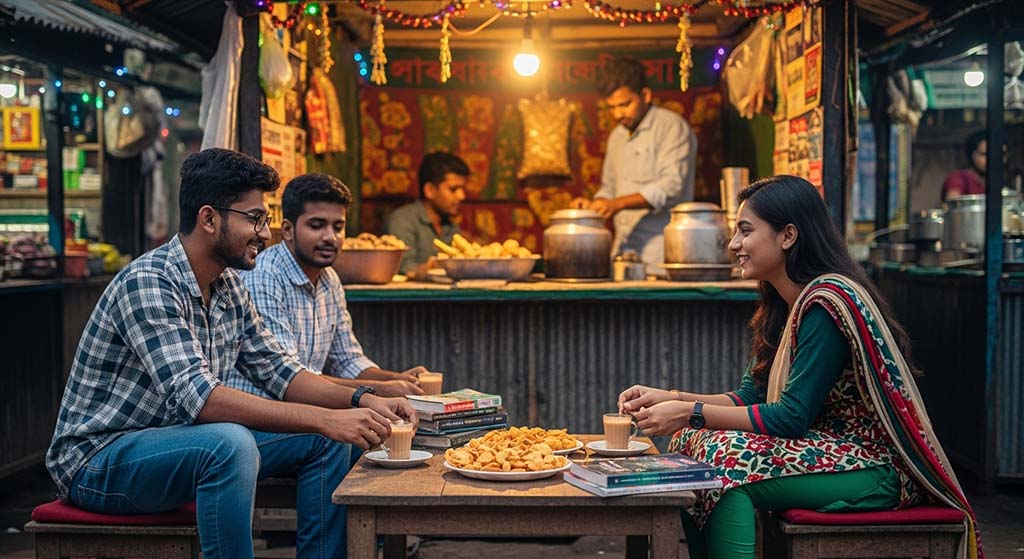
A tea stall is a small shop where people drink tea and snacks. It is a very common place in Bangladesh. We can see tea stalls on roadsides, near bus stands, and in markets. The stall owner makes fresh tea with milk, sugar, and tea leaves. He also sells biscuits, cakes, and bread. The tea stall opens early in the morning and closes late at night. Many people visit the tea stall during the day. Workers, students, and shopkeepers come here to take a break. They sit on wooden benches and enjoy hot tea.
People also talk about news, sports, and daily life. The tea stall becomes a meeting place for local people. Everyone feels relaxed after drinking tea. Also, the price of tea is very cheap. Therefore, a tea stall is an important part of our society. It brings people together in a simple way.
Vocabulary Table:
| Word | Bangla Meaning |
|---|---|
| tea stall | চায়ের দোকান |
| tea | চা |
| common | সাধারণ |
| roadsides | রাস্তার পাশে |
| bus stands | বাস স্ট্যান্ড |
| markets | বাজার |
| milk | দুধ |
| sugar | চিনি |
| biscuits | বিস্কুট |
| cakes | কেক |
| bread | রুটি |
| morning | সকাল |
| night | রাত |
| workers | শ্রমিক |
| students | ছাত্র-ছাত্রী |
| shopkeepers | দোকানদার |
| wooden benches | কাঠের বেঞ্চ |
| news | খবর |
| sports | খেলাধুলা |
| meeting place | মিলনস্থল |
| relaxed | আরামদায়ক |
| cheap | সস্তা |
| society | সমাজ |
A Tea Stall Paragraph – For Class 7 & 8 (265 words)
A tea stall is a small and simple shop where people drink hot tea with snacks. It is a very popular place in Bangladesh. We find tea stalls everywhere in our country. They stand on busy roadsides, near railway stations, at bus stops, and in market areas. The owner of a tea stall is usually a poor man. He works hard from early morning till late night. The stall has some wooden benches and tables for customers. A clay stove or gas burner is used to make tea. The owner keeps a big kettle on the stove. He boils water with tea leaves, milk, and sugar. The smell of fresh tea attracts many people.
Moreover, the stall sells biscuits, cakes, bread, bananas, and sometimes cigarettes. People from all walks of life visit the tea stall. Rickshaw pullers, farmers, students, office workers, and businessmen come here. They take rest and drink tea. Also, people discuss many things at the tea stall. They talk about politics, sports, weather, and local events. Some people read newspapers while drinking tea. The tea stall becomes a social center for the community.
Furthermore, it is open almost all day long. People can visit anytime they want. The price of tea is very low and affordable. Anyone can buy a cup of tea easily. Therefore, a tea stall plays an important role in our daily life. It provides a place for rest and friendship. It helps people feel connected with each other.
Vocabulary Table:
| Word | Bangla Meaning |
|---|---|
| tea stall | চায়ের দোকান |
| tea | চা |
| popular | জনপ্রিয় |
| country | দেশ |
| roadsides | রাস্তার পাশে |
| railway stations | রেলওয়ে স্টেশন |
| bus stops | বাস স্টপ |
| market areas | বাজার এলাকা |
| owner | মালিক |
| morning | সকাল |
| night | রাত |
| wooden benches | কাঠের বেঞ্চ |
| customers | ক্রেতা |
| stove | চুলা |
| kettle | কেটলি |
| milk | দুধ |
| sugar | চিনি |
| biscuits | বিস্কুট |
| cakes | কেক |
| bread | রুটি |
| bananas | কলা |
| cigarettes | সিগারেট |
| rickshaw pullers | রিকশাওয়ালা |
| farmers | কৃষক |
| students | ছাত্র-ছাত্রী |
| office workers | অফিস কর্মচারী |
| businessmen | ব্যবসায়ী |
| politics | রাজনীতি |
| sports | খেলাধুলা |
| weather | আবহাওয়া |
| events | ঘটনা |
| newspapers | সংবাদপত্র |
| social center | সামাজিক কেন্দ্র |
| community | সম্প্রদায় |
| low | কম |
| affordable | সাধ্যের মধ্যে |
| rest | বিশ্রাম |
| friendship | বন্ধুত্ব |
A Tea Stall Paragraph – For Class 9 & 10 (368 words)
A tea stall is a small shop that serves hot tea and light snacks to people. It is a very common sight in Bangladesh. We can find tea stalls in every village, town, and city. They are located on roadsides, near bus stands, at railway stations, in markets, and beside schools and colleges. The owner of a tea stall is usually from a poor family. He runs the shop to earn his living. The stall is made of tin sheets or bamboo. Inside the stall, there are some wooden benches and tables. A stove or gas burner stands in one corner. The owner uses a large kettle to boil water. He adds tea leaves, milk, sugar, and sometimes spices like ginger or cardamom. The tea smells very pleasant and fresh.
Moreover, the stall sells various items like biscuits, cakes, bread, bananas, nuts, and cigarettes. Some tea stalls also serve singara, samosa, and puri. People from all social classes visit the tea stall. Farmers, laborers, rickshaw pullers, students, teachers, office workers, and shopkeepers all come here. They drink tea and take a short break from their work.
Also, the tea stall serves as a meeting place for local people. They sit together and talk about many topics. They discuss politics, sports, news, weather, and family matters. Some people read newspapers or listen to the radio. The tea stall becomes a social hub where people share their opinions and feelings.
Furthermore, the tea stall remains open for long hours. It opens early in the morning before sunrise. It stays open till late at night. People can visit anytime they feel tired or thirsty. The price of tea is very cheap and affordable for everyone. A cup of tea costs only a few taka. However, tea stalls are not always clean or hygienic. Sometimes the environment is dirty and crowded.
Nevertheless, people still love to visit tea stalls. Therefore, a tea stall plays an important role in our society. It provides a place for rest, refreshment, and social interaction. It helps people feel connected and brings the community together every single day.
Vocabulary Table:
| Word | Bangla Meaning |
|---|---|
| tea stall | চায়ের দোকান |
| tea | চা |
| common | সাধারণ |
| village | গ্রাম |
| town | শহর |
| city | নগর |
| roadsides | রাস্তার পাশে |
| bus stands | বাস স্ট্যান্ড |
| railway stations | রেলওয়ে স্টেশন |
| markets | বাজার |
| schools | স্কুল |
| colleges | কলেজ |
| owner | মালিক |
| poor family | দরিদ্র পরিবার |
| living | জীবিকা |
| tin sheets | টিনের চাদর |
| bamboo | বাঁশ |
| wooden benches | কাঠের বেঞ্চ |
| stove | চুলা |
| kettle | কেটলি |
| milk | দুধ |
| sugar | চিনি |
| spices | মসলা |
| ginger | আদা |
| cardamom | এলাচ |
| pleasant | মনোরম |
| biscuits | বিস্কুট |
| cakes | কেক |
| bread | রুটি |
| bananas | কলা |
| nuts | বাদাম |
| cigarettes | সিগারেট |
| singara | সিঙ্গারা |
| samosa | সমুচা |
| puri | পুরি |
| social classes | সামাজিক শ্রেণি |
| farmers | কৃষক |
| laborers | শ্রমিক |
| rickshaw pullers | রিকশাওয়ালা |
| students | ছাত্র-ছাত্রী |
| teachers | শিক্ষক |
| office workers | অফিস কর্মচারী |
| shopkeepers | দোকানদার |
| meeting place | মিলনস্থল |
| politics | রাজনীতি |
| sports | খেলাধুলা |
| news | খবর |
| weather | আবহাওয়া |
| family matters | পারিবারিক বিষয় |
| newspapers | সংবাদপত্র |
| radio | রেডিও |
| social hub | সামাজিক কেন্দ্র |
| opinions | মতামত |
| feelings | অনুভূতি |
| morning | সকাল |
| night | রাত |
| tired | ক্লান্ত |
| thirsty | তৃষ্ণার্ত |
| cheap | সস্তা |
| affordable | সাধ্যের মধ্যে |
| taka | টাকা |
| clean | পরিষ্কার |
| hygienic | স্বাস্থ্যকর |
| environment | পরিবেশ |
| dirty | নোংরা |
| crowded | জনাকীর্ণ |
| society | সমাজ |
| rest | বিশ্রাম |
| refreshment | প্রাণবন্ততা |
| social interaction | সামাজিক মেলামেশা |
| community | সম্প্রদায় |
A Tea Stall Paragraph – For Class 11 & 12 (476 words)
A tea stall is a small and simple shop where people gather to drink hot tea and light snacks. It is one of the most common and popular places in Bangladesh. Tea stalls can be found everywhere in our country. They exist in villages, towns, and cities. We see them on busy roadsides, near bus terminals, at railway stations, in market areas, beside educational institutions, and even in industrial zones. The owner of a tea stall is usually a hardworking person from a poor or middle-class family. He runs the shop to support his family and earn his daily bread. The structure of a tea stall is very basic and temporary. It is often made of tin sheets, bamboo, or wooden planks. Inside the stall, there are a few benches and tables for customers to sit.
A clay stove or gas burner is placed in one corner for making tea. The owner keeps a large kettle on the stove where he boils water with tea leaves, milk, sugar, and sometimes spices like ginger or cardamom. The aroma of fresh tea fills the air and attracts people from far away. Moreover, the stall offers various food items such as biscuits, cakes, bread, bananas, peanuts, chanachur, and cigarettes. Some tea stalls also serve hot snacks like singara, samosa, puri, egg roll, and dal puri.
The tea stall serves people from all social backgrounds and professions. Farmers, day laborers, rickshaw pullers, van drivers, students, teachers, office employees, businessmen, and travelers all visit the tea stall regularly. They come here to take a short break from their busy schedule. They drink tea and feel refreshed and energized.
Also, the tea stall acts as an important social gathering place for the local community. People sit together on the benches and engage in conversations. They discuss various topics such as politics, economics, sports, current events, weather conditions, and personal experiences. Some people read newspapers or listen to the radio or television if available. The tea stall becomes a platform for exchanging ideas, opinions, and information.
Furthermore, the tea stall operates for extended hours. It opens very early in the morning, often before dawn, and remains open until late at night. This makes it accessible to everyone at any time. The price of tea is extremely cheap and affordable. A cup of tea usually costs between five to fifteen taka, which anyone can easily afford. However, most tea stalls lack proper cleanliness and hygiene. The surroundings are often dirty and crowded. The utensils may not be washed properly. The seating arrangement is uncomfortable.
Despite these drawbacks, people continue to love and visit tea stalls regularly. Nevertheless, tea stalls remain an essential part of our daily life and culture. Therefore, a tea stall is not just a place for drinking tea. It is a symbol of unity, friendship, and social bonding. It provides a space for people to rest, relax, and connect with each other in our fast-moving modern world.
Vocabulary Table:
| Word | Bangla Meaning |
|---|---|
| tea stall | চায়ের দোকান |
| tea | চা |
| common | সাধারণ |
| popular | জনপ্রিয় |
| country | দেশ |
| villages | গ্রাম |
| towns | শহর |
| cities | নগর |
| roadsides | রাস্তার পাশে |
| bus terminals | বাস টার্মিনাল |
| railway stations | রেলওয়ে স্টেশন |
| market areas | বাজার এলাকা |
| educational institutions | শিক্ষা প্রতিষ্ঠান |
| industrial zones | শিল্প এলাকা |
| owner | মালিক |
| hardworking | পরিশ্রমী |
| poor | দরিদ্র |
| middle-class family | মধ্যবিত্ত পরিবার |
| bread | জীবিকা |
| temporary | অস্থায়ী |
| tin sheets | টিনের চাদর |
| bamboo | বাঁশ |
| wooden planks | কাঠের তক্তা |
| benches | বেঞ্চ |
| customers | ক্রেতা |
| clay stove | মাটির চুলা |
| kettle | কেটলি |
| milk | দুধ |
| sugar | চিনি |
| spices | মসলা |
| ginger | আদা |
| cardamom | এলাচ |
| aroma | সুগন্ধ |
| biscuits | বিস্কুট |
| cakes | কেক |
| bread | রুটি |
| bananas | কলা |
| peanuts | চিনাবাদাম |
| chanachur | চানাচুর |
| cigarettes | সিগারেট |
| singara | সিঙ্গারা |
| samosa | সমুচা |
| puri | পুরি |
| egg roll | ডিম রোল |
| dal puri | ডাল পুরি |
| social backgrounds | সামাজিক পটভূমি |
| professions | পেশা |
| farmers | কৃষক |
| day laborers | দিনমজুর |
| rickshaw pullers | রিকশাওয়ালা |
| van drivers | ভ্যান চালক |
| students | ছাত্র-ছাত্রী |
| teachers | শিক্ষক |
| office employees | অফিস কর্মচারী |
| businessmen | ব্যবসায়ী |
| travelers | ভ্রমণকারী |
| schedule | সময়সূচি |
| refreshed | সতেজ |
| energized | শক্তিশালী |
| social gathering place | সামাজিক মিলনস্থল |
| local community | স্থানীয় সম্প্রদায় |
| conversations | কথোপকথন |
| politics | রাজনীতি |
| economics | অর্থনীতি |
| sports | খেলাধুলা |
| current events | বর্তমান ঘটনা |
| weather conditions | আবহাওয়ার অবস্থা |
| personal experiences | ব্যক্তিগত অভিজ্ঞতা |
| newspapers | সংবাদপত্র |
| radio | রেডিও |
| television | টেলিভিশন |
| platform | মঞ্চ |
| ideas | ধারণা |
| opinions | মতামত |
| information | তথ্য |
| morning | সকাল |
| night | রাত |
| accessible | সহজলভ্য |
| cheap | সস্তা |
| affordable | সাধ্যের মধ্যে |
| taka | টাকা |
| cleanliness | পরিচ্ছন্নতা |
| hygiene | স্বাস্থ্যবিধি |
| surroundings | পরিবেশ |
| dirty | নোংরা |
| crowded | জনাকীর্ণ |
| utensils | বাসনপত্র |
| seating arrangement | বসার ব্যবস্থা |
| uncomfortable | অস্বস্তিকর |
| drawbacks | ত্রুটি |
| essential | অপরিহার্য |
| culture | সংস্কৃতি |
| symbol | প্রতীক |
| unity | ঐক্য |
| friendship | বন্ধুত্ব |
| social bonding | সামাজিক বন্ধন |
FAQ Section on A Tea Stall Paragraph
Q1: What is a tea stall? A tea stall is a small shop where people drink hot tea and snacks. It is a common place in Bangladesh where people gather and relax.
Q2: Where can we find tea stalls? We can find tea stalls on roadsides, near bus stands, railway stations, markets, and beside schools. They are located everywhere in villages, towns, and cities.
Q3: Who owns a tea stall? The owner of a tea stall is usually a hardworking person from a poor or middle-class family. He runs the shop to earn his living and support his family.
Q4: What items are sold at a tea stall? A tea stall sells tea, biscuits, cakes, bread, bananas, nuts, and cigarettes. Some stalls also serve singara, samosa, puri, and egg rolls.
Q5: Who visits tea stalls? People from all social classes visit tea stalls including farmers, laborers, rickshaw pullers, students, teachers, and office workers. Everyone comes here to take rest and drink tea.
Q6: What do people do at a tea stall? People drink tea, eat snacks, and talk with each other at tea stalls. They discuss politics, sports, news, weather, and share their personal experiences.
Q7: When do tea stalls open and close? Tea stalls open very early in the morning before sunrise and close late at night. They remain open for long hours so people can visit anytime.
Q8: How much does tea cost at a tea stall? Tea at a stall is very cheap and affordable for everyone. A cup of tea usually costs between five to fifteen taka only.
Q9: What are the problems with tea stalls? Most tea stalls lack proper cleanliness and hygiene and the surroundings are often dirty and crowded. The seating arrangement is also uncomfortable for customers.
Q10: Why are tea stalls important in our society? Tea stalls are important because they provide a place for rest, refreshment, and social interaction. They bring the community together and help people feel connected with each other.