



A Journey by Boat Composition or Essay for Class 6 & 7 (200 words)
Last winter, I went to visit my grandmother’s village by boat. It was my first boat journey and I was very excited. Early in the morning, we went to the river ghat. Many boats were waiting there. We got into a small wooden boat.
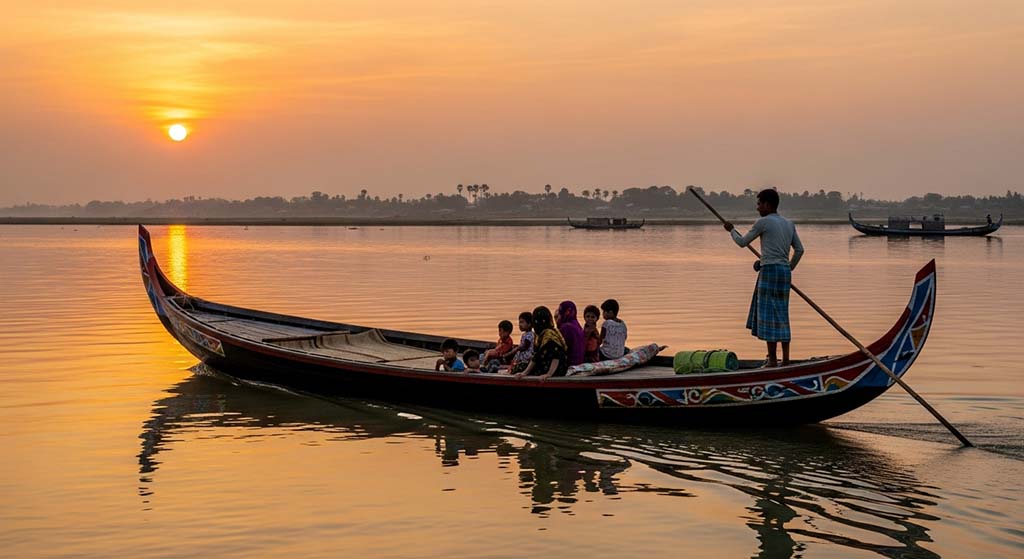
The boatman started rowing with his oars. The boat moved slowly on the calm water. I sat at the front and watched everything around me. The river was very wide and the water was clear. I could see small fish swimming near the boat. The morning sun made the water look golden and beautiful.
On both sides of the river, I saw green fields, tall trees, and small houses. Some people were fishing from their boats. Women were washing clothes on the bank of the river. Children were playing and swimming in the water. Birds were flying over the river and making sweet sounds.
The cool breeze from the river felt very nice on my face. The gentle movement of the boat was very relaxing. Sometimes we passed under big trees and their shadows fell on us. After two hours, we reached my grandmother’s village. The boat journey was really wonderful and peaceful. I enjoyed every moment of it and want to go on another boat journey soon.
Key Vocabulary:
| English Word | Bangla Meaning |
|---|---|
| village | গ্রাম |
| journey | যাত্রা |
| excited | উত্তেজিত |
| ghat | ঘাট |
| wooden | কাঠের |
| boatman | মাঝি |
| oars | বৈঠা |
| beautiful | সুন্দর |
| fishing | মাছ ধরা |
| bank | পাড় |
| breeze | মৃদু বাতাস |
| movement | গতিবিধি |
| relaxing | আরামদায়ক |
| shadows | ছায়া |
| wonderful | বিস্ময়কর |
| peaceful | শান্তিপূর্ণ |
A Journey by Boat Composition or Essay for Class 7 & 8 (300 words)
Introduction:
Bangladesh is a land of rivers and canals. Boat journeys are very common here, especially in rural areas. Last year, I had a memorable journey by boat when I visited my uncle’s village in Barisal district.
Starting the Journey:
One early morning, my father and I went to the local ghat to catch a boat. The river was wide and the water was flowing gently. Many boats of different sizes were there. Some were small wooden boats while others were bigger ones with engines. We chose a medium-sized boat that could carry about twenty passengers. The boatman was an old man with a friendly smile. He helped us get into the boat and we found good seats.
The Beautiful River Scenery:
As the boat started moving, I felt very excited and happy. The scenery around the river was amazing. On both sides, I could see endless green paddy fields, coconut trees, and small villages. The water of the river was calm and clear. Sometimes we saw fishermen casting their nets to catch fish. Women were washing clothes and dishes at the river bank. Children were swimming and playing in the water, enjoying themselves completely.
Experiencing Nature:
The cool breeze from the river was very refreshing. I could hear the sweet songs of different birds. The sun was rising slowly and its golden rays made the river water look very beautiful. The gentle rocking of the boat felt very soothing. I put my hand in the cool water and felt very happy. We passed through some narrow canals where trees on both sides created natural tunnels. It was like traveling through a green paradise.
Meeting People:
During the journey, I talked with other passengers. They were simple village people going to different places for work or to visit family members. They told me interesting stories about river life and how boats are an important part of their daily lives.
Conclusion:
After four hours, we reached our destination. The boat journey was really wonderful. It was peaceful, natural, and very different from traveling by bus or train. I enjoyed watching the river life and the beauty of rural Bangladesh. This experience made me love our rivers even more. I will never forget this beautiful boat journey.
Key Vocabulary:
| English Word | Bangla Meaning |
|---|---|
| canals | খাল |
| memorable | স্মরণীয় |
| journey | যাত্রা |
| village | গ্রাম |
| district | জেলা |
| ghat | ঘাট |
| gently | মৃদুভাবে |
| wooden | কাঠের |
| engines | ইঞ্জিন |
| passengers | যাত্রীগণ |
| boatman | মাঝি |
| excited | উত্তেজিত |
| scenery | দৃশ্য |
| amazing | আশ্চর্যজনক |
| paddy | ধান |
| fishermen | জেলে |
| casting | নিক্ষেপ করা |
| bank | পাড় |
| completely | সম্পূর্ণভাবে |
| breeze | মৃদু বাতাস |
| refreshing | সতেজকর |
| beautiful | সুন্দর |
| rocking | দোলা |
| soothing | প্রশান্তিদায়ক |
| tunnels | সুড়ঙ্গ |
| paradise | স্বর্গ |
| destination | গন্তব্য |
| peaceful | শান্তিপূর্ণ |
| natural | প্রাকৃতিক |
| experience | অভিজ্ঞতা |
A Journey by Boat Composition or Essay for SSC or Class 9 & 10 (400 words)
Introduction:
Bangladesh is often called the land of rivers because it has hundreds of rivers and canals flowing through the country. Boat journeys are an integral part of life here, especially in rural and coastal areas. Last year during the monsoon season, I had an unforgettable journey by boat from Dhaka to Barisal, which gave me deep insights into the river culture of Bangladesh.
Preparation and Beginning:
Our family decided to travel to Barisal to attend a wedding ceremony. Instead of taking a bus, my father chose to travel by boat so we could experience the river route. We reached Sadarghat Launch Terminal in the evening. The terminal was very crowded with hundreds of passengers carrying their luggage. The atmosphere was filled with noise, excitement, and activity. After buying tickets, we boarded a large passenger boat called a launch. The boat had multiple decks, comfortable seats, and even a small restaurant inside.
The Journey Begins:
As the boat left the terminal and entered the Buriganga River, I felt a sense of freedom and adventure. The city lights of Dhaka slowly disappeared behind us. Soon we were surrounded by darkness and the only sounds were the humming of the boat engine and the splashing of water. The night journey had its own special charm. The moon and stars reflected beautifully on the river water, creating a magical scene.
Morning Views and Natural Beauty:
I woke up early in the morning and went to the upper deck to see the sunrise. The view was breathtaking. The sun was rising slowly from behind the trees, painting the sky in beautiful colors of orange, pink, and gold. The river water looked calm and peaceful. On both sides of the river, I saw endless green paddy fields, small villages with simple houses, coconut and banana trees, and narrow canals connecting to the main river. Fishermen were already at work, casting their nets into the water. Village women were collecting water from the river, and children were getting ready for school.
Understanding River Life:
The boat journey gave me a wonderful opportunity to observe and understand the lifestyle of river people. I saw how rivers are not just water bodies but the lifeline of millions of people. They use rivers for transportation, fishing, agriculture, and daily needs. The boat stopped at several small river ports where people got on and off. Vendors came selling breakfast items like tea, bread, and traditional snacks. The simple and hardworking life of these people taught me valuable lessons about contentment and resilience.
Social Interaction:
Inside the boat, I met many interesting people from different backgrounds. Some were businessmen, some were students, and others were simple village people. Everyone was friendly and willing to share their stories. An old man told me about how he had been traveling this river route for forty years and how much it had changed. A young student shared his dreams of studying in the city. These conversations made the journey even more meaningful.
Challenges and Observations:
The journey was not without challenges. Sometimes the boat rocked quite strongly due to waves, which made some passengers feel uncomfortable. The facilities on the boat were basic and the toilets were not very clean. However, these small inconveniences did not reduce the overall joy and learning from the experience.
Arrival and Conclusion:
After traveling for about twelve hours, we finally reached Barisal. Though I felt physically tired, my mind was full of new experiences and observations. The boat journey was much more than just transportation; it was a journey through the heart of rural Bangladesh. It helped me understand the deep connection between our people and rivers. This experience taught me to appreciate the natural beauty of our country and the simple yet dignified life of river communities. I realized that to truly understand Bangladesh, one must experience its rivers. This memorable boat journey will always remain close to my heart.
Key Vocabulary:
| English Word | Bangla Meaning |
|---|---|
| canals | খাল |
| integral | অবিচ্ছেদ্য |
| coastal | উপকূলীয় |
| unforgettable | অবিস্মরণীয় |
| journey | যাত্রা |
| insights | অন্তর্দৃষ্টি |
| ceremony | অনুষ্ঠান |
| route | পথ |
| terminal | টার্মিনাল |
| crowded | জনাকীর্ণ |
| passengers | যাত্রীগণ |
| luggage | মালপত্র |
| atmosphere | পরিবেশ |
| excitement | উত্তেজনা |
| activity | কার্যকলাপ |
| passenger | যাত্রী |
| decks | ডেক |
| restaurant | রেস্তোরাঁ |
| freedom | স্বাধীনতা |
| adventure | দুঃসাহসিক কাজ |
| disappeared | অদৃশ্য হয়ে যাওয়া |
| humming | গুনগুন শব্দ |
| splashing | ছিটানো |
| charm | মোহনীয়তা |
| magical | জাদুকরী |
| deck | ডেক |
| sunrise | সূর্যোদয় |
| breathtaking | শ্বাসরুদ্ধকর |
| peaceful | শান্তিপূর্ণ |
| paddy | ধান |
| fishermen | জেলে |
| casting | নিক্ষেপ করা |
| opportunity | সুযোগ |
| observe | পর্যবেক্ষণ করা |
| lifestyle | জীবনযাত্রা |
| lifeline | জীবনরেখা |
| transportation | পরিবহন |
| fishing | মাছ ধরা |
| agriculture | কৃষি |
| vendors | বিক্রে |
A Journey by Boat Composition or Essay for HSC or Class 11 & 12 (500 words)
Introduction:
Bangladesh, often described as a deltaic country, is blessed with an extensive network of rivers, canals, and waterways that have shaped its history, culture, and economy for centuries. Water transportation remains an essential part of life, particularly in rural and coastal regions where rivers serve as the primary means of communication and commerce. Last monsoon season, I embarked on a remarkable boat journey from Dhaka to Barisal that not only took me across water but also through the very soul of riverine Bangladesh, offering profound insights into our cultural heritage and natural beauty.
Planning and Departure:
The decision to travel by boat was deliberate and purposeful. While modern transportation options like buses and trains offer speed and convenience, I wanted to experience the traditional river route that our ancestors used for generations. After careful consideration, we chose to travel on a passenger launch from Sadarghat Launch Terminal, one of the busiest river ports in South Asia. The terminal itself was a microcosm of Bangladeshi society, bustling with diverse people from all walks of life. The atmosphere was chaotic yet organized, filled with the sounds of boat horns, vendors calling out their wares, and the continuous movement of passengers and luggage. After purchasing our tickets and completing the necessary formalities, we boarded the launch as dusk began to fall.
The Night Journey:
As our boat departed and entered the Buriganga River, the transition from urban to riverine life was immediate and striking. The congested cityscape of Dhaka gradually gave way to the open expanse of water. The night journey had a unique mystical quality. The darkness was broken only by occasional lights from riverside villages and the reflection of celestial bodies on the water surface. The rhythmic sound of the engine and the gentle lapping of water against the boat created a meditative ambiance. This peaceful environment provided a rare opportunity for introspection, away from the constant distractions of modern life.
Dawn and Natural Splendor:
The sunrise over the river was an unforgettable spectacle. As the first rays of light pierced through the morning mist, the landscape transformed into a living painting. The river, often called the lifeline of Bangladesh, revealed its true magnificence. Endless green paddy fields stretched to the horizon, punctuated by clusters of bamboo and coconut trees. Small villages with their simple mud and tin houses dotted the riverbanks. The agricultural landscape was already alive with activity: farmers heading to their fields, women collecting water, children preparing for school, and fishermen casting their nets with practiced precision. This scene epitomized the harmonious relationship between humans and nature that has sustained Bangladeshi civilization for millennia.
Understanding Riverine Culture:
The boat journey served as a moving classroom, offering invaluable lessons about Bangladesh’s riverine culture and economy. Rivers are not merely geographical features in Bangladesh; they are integral to the nation’s identity. They provide water for irrigation, serve as transportation arteries, supply fish as a protein source, and facilitate trade and commerce. I observed how entire communities have built their livelihoods around rivers. The boat made several stops at small river ports where the interaction between river and shore was fascinating to watch. Merchants loaded and unloaded goods, passengers embarked and disembarked, and vendors sold everything from traditional breakfast items to newspapers and handicrafts.
Social Dynamics and Human Connections:
One of the most enriching aspects of the journey was the opportunity for genuine human interaction. Unlike air-conditioned buses or private cars where passengers remain isolated, the boat created a communal space that encouraged conversation and connection. I met a retired schoolteacher who shared nostalgic stories about how river transportation was once the only option, a young entrepreneur who exported river fish to Dhaka markets, a college student returning home after exams, and several migrant workers traveling for employment. These conversations provided diverse perspectives on contemporary Bangladeshi life and revealed both the challenges and aspirations of ordinary people.
Environmental and Social Observations:
The journey also made me acutely aware of environmental challenges facing our rivers. I noticed pollution in many areas, with plastic waste floating on the water surface and industrial discharge affecting water quality. River erosion was evident in several places where entire village homes had been swallowed by the water. These observations highlighted the urgent need for sustainable development and environmental protection. However, I also witnessed resilience among riverine communities who continue to adapt and survive despite these adversities.
Philosophical Reflections:
As the journey progressed, I found myself contemplating deeper questions about life, nature, and progress. The slow, steady movement of the boat stood in stark contrast to the frantic pace of modern urban life. It reminded me that meaningful experiences often require patience and time. The river, with its continuous flow, became a metaphor for life itself – constantly moving, adapting to obstacles, and sustaining life along its banks. This journey taught me that true understanding of our country requires direct experience, not just textbook knowledge.
Arrival and Lasting Impact:
After approximately fourteen hours, we reached Barisal River Port. Though physically exhausted, I felt mentally rejuvenated and spiritually enriched. The boat journey transcended mere transportation; it was an educational expedition, a cultural immersion, and a personal transformation. It connected me with Bangladesh’s geographical reality, historical traditions, and contemporary challenges in ways that classroom learning never could.
Conclusion:
This memorable boat journey reinforced my belief that to truly understand and appreciate Bangladesh, one must experience its rivers. They are not just water bodies but living testimonies to our civilization, culture, and way of life. The journey also made me reflect on the importance of preserving our river heritage while pursuing modern development. As young citizens, we have a responsibility to protect these vital waterways for future generations. The experiences, observations, and insights gained from this journey will remain with me forever, serving as a constant reminder of the profound beauty and complexity of our beloved Bangladesh.
Key Vocabulary:
| English Word | Bangla Meaning |
|---|---|
| deltaic | বদ্বীপীয় |
| extensive | ব্যাপক |
| canals | খাল |
| waterways | জলপথ |
| transportation | পরিবহন |
| coastal | উপকূলীয় |
| communication | যোগাযোগ |
| commerce | বাণিজ্য |
| embarked | যাত্রা শুরু করা |
| remarkable | উল্লেখযোগ্য |
| profound | গভীর |
| insights | অন্তর্দৃষ্টি |
| cultural | সাংস্কৃতিক |
| heritage | ঐতিহ্য |
| deliberate | ইচ্ছাকৃত |
| purposeful | উদ্দেশ্যপূর্ণ |
| convenience | সুবিধা |
| route | পথ |
| ancestors | পূর্বপুরুষ |
| consideration | বিবেচনা |
| terminal | টার্মিনাল |
| microcosm | ক্ষুদ্র রূপ |
| bustling | কোলাহলপূর্ণ |
| diverse | বৈচিত্র্যময় |
| atmosphere | পরিবেশ |
| chaotic | বিশৃঙ্খল |
| organized | সংগঠিত |
| continuous | অবিরাম |
| movement | গতিবিধি |
| passengers | যাত্রীগণ |
| luggage | মালপত্র |
| necessary | প্রয়োজনীয় |
| formalities | আনুষ্ঠানিকতা |
| transition | রূপান্তর |
| immediate | তাৎক্ষণিক |
| striking | চমকপ্রদ |
| congested | যানজটপূর্ণ |
| expanse | বিস্তৃতি |
| mystical | রহস্যময় |
| rhythmic | ছন্দময় |
| lapping | আছড়ে পড়া |
| meditative | ধ্যানমগ্ন |
| ambiance | পরিবেশ |
| peaceful | শান্তিপূর্ণ |
| opportunity | সুযোগ |
| introspection | আত্মনিরীক্ষণ |
| constant | স্থির |
| distractions | বিক্ষেপ |
| sunrise | সূর্যোদয় |
| unforgettable | অবিস্মরণীয় |
| spectacle | দৃশ্য |
| pierced | ভেদ করা |
| landscape | ভূদৃশ্য |
| lifeline | জীবনরেখা |
| magnificence | মহিমা |
| paddy | ধান |
| horizon | দিগন্ত |
| punctuated | বিভক্ত |
| agricultural | কৃষি |
| activity | কার্যকলাপ |
| farmers | কৃষক |
| fishermen | জেলে |
| casting | নিক্ষেপ করা |
| practiced | অভ্যস্ত |
| precision | নির্ভুলতা |
| epitomized | প্রতীক |
| harmonious | সুসংগত |
| sustained | টিকিয়ে রাখা |
| civilization | সভ্যতা |
| classroom | শ্রেণীকক্ষ |
| invaluable | অমূল্য |
| geographical | ভৌগোলিক |
| integral | অবিচ্ছেদ্য |
| identity | পরিচয় |
| irrigation | সেচ |
| arteries | ধমনী |
| trade | বাণিজ্য |
| observed | পর্যবেক্ষণ করা |
| communities | সম্প্রদায় |
| livelihoods | জীবিকা |
| interaction | মিথস্ক্রিয়া |
| fascinating | মুগ্ধকর |
| merchants | বণিক |
| embarked | আরোহণ করা |
| disembarked | অবতরণ করা |
| handicrafts | হস্তশিল্প |
| enriching | সমৃদ্ধকারী |
| isolated | বিচ্ছিন্ন |
| communal | সাম্প্রদায়িক |
| encouraged | উৎসাহিত |
| conversation | কথোপকথন |
| connection | সংযোগ |
| retired | অবসরপ্রাপ্ত |
| nostalgic | নস্টালজিক |
| entrepreneur | উদ্যোক্তা |
| migrant | অভিবাসী |
| employment | কর্মসংস্থান |
| diverse | বৈচিত্র্যময় |
| perspectives | দৃষ্টিভঙ্গি |
| challenges | চ্যালেঞ্জ |
| aspirations | আকাঙ্ক্ষা |
| acutely | তীব্রভাবে |
| aware | সচেতন |
| environmental | পরিবেশগত |
| pollution | দূষণ |
| industrial | শিল্প |
| discharge | নিঃসরণ |
| erosion | ক্ষয় |
| evident | স্পষ্ট |
| swallowed | গ্রাস করা |
| observations | পর্যবেক্ষণ |
| urgent | জরুরি |
| sustainable | টেকসই |
| development | উন্নয়ন |
| protection | সুরক্ষা |
| resilience | স্থিতিস্থাপকতা |
| survive | বেঁচে থাকা |
| adversities | প্রতিকূলতা |
| contemplating | চিন্তা করা |
| steady | স্থির |
| contrast | বৈপরীত্য |
| frantic | উন্মত্ত |
| meaningful | অর্থপূর্ণ |
| metaphor | রূপক |
| constantly | ক্রমাগত |
| obstacles | বাধা |
| sustaining | টিকিয়ে রাখা |
| understanding | বোঝা |
| knowledge | জ্ঞান |
| mentally | মানসিকভাবে |
| rejuvenated | পুনরুজ্জীবিত |
| spiritually | আধ্যাত্মিকভাবে |
| enriched | সমৃদ্ধ |
| transcended | অতিক্রম করা |
| educational | শিক্ষামূলক |
| expedition | অভিযান |
| immersion | নিমজ্জন |
| transformation | রূপান্তর |
| geographical | ভৌগোলিক |
| historical | ঐতিহাসিক |
| traditions | ঐতিহ্য |
| contemporary | সমসাময়িক |
| appreciate | মূল্যায়ন করা |
| testimonies | সাক্ষ্য |
| civilization | সভ্যতা |
| importance | গুরুত্ব |
| preserving | সংরক্ষণ |
| heritage | ঐতিহ্য |
| pursuing | অনুসরণ করা |
| citizens | নাগরিক |
| responsibility | দায়িত্ব |
| vital | গুরুত্বপূর্ণ |
| waterways | জলপথ |
| complexity | জটিলতা |
Exam-Style FAQs on Journey by Boat Composition or Essay
Q1: Why is Bangladesh called a land of rivers?
Answer: Bangladesh has over 700 rivers and countless canals flowing through the country, making water transportation essential and shaping the culture, economy, and daily life of millions.
Q2: How does a boat journey help us understand rural Bangladesh?
Answer: Boat journeys show us village life, farming activities, river-dependent communities, fishing culture, and the natural beauty of our riverine landscape that we cannot see from roads.
Q3: Why are rivers called the lifeline of Bangladesh?
Answer: Rivers provide water for irrigation and daily use, serve as transportation routes, supply fish for food, facilitate trade and commerce, and have shaped our culture and civilization.
Q4: What is Sadarghat Launch Terminal and why is it important?
Answer: Sadarghat is the largest river port in Bangladesh located in Dhaka, serving as a major hub for passenger and cargo boats connecting the capital with southern districts.
Q5: What environmental problems are affecting Bangladesh’s rivers?
Answer: River pollution from plastic waste and industrial discharge, river erosion destroying homes and land, and decreasing water quality affecting fish populations and people’s health.
Q6: Describe the experience of a night journey by boat.
Answer: Night boat journeys offer peaceful darkness, stars reflecting on water, rhythmic engine sounds, cool breezes, and a mystical atmosphere that provides time for reflection and relaxation.
Q7: What economic activities depend on rivers in Bangladesh?
Answer: Rivers support fishing, agriculture through irrigation, transportation of goods and people, trade and commerce, tourism, and provide livelihoods for millions of people along riverbanks.
Q8: How has modern transportation affected traditional boat travel?
Answer: Modern buses and trains have reduced boat passenger numbers, but boats remain essential in remote areas where roads cannot reach, especially during monsoon floods.
Q9: What lessons can we learn from observing riverine communities?
Answer: We learn about hard work, simple living, contentment with basic resources, resilience against natural challenges, strong community bonds, and harmonious relationships between humans and nature.
Q10: Why should we preserve river heritage in Bangladesh?
Answer: Rivers are integral to our identity, culture, and economy; preserving them ensures sustainable development, protects livelihoods of millions, maintains biodiversity, and safeguards our natural heritage for future generations.