





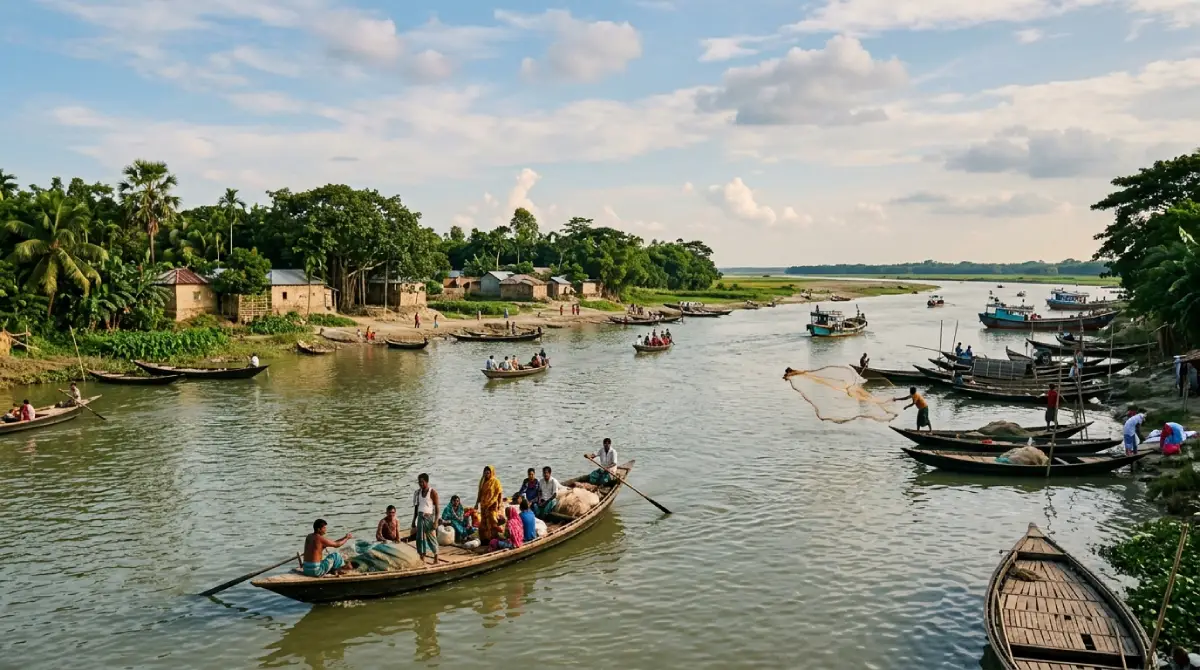
Rivers of Bangladesh Composition for HSC (Class 11–12) – 350 Words (Easy)
Introduction
Bangladesh is globally recognized as the land of rivers, with over 700 rivers flowing through this deltaic nation. The Padma (lower Ganges), Meghna, and Jamuna (Brahmaputra) form the Ganges-Brahmaputra-Meghna delta, covering 80% of our landmass. These rivers are the lifeline of Bangladesh, supporting agriculture, fisheries, transportation, and economy. However, severe pollution threatens their survival today.
River Systems and Geography
The Brahmaputra originates in the Himalayas of Tibet at 5,210 meters elevation and traverses 2,900 kilometers through China, India, and Assam. It enters Bangladesh near Kurigram as the Jamuna and converges with the Padma at Goalundo. Moreover, important rivers include Buriganga (surrounding Dhaka), Karnaphuli (Chittagong), Surma and Kushiyara (Sylhet), and Teesta (north). This river network supports 130 million people.
Economic Contributions
Rivers contribute 24% to Bangladesh’s GDP. They irrigate 7.8 million hectares through BADC infrastructure. During monsoon, rivers deposit 1 billion tons of alluvial silt with nutrients, creating exceptionally fertile soil for rice, jute, and vegetables. Moreover, fisheries produce 4.4 million tons annually. Hilsa, our national fish, contributes 12% of production and supports 2.5 million livelihoods while providing 60% of animal protein. Furthermore, rivers transport 6.2 million tons of cargo, costing 40-50% less than roads. Chittagong port handles 92% of international trade.
Environmental and Cultural Importance
Rivers support 260 fish species and diverse biodiversity. The Sundarbans, a UNESCO site, protects the Royal Bengal Tiger. Rivers regulate climate and maintain ecological balance. Moreover, poets like Tagore and Nazrul Islam celebrated rivers in Bengali literature. Traditional music and boat races reflect our cultural heritage.
Challenges and Solutions
However, 25,000 factories discharge industrial effluents with heavy metals (lead, mercury, chromium). Moreover, 3,000 million liters of untreated sewage flow daily. Plastics and microplastics damage ecosystems. The National River Conservation Commission (2014, Act No. 46), BIWTA, and Department of Environment enforce protection. Laws include Environment Conservation Act 1995, Bangladesh Water Act 2013, and National River Protection Act 2019. Bangladesh committed to Ramsar Convention and SDG 6 & 14. Solutions require effluent treatment plants and public awareness.
Conclusion
Rivers provide fertile soil, fisheries, and transport essential for 130 million people. Pollution from 25,000 factories threatens survival. Therefore, strict enforcement and collective action are necessary to save our national treasure for future generations.
Vocabulary Table
| Word | Meaning in Bangla |
|---|---|
| Rivers | নদী |
| Deltaic | ব-দ্বীপীয় |
| Padma | পদ্মা |
| Ganges | গঙ্গা |
| Meghna | মেঘনা |
| Jamuna | যমুনা |
| Brahmaputra | ব্রহ্মপুত্র |
| Ganges-Brahmaputra-Meghna delta | গঙ্গা-ব্রহ্মপুত্র-মেঘনা ব-দ্বীপ |
| Lifeline | জীবনরেখা |
| Agriculture | কৃষি |
| Fisheries | মৎস্য শিল্প |
| Transportation | পরিবহন |
| Economy | অর্থনীতি |
| Pollution | দূষণ |
| Himalayas | হিমালয় |
| Tibet | তিব্বত |
| India | ভারত |
| Assam | আসাম |
| Kurigram | কুড়িগ্রাম |
| Goalundo | গোয়ালন্দ |
| Buriganga | বুড়িগঙ্গা |
| Dhaka | ঢাকা |
| Karnaphuli | কর্ণফুলী |
| Chittagong | চট্টগ্রাম |
| Surma | সুরমা |
| Kushiyara | কুশিয়ারা |
| Sylhet | সিলেট |
| Teesta | তিস্তা |
| GDP | মোট দেশজ উৎপাদন |
| BADC | বাংলাদেশ কৃষি উন্নয়ন কর্পোরেশন |
| Monsoon | বর্ষা |
| Alluvial silt | পলিমাটি |
| Nutrients | পুষ্টি উপাদান |
| Fertile | উর্বর |
| Hilsa | ইলিশ |
| Protein | আমিষ |
| Biodiversity | জীববৈচিত্র্য |
| Sundarbans | সুন্দরবন |
| Climate | জলবায়ু |
| Ecological balance | বাস্তুতান্ত্রিক ভারসাম্য |
| Cultural heritage | সাংস্কৃতিক ঐতিহ্য |
| Industrial effluents | শিল্প বর্জ্য |
| Heavy metals | ভারী ধাতু |
| Sewage | নর্দমার বর্জ্য |
| Plastics | প্লাস্টিক |
| Microplastics | মাইক্রো প্লাস্টিক |
| Ecosystems | বাস্তুতন্ত্র |
| National River Conservation Commission | জাতীয় নদী রক্ষা কমিশন |
| BIWTA | বাংলাদেশ অভ্যন্তরীণ নৌ-পরিবহন কর্তৃপক্ষ |
| Department of Environment | পরিবেশ অধিদপ্তর |
| Environment Conservation Act 1995 | পরিবেশ সংরক্ষণ আইন ১৯৯৫ |
| Bangladesh Water Act 2013 | বাংলাদেশ জল আইন ২০১৩ |
| National River Protection Act 2019 | জাতীয় নদী সংরক্ষণ আইন ২০১৯ |
| Ramsar Convention | রামসার সনদ |
| SDG 6 & 14 | টেকসই উন্নয়ন লক্ষ্য ৬ ও ১৪ |
| Effluent treatment plants | বর্জ্য শোধনাগার |
| National treasure | জাতীয় সম্পদ |
| Generations | প্রজন্ম |
Rivers of Bangladesh Composition for HSC (Class 11–12) – 450 Words (Standard)
Introduction
Bangladesh is internationally recognized as the land of rivers, with over 700 rivers including tributaries, distributaries, and estuaries flowing through this densely populated deltaic nation. The Padma (lower course of the sacred Ganges), Meghna, and Jamuna (Bangladeshi name for Brahmaputra) form the Ganges-Brahmaputra-Meghna delta, the world’s largest active delta covering 80% of Bangladesh’s landmass and supporting over 130 million people. These rivers fundamentally shape our geography, hydrology, economy, and national identity. Moreover, rivers are the absolute lifeline supporting agriculture, fisheries, inland navigation, trade, and cultural heritage. However, severe water pollution from industrial and municipal sources threatens their ecological survival and economic viability.
Geographical Context and River Systems
The Brahmaputra, one of Asia’s mightiest rivers, originates in the glacial Himalayas of Tibet at approximately 5,210 meters elevation. It traverses 2,900 kilometers through China, India, and Assam, carrying massive sediment loads before entering Bangladesh near Kurigram district as the powerful Jamuna river. The Jamuna eventually converges with the Padma near Goalundo, creating one of the world’s most dynamic river systems. Moreover, the Meghna is formed by the confluence of Surma and Kushiyara rivers in Sylhet division. Furthermore, regionally important rivers include Buriganga (encircling the capital Dhaka), Karnaphuli (flowing through Chittagong port city), Teesta (irrigating northern plains), Atrai, Rupsha, and Sangu. This intricate network creates the hydrological foundation of Bangladesh.
Economic Contributions
Rivers contribute approximately 24% to Bangladesh’s GDP through agriculture, fisheries, and transportation sectors. They irrigate about 7.8 million hectares of agricultural land through extensive infrastructure managed by Bangladesh Agricultural Development Corporation (BADC). During annual monsoon season (June-October), rivers overflow and deposit approximately 1 billion tons of alluvial silt and sediment containing essential nutrients across floodplains. This natural hydrological process creates exceptionally fertile soil ideal for intensive cultivation of rice (aman, aus, boro varieties), jute, sugarcane, tea, and vegetables.
Moreover, fisheries and aquaculture produce approximately 4.4 million tons annually. Hilsa (Tenualosa ilisha), Bangladesh’s official national fish, contributes 12% of total production (about 0.5 million tons) and directly supports 2.5 million livelihoods while providing 60% of animal protein intake for the population. Furthermore, rivers function as vital inland waterways transporting approximately 6.2 million tons of cargo annually, which costs 40-50% less than road transport. Major port cities including Dhaka, Chittagong (handling 92% of international trade), Khulna, Mongla, Narayanganj, and Chandpur developed historically along riverbanks for trade access.
Environmental and Cultural Significance
Rivers support approximately 260 fish species and maintain critical aquatic biodiversity. The Sundarbans mangrove forest, a UNESCO World Heritage Site located at river estuaries, protects endangered species including the Royal Bengal Tiger, Irrawaddy dolphin, and estuarine crocodile. Moreover, rivers regulate regional climate, control flooding, and maintain ecological balance.
Additionally, rivers hold profound cultural significance. Great Bengali poets Rabindranath Tagore and Kazi Nazrul Islam celebrated rivers in literature. Traditional music genres like Bhatiali and Sari songs, boat races, and fishing communities embody our cultural heritage and national identity.
Critical Challenges
However, approximately 25,000 industrial facilities discharge industrial effluents containing toxic chemicals and heavy metals (lead, mercury, chromium, arsenic) without adequate treatment. Moreover, 3,000 million liters of untreated municipal sewage flow into rivers daily. Plastics and microplastics accumulate in sediments, entering food chains. Furthermore, upstream water diversion, particularly the Teesta by India, reduces dry-season flow. Many rivers are dying.
Conservation Framework
The National River Conservation Commission (established 2014, Act No. 46), BIWTA, and Department of Environment (DoE) enforce protection. The Environment Conservation Act 1995 (amended 2010), Bangladesh Water Act 2013, and National River Protection Act 2019 provide legal frameworks. Bangladesh committed to Ramsar Convention and Sustainable Development Goals (SDG 6 & 14). Solutions require mandatory effluent treatment plants, sewage infrastructure, dredging, transboundary cooperation, and public awareness.
Conclusion
Rivers are our national treasure, providing fertile soil through billion-ton silt deposition, hilsa fisheries supporting 2.5 million people, and cost-effective cargo transport. However, pollution from 25,000 factories threatens ecological sustainability. Therefore, strict law enforcement and collective action are essential to save rivers for future generations.
Vocabulary Table
| Word | Meaning in Bangla |
|---|---|
| Rivers | নদী |
| Tributaries | উপনদী |
| Distributaries | শাখা নদী |
| Estuaries | মোহনা |
| Deltaic | ব-দ্বীপীয় |
| Padma | পদ্মা |
| Ganges | গঙ্গা |
| Meghna | মেঘনা |
| Jamuna | যমুনা |
| Brahmaputra | ব্রহ্মপুত্র |
| Ganges-Brahmaputra-Meghna delta | গঙ্গা-ব্রহ্মপুত্র-মেঘনা ব-দ্বীপ |
| Geography | ভূগোল |
| Hydrology | জলবিদ্যা |
| Economy | অর্থনীতি |
| Identity | পরিচয় |
| Lifeline | জীবনরেখা |
| Agriculture | কৃষি |
| Fisheries | মৎস্য শিল্প |
| Inland navigation | অভ্যন্তরীণ নৌ-চলাচল |
| Trade | বাণিজ্য |
| Cultural heritage | সাংস্কৃতিক ঐতিহ্য |
| Water pollution | জল দূষণ |
| Himalayas | হিমালয় |
| Tibet | তিব্বত |
| India | ভারত |
| Assam | আসাম |
| Kurigram | কুড়িগ্রাম |
| Goalundo | গোয়ালন্দ |
| Surma | সুরমা |
| Kushiyara | কুশিয়ারা |
| Sylhet | সিলেট |
| Buriganga | বুড়িগঙ্গা |
| Dhaka | ঢাকা |
| Karnaphuli | কর্ণফুলী |
| Chittagong | চট্টগ্রাম |
| Teesta | তিস্তা |
| Atrai | আত্রাই |
| Rupsha | রূপসা |
| Sangu | সাঙ্গু |
| GDP | মোট দেশজ উৎপাদন |
| Bangladesh Agricultural Development Corporation (BADC) | বাংলাদেশ কৃষি উন্নয়ন কর্পোরেশন |
| Monsoon | বর্ষা |
| Alluvial silt | পলিমাটি |
| Sediment | পলল |
| Nutrients | পুষ্টি উপাদান |
| Hydrological process | জলবিদ্যা প্রক্রিয়া |
| Fertile | উর্বর |
| Aquaculture | মৎস্য চাষ |
| Hilsa | ইলিশ |
| Protein | আমিষ |
| Inland waterways | অভ্যন্তরীণ জলপথ |
| Port | বন্দর |
| Khulna | খুলনা |
| Mongla | মংলা |
| Narayanganj | নারায়ণগঞ্জ |
| Chandpur | চাঁদপুর |
| Riverbanks | নদীর তীর |
| Aquatic biodiversity | জলজ জীববৈচিত্র্য |
| Sundarbans | সুন্দরবন |
| Climate | জলবায়ু |
| Ecological balance | বাস্তুতান্ত্রিক ভারসাম্য |
| National identity | জাতীয় পরিচয় |
| Industrial effluents | শিল্প বর্জ্য |
| Chemicals | রাসায়নিক পদার্থ |
| Heavy metals | ভারী ধাতু |
| Sewage | নর্দমার বর্জ্য |
| Plastics | প্লাস্টিক |
| Microplastics | মাইক্রো প্লাস্টিক |
| Upstream | ঊর্ধ্ব প্রবাহ |
| National River Conservation Commission | জাতীয় নদী রক্ষা কমিশন |
| BIWTA | বাংলাদেশ অভ্যন্তরীণ নৌ-পরিবহন কর্তৃপক্ষ |
| Department of Environment (DoE) | পরিবেশ অধিদপ্তর |
| Environment Conservation Act 1995 | পরিবেশ সংরক্ষণ আইন ১৯৯৫ |
| Bangladesh Water Act 2013 | বাংলাদেশ জল আইন ২০১৩ |
| National River Protection Act 2019 | জাতীয় নদী সংরক্ষণ আইন ২০১৯ |
| Ramsar Convention | রামসার সনদ |
| Sustainable Development Goals (SDG 6 & 14) | টেকসই উন্নয়ন লক্ষ্য ৬ ও ১৪ |
| Effluent treatment plants | বর্জ্য শোধনাগার |
| Dredging | খনন |
| Ecological sustainability | বাস্তুতান্ত্রিক টেকসইতা |
| National treasure | জাতীয় সম্পদ |
| Generations | প্রজন্ম |
Rivers of Bangladesh Composition for HSC (Class 11–12) – 500 Words (Advanced)
Introduction
Bangladesh is universally recognized as the quintessential land of rivers, with over 700 rivers including major tributaries, extensive distributaries, and vast estuaries forming one of the world’s most extensive and hydrologically complex river networks. The Padma (lower course of the sacred Ganges), Meghna, and Jamuna (Bangladeshi designation for the mighty Brahmaputra) constitute three colossal rivers fundamentally shaping our geography, topography, hydrology, geomorphology, climate, and national identity. These rivers create the Ganges-Brahmaputra-Meghna delta, the world’s largest active delta covering approximately 80% of Bangladesh’s landmass and supporting over 130 million people. Moreover, rivers are the absolute lifeline of our nation, contributing approximately 24% to GDP through agriculture, fisheries, inland navigation, trade, industrial production, and urbanization. Rivers also maintain critical ecological balance, support biodiversity, and embody our profound cultural heritage. However, severe water pollution from approximately 25,000 industrial facilities, 3,000 million liters of daily untreated sewage, microplastics accumulation, and upstream water diversion create existential threats requiring urgent comprehensive conservation action.
Geographical and Hydrological Context
The Brahmaputra, one of Asia’s mightiest and most legendary rivers, originates in the glacial Himalayas of Tibet at approximately 5,210 meters elevation near the sacred Mount Kailash. It traverses approximately 2,900 kilometers through China, India, and Assam, transporting massive volumes of water and sediment before majestically entering Bangladesh near Kurigram district as the powerful and economically vital Jamuna river. The Jamuna eventually converges with the Padma near Goalundo, creating one of the world’s most dynamic and productive river systems.
Moreover, the Meghna is formed by the confluence of Surma and Kushiyara rivers in Sylhet division, draining the northeastern hill regions. Furthermore, regionally significant rivers include Buriganga (encircling the sprawling capital Dhaka), Karnaphuli (flowing through international port city Chittagong), Teesta (extensively irrigating northern agricultural plains though currently affected by upstream diversion), Atrai, Mahananda, Rupsha, Bhairab, Gorai, and Sangu. This intricate network forms the fundamental hydrological foundation of Bangladeshi civilization and economy.
Economic Contributions and Agricultural Significance
Rivers contribute approximately 24% to Bangladesh’s GDP through multiple interconnected sectors. They irrigate about 7.8 million hectares of agricultural land through extensive infrastructure managed by Bangladesh Agricultural Development Corporation (BADC), including canal networks, mechanized pumps, and deep tube wells. During the annual monsoon season (June-October), rivers dramatically overflow and deposit approximately 1 billion tons of rich alluvial silt, fine sediment, organic matter, and essential mineral nutrients across the vast Ganges-Brahmaputra-Meghna delta floodplains.
This entirely natural hydrological and geomorphological process, continuously occurring over millennia, has created exceptionally fertile soil conditions perfectly suited for intensive year-round cultivation of multiple rice varieties (aman, aus, boro), jute, sugarcane, tea, wheat, vegetables, and diverse commercial crops, enabling Bangladesh to achieve remarkable food production despite limited land resources.
Moreover, fisheries and aquaculture produce approximately 4.4 million tons annually, making Bangladesh one of the world’s leading fish-producing nations. Hilsa (Tenualosa ilisha), proudly recognized as Bangladesh’s official national fish, contributes approximately 12% of total fish production (around 0.5 million tons annually) and directly supports approximately 2.5 million people economically while providing 60% of animal protein intake for the entire population, making fisheries absolutely critical for food security and public health.
Furthermore, rivers serve as indispensable and economically efficient inland waterways transporting approximately 6.2 million tons of cargo and millions of passengers annually. Water transportation costs approximately 40-50% less than equivalent road transport, significantly reducing logistics expenses. Major port cities including Dhaka, Chittagong (handling approximately 92% of Bangladesh’s international trade volume), Khulna, Mongla (second international seaport), Narayanganj (industrial hub), Chandpur (critical river junction), and Barisal developed historically along major riverbanks for trade access and economic connectivity.
Environmental, Ecological, and Cultural Dimensions
Rivers support approximately 260 fish species and maintain critical aquatic biodiversity and ecosystem health. The Sundarbans mangrove forest, a UNESCO World Heritage Site located at river estuaries where freshwater meets saltwater, creates unique habitats protecting endangered species including the Royal Bengal Tiger, Irrawaddy dolphin, estuarine crocodile, and countless migratory birds. Moreover, rivers regulate regional climate patterns, control flooding, recharge groundwater, and maintain landscape stability.
Additionally, rivers possess profound cultural and spiritual significance deeply embedded in Bengali society. Great poets Rabindranath Tagore and Kazi Nazrul Islam celebrated rivers in immortal literature. Traditional music genres like Bhatiali and Sari songs, monsoon boat races, fishing communities, and rural lifestyles revolve around rivers, making them integral symbols of our cultural heritage and national identity.
Critical Environmental Challenges
However, approximately 25,000 industrial facilities including tanneries, textile mills, pharmaceutical plants, and chemical factories discharge highly toxic industrial effluents containing dangerous chemicals and heavy metals (lead, mercury, chromium, cadmium, arsenic) without adequate treatment. Moreover, 3,000 million liters of completely untreated municipal sewage flow into rivers daily. Plastics and microplastics (particles smaller than 5mm) accumulate in sediments, are consumed by fish, and enter human food chains causing serious health impacts. Furthermore, upstream water diversion, particularly the Teesta by India, reduces dry-season flow, causing agricultural water scarcity and ecosystem degradation. Consequently, many rivers are biologically dying.
Conservation Framework and Pathways Forward
The National River Conservation Commission (established 2014 under Act No. 46), Bangladesh Inland Water Transport Authority (BIWTA), Department of Environment (DoE), and Water Resources Planning Organization (WARPO) enforce protection. The Environment Conservation Act 1995 (amended 2010), Bangladesh Water Act 2013, and National River Protection Act 2019 provide comprehensive legal frameworks. Bangladesh committed to the Ramsar Convention for wetland protection and Sustainable Development Goals (SDG 6 & 14) for water quality and aquatic ecosystems.
Effective solutions require mandatory effluent treatment plants (ETPs) for all industries, rapid development of municipal sewage treatment infrastructure, regular dredging to maintain navigability, stopping illegal encroachment, strengthening transboundary water cooperation through Joint Rivers Commission, and massive public awareness campaigns mobilizing community-based conservation.
Conclusion
Rivers are Bangladesh’s lifeline and national treasure, providing fertile soil through billion-ton annual silt deposition, hilsa fisheries supporting 2.5 million livelihoods with 60% protein contribution, cost-effective cargo transport, and critical Sundarbans biodiversity. However, pollution from 25,000 factories discharging heavy metals and 3,000 million liters daily sewage creates an environmental crisis. Therefore, strict enforcement of Environment Act 1995, Water Act 2013, and River Protection Act 2019 through River Commission, mandatory ETPs, transboundary cooperation, and active public participation are essential. Protecting rivers is not optional but a national imperative for ecological sustainability and survival of future generations.
Vocabulary Table
| Word | Meaning in Bangla |
|---|---|
| Rivers | নদী |
| Tributaries | উপনদী |
| Distributaries | শাখা নদী |
| Estuaries | মোহনা |
| River networks | নদী জালিকা |
| Padma | পদ্মা |
| Ganges | গঙ্গা |
| Meghna | মেঘনা |
| Jamuna | যমুনা |
| Brahmaputra | ব্রহ্মপুত্র |
| Geography | ভূগোল |
| Topography | ভূ-প্রকৃতি |
| Hydrology | জলবিদ্যা |
| Geomorphology | ভূ-আকৃতিবিদ্যা |
| Climate | জলবায়ু |
| Identity | পরিচয় |
| Ganges-Brahmaputra-Meghna delta | গঙ্গা-ব্রহ্মপুত্র-মেঘনা ব-দ্বীপ |
| Lifeline | জীবনরেখা |
| GDP | মোট দেশজ উৎপাদন |
| Agriculture | কৃষি |
| Fisheries | মৎস্য শিল্প |
| Inland navigation | অভ্যন্তরীণ নৌ-চলাচল |
| Trade | বাণিজ্য |
| Industrial production | শিল্প উৎপাদন |
| Urbanization | নগরায়ণ |
| Ecological balance | বাস্তুতান্ত্রিক ভারসাম্য |
| Biodiversity | জীববৈচিত্র্য |
| Cultural heritage | সাংস্কৃতিক ঐতিহ্য |
| Water pollution | জল দূষণ |
| Sewage | নর্দমার বর্জ্য |
| Microplastics | মাইক্রো প্লাস্টিক |
| Upstream | ঊর্ধ্ব প্রবাহ |
| Himalayas | হিমালয় |
| Tibet | তিব্বত |
| India | ভারত |
| Assam | আসাম |
| Kurigram | কুড়িগ্রাম |
| Goalundo | গোয়ালন্দ |
| Surma | সুরমা |
| Kushiyara | কুশিয়ারা |
| Sylhet | সিলেট |
| Buriganga | বুড়িগঙ্গা |
| Dhaka | ঢাকা |
| Karnaphuli | কর্ণফুলী |
| Chittagong | চট্টগ্রাম |
| Teesta | তিস্তা |
| Atrai | আত্রাই |
| Mahananda | মহানন্দা |
| Rupsha | রূপসা |
| Bhairab | ভৈরব |
| Gorai | গড়াই |
| Sangu | সাঙ্গু |
| Bangladesh Agricultural Development Corporation (BADC) | বাংলাদেশ কৃষি উন্নয়ন কর্পোরেশন |
| Monsoon | বর্ষা |
| Alluvial silt | পলিমাটি |
| Sediment | পলল |
| Nutrients | পুষ্টি উপাদান |
| Hydrological | জলবিদ্যাগত |
| Geomorphological process | ভূ-আকৃতিগত প্রক্রিয়া |
| Fertile | উর্বর |
| Aquaculture | মৎস্য চাষ |
| Hilsa | ইলিশ |
| Protein | আমিষ |
| Food security | খাদ্য নিরাপত্তা |
| Inland waterways | অভ্যন্তরীণ জলপথ |
| Port | বন্দর |
| Khulna | খুলনা |
| Mongla | মংলা |
| Narayanganj | নারায়ণগঞ্জ |
| Chandpur | চাঁদপুর |
| Barisal | বরিশাল |
| Riverbanks | নদীর তীর |
| Aquatic biodiversity | জলজ জীববৈচিত্র্য |
| Ecosystem | বাস্তুতন্ত্র |
| Sundarbans | সুন্দরবন |
| National identity | জাতীয় পরিচয় |
| Industrial effluents | শিল্প বর্জ্য |
| Chemicals | রাসায়নিক পদার্থ |
| Heavy metals | ভারী ধাতু |
| Plastics | প্লাস্টিক |
| National River Conservation Commission | জাতীয় নদী রক্ষা কমিশন |
| Bangladesh Inland Water Transport Authority (BIWTA) | বাংলাদেশ অভ্যন্তরীণ নৌ-পরিবহন কর্তৃপক্ষ |
| Department of Environment (DoE) | পরিবেশ অধিদপ্তর |
| Water Resources Planning Organization (WARPO) | পানি সম্পদ পরিকল্পনা সংস্থা |
| Environment Conservation Act 1995 | পরিবেশ সংরক্ষণ আইন ১৯৯৫ |
| Bangladesh Water Act 2013 | বাংলাদেশ জল আইন ২০১৩ |
| National River Protection Act 2019 | জাতীয় নদী সংরক্ষণ আইন ২০১৯ |
| Ramsar Convention | রামসার সনদ |
| Sustainable Development Goals (SDG 6 & 14) | টেকসই উন্নয়ন লক্ষ্য ৬ ও ১৪ |
| Effluent treatment plants (ETPs) | বর্জ্য শোধনাগার |
| Dredging | খনন |
| Navigability | নাব্যতা |
| Ecological sustainability | বাস্তুতান্ত্রিক টেকসইতা |
| National treasure | জাতীয় সম্পদ |
| Generations | প্রজন্ম |
📝 How to Learn and Write This Composition in Exam – For HSC (Class 11-12)
1. Key Points to Remember
- 700+ rivers; delta covers 80% landmass, supports 130M people
- Brahmaputra: 5,210m Himalayas/Tibet, 2,900km, enters Kurigram, meets Padma at Goalundo
- Economic: 24% GDP, 7.8M hectares (BADC), 1B tons silt annually
- Fisheries: 4.4M tons; hilsa 12% (0.5M tons), 2.5M livelihoods, 60% protein
- Transport: 6.2M tons cargo (40-50% cheaper); Chittagong 92% trade
- Environment: 260 fish species, Sundarbans UNESCO, Royal Bengal Tiger
- Culture: Tagore, Nazrul, Bhatiali music, boat races
- Pollution: 25,000 factories, heavy metals (lead, mercury, chromium, arsenic), 3,000M liters sewage, microplastics
- Institutions: River Commission (2014, Act 46), BIWTA, DoE, WARPO
- Laws: Environment Act 1995 (amended 2010), Water Act 2013, River Protection Act 2019, Ramsar, SDG 6&14
- Solutions: mandatory ETPs, sewage treatment, dredging, transboundary cooperation
2. Memory Trick / Mnemonic
Remember “DELTA” for HSC Composition:
- D = Delta: 80% landmass, 130M people, Brahmaputra 5,210m/2,900km/Goalundo
- E = Economy: 24% GDP, 7.8M hectares, 1B tons silt, hilsa 12%/0.5M/2.5M/60%
- L = Lifeline: 4.4M tons fish, 6.2M tons cargo (40-50%), Chittagong 92%, 260 species, Sundarbans
- T = Threat: 25,000 factories, heavy metals (lead/mercury/chromium/arsenic), 3,000M sewage, microplastics
- A = Acts: River Commission 2014/46, BIWTA, DoE, WARPO, Environment 1995/2010, Water 2013, Protection 2019, Ramsar, SDG 6&14
3. Exam Writing Checklist
✅ Did I establish delta context (80% landmass, 130M people) in introduction?
✅ Did I detail Brahmaputra journey (5,210m Himalayas/Tibet, 2,900km through China/India/Assam, Kurigram entry, Goalundo convergence)?
✅ Did I quantify all economic data (24% GDP, 7.8M hectares BADC, 1B tons silt, 4.4M fish, hilsa 12%/0.5M/2.5M/60%, 6.2M cargo/40-50%, Chittagong 92%)?
✅ Did I specify environmental aspects (260 species, Sundarbans UNESCO) and cultural figures (Tagore, Nazrul, Bhatiali)?
✅ Did I detail pollution (25,000 factories, specific heavy metals, 3,000M sewage, microplastics, Teesta upstream)?
✅ Did I name all institutions with dates (River Commission 2014/Act 46, BIWTA, DoE, WARPO) and laws (Environment 1995/2010, Water 2013, Protection 2019, Ramsar, SDG 6&14)?
✅ Did I propose specific solutions (mandatory ETPs, sewage treatment, dredging, cooperation)?
✅ Did I maintain exact word limit (350/450/500 for Easy/Standard/Advanced)?
✅ Did I write conclusion synthesizing data and emphasizing urgency?
4. One-Line Summary
Rivers forming the Ganges-Brahmaputra-Meghna delta with Brahmaputra traveling 2,900km from 5,210m Himalayas depositing 1 billion tons silt provide 24% GDP through 7.8 million hectares agriculture and hilsa fisheries (12% production, 2.5 million livelihoods, 60% protein) while supporting Chittagong’s 92% trade and Sundarbans’ 260 species, but 25,000 factories discharging heavy metals and 3,000 million liters sewage require National River Conservation Commission and strict enforcement of Environment Act 1995, Water Act 2013, and River Protection Act 2019 through mandatory ETPs and transboundary cooperation.
FAQ Section on Rivers of Bangladesh Composition – For HSC (Class 11-12)
Q1: What are the exact word limits for each HSC difficulty level?
Answer: Easy: exactly 350 words, Standard: exactly 450 words, Advanced: exactly 500 words. Maintain these limits strictly to demonstrate discipline and complete within 20-minute exam time frame.
Q2: Which specific quantitative data must appear in all three HSC levels?
Answer: All levels must include: 24% GDP, 7.8M hectares irrigation, 1B tons silt, 4.4M tons fish, hilsa 12%/2.5M people/60% protein, 6.2M tons cargo/40-50% cheaper, Chittagong 92% trade, 25,000 factories, 3,000M liters sewage.
Q3: How detailed should Brahmaputra’s description be in each level?
Answer: Easy: “originates Himalayas/Tibet at 5,210m, 2,900km, enters Kurigram, meets Padma at Goalundo.” Standard: add “traverses through China, India, Assam.” Advanced: add “near Mount Kailash, carrying massive sediment loads.”
Q4: Which institutions and laws with dates are mandatory for Advanced level?
Answer: River Commission (2014, Act No. 46), BIWTA, DoE, WARPO, Environment Act 1995 (amended 2010), Water Act 2013, River Protection Act 2019, Ramsar Convention, SDG 6&14. All with years/numbers.
Q5: What heavy metals must be specifically named?
Answer: For Standard and Advanced levels, always specify: lead, mercury, chromium. For Advanced, add: cadmium, arsenic. This shows scientific precision beyond generic “heavy metals.”
Q6: How should cultural elements differ across difficulty levels?
Answer: Easy: “poets like Tagore and Nazrul, traditional music.” Standard: “Tagore and Nazrul Islam celebrated in literature, Bhatiali and Sari songs.” Advanced: “immortal literature by Tagore and Nazrul, traditional genres like Bhatiali and Sari, monsoon boat races.”
Q7: What makes an Advanced level conclusion different from Standard?
Answer: Advanced must synthesize ALL key data points (Brahmaputra 2,900km/5,210m, hilsa 0.5M tons, specific laws with years, microplastics), propose integrated solutions (ETPs, dredging, cooperation), and use sophisticated phrasing like “existential crisis,” “national imperative,” “ecological sustainability.”
Q8: Should I mention BADC in all levels?
Answer: Yes. Easy: “irrigation infrastructure.” Standard: “managed by BADC.” Advanced: “Bangladesh Agricultural Development Corporation (BADC) including canal networks, pumps, tube wells.” Detail increases with level.
Q9: How can I manage writing 500 words in 20 minutes?
Answer: Practice timed writing: 2 minutes planning structure, 15 minutes writing (33 words/minute pace), 3 minutes reviewing. Memorize key data points so you don’t pause to recall numbers during exam.
Q10: What’s the biggest mistake students make in HSC composition?
Answer: Writing too generally without specific data. Instead of “many hectares,” write “7.8 million hectares.” Instead of “factories pollute,” write “25,000 factories discharge heavy metals including lead, mercury, chromium.” Precision demonstrates mastery and earns higher marks.