




বাংলাদেশি শিক্ষার্থীদের Population Problem in Bangladesh Paragraph টি খুব সহজ ভাষায় প্রস্তুত করা হয়েছে। গুরুত্বপূর্ণ শব্দগুলো Bold করে প্রতিটি Paragraph এর পরে শব্দার্থসহ হয়েছে, যাতে শিক্ষার্থীরা সহজে বুঝে শিখতে পারে। এখানে ক্লাস স্ট্যান্ডার্ড অনুযায়ী প্যারাগ্রাফগুলো লেখা হয়েছে। তবে শিক্ষার্থী তার চাহিদা ও সক্ষমতা অনুযায়ী ছোট বা বড় যেকোনো প্যারাগ্রাফ বেছে নিয়ে শিখতে পারে। প্রতিটি Paragraph মানসম্মত ও শেখার জন্য উপযোগী।
Population Problem in Bangladesh Paragraph – For Class 6 & 7 (162 words)
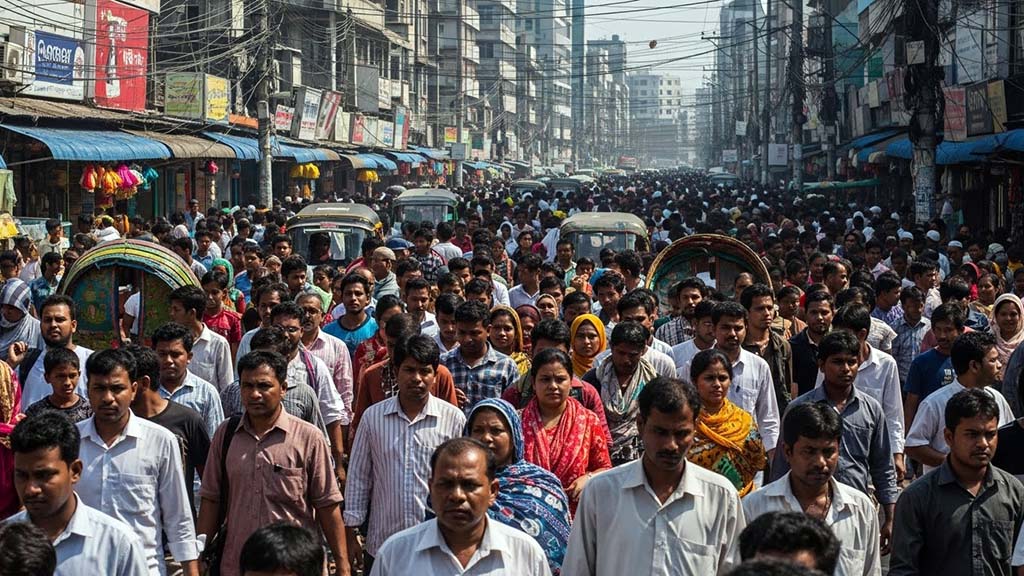
Population problem is one of the biggest challenges facing Bangladesh today. Bangladesh has over 170 million people living in a small area. This makes our country one of the most densely populated nations worldwide. Moreover, overpopulation creates many serious problems for development and progress. Poverty increases when too many people compete for limited resources and opportunities. Also, there are not enough jobs available for all people in society.
Unemployment becomes a major issue affecting millions of young workers daily. Furthermore, food shortage occurs because we cannot produce enough for everyone always. Housing problem is severe as people struggle to find affordable shelter everywhere. Healthcare facilities remain insufficient to serve such a large population properly. Schools and educational institutions face overcrowding with inadequate teachers and resources. Traffic congestion in cities makes life difficult and wastes valuable time.
Additionally, environmental pollution increases due to high population density and waste production. Therefore, we must control population growth through family planning and education programs. By reducing birth rates, Bangladesh can ensure better living standards for everyone.
Vocabulary Table
| English Word | Bangla Meaning |
|---|---|
| Population problem | জনসংখ্যা সমস্যা |
| 170 million people | ১৭ কোটি মানুষ |
| Densely populated | ঘনবসতিপূর্ণ |
| Overpopulation | অতিরিক্ত জনসংখ্যা |
| Poverty | দারিদ্র্য |
| Jobs | চাকরি |
| Unemployment | বেকারত্ব |
| Food shortage | খাদ্য ঘাটতি |
| Housing problem | আবাসন সমস্যা |
| Healthcare facilities | স্বাস্থ্যসেবা সুবিধা |
| Educational institutions | শিক্ষা প্রতিষ্ঠান |
| Traffic congestion | যানজট |
| Environmental pollution | পরিবেশ প্রদূষণ |
| Population growth | জনসংখ্যা বৃদ্ধি |
| Family planning | পরিবার পরিকল্পনা |
Population Problem in Bangladesh Paragraph – For Class 7 & 8 (270 words)
Population problem represents the most critical challenge hindering Bangladesh’s development and prosperity currently. Bangladesh has approximately 170 million people living within just 147,570 square kilometers of land. This makes our country the eighth most densely populated nation globally.
Moreover, rapid population growth continues despite various government efforts and awareness campaigns. Overpopulation generates numerous interconnected socioeconomic problems affecting national progress significantly. First, poverty intensifies when limited resources must serve an ever-increasing population. Millions struggle daily to meet basic needs like food and shelter. Also, unemployment emerges as a severe crisis with insufficient job opportunities available. Young educated graduates cannot find suitable employment matching their qualifications regularly.
Furthermore, food production cannot keep pace with population growth despite agricultural improvements. Bangladesh must import food grains spending valuable foreign currency to feed everyone. Housing shortage forces many families to live in overcrowded slums and unhealthy conditions. Cities expand rapidly without proper urban planning creating chaotic environments everywhere. Additionally, healthcare services remain inadequate to serve such massive populations effectively. Hospitals lack sufficient beds, doctors, medicines, and modern equipment for treatment. Educational institutions face severe overcrowding with insufficient teachers, classrooms, and learning materials. Quality education becomes impossible when one teacher must handle hundred students. Traffic congestion in major cities wastes countless hours and hampers economic productivity.
Environmental degradation accelerates as overpopulation increases pollution, deforestation, and resource depletion. Water scarcity and sanitation problems create public health hazards affecting community wellbeing. Therefore, controlling population growth through family planning, education, and awareness becomes absolutely essential. Government should promote small family norms through media campaigns and incentives. Female education and women’s empowerment naturally reduce birth rates sustainably. By managing population wisely, Bangladesh can achieve sustainable development and improved living standards.
Vocabulary Table
| English Word | Bangla Meaning |
|---|---|
| Population problem | জনসংখ্যা সমস্যা |
| 170 million people | ১৭ কোটি মানুষ |
| 147,570 square kilometers | ১,৪৭,৫৭০ বর্গ কিলোমিটার |
| Densely populated | ঘনবসতিপূর্ণ |
| Rapid population growth | দ্রুত জনসংখ্যা বৃদ্ধি |
| Overpopulation | অতিরিক্ত জনসংখ্যা |
| Poverty | দারিদ্র্য |
| Unemployment | বেকারত্ব |
| Job opportunities | চাকরির সুযোগ |
| Food production | খাদ্য উৎপাদন |
| Foreign currency | বৈদেশিক মুদ্রা |
| Housing shortage | আবাসন ঘাটতি |
| Urban planning | নগর পরিকল্পনা |
| Healthcare services | স্বাস্থ্যসেবা |
| Educational institutions | শিক্ষা প্রতিষ্ঠান |
| Traffic congestion | যানজট |
| Environmental degradation | পরিবেশ অবনতি |
| Water scarcity | পানি সংকট |
| Sanitation problems | স্যানিটেশন সমস্যা |
| Family planning | পরিবার পরিকল্পনা |
| Education | শিক্ষা |
| Awareness | সচেতনতা |
| Small family norms | ছোট পরিবার নীতি |
| Female education | নারী শিক্ষা |
| Women’s empowerment | নারীর ক্ষমতায়ন |
Population Problem in Bangladesh Paragraph – For Class 9 & 10 (368 words)
Population problem constitutes the most formidable obstacle preventing Bangladesh from achieving sustainable development and economic prosperity. Bangladesh currently has approximately 170 million inhabitants residing within merely 147,570 square kilometers of geographical area. This translates to a staggering population density of over 1,150 people per square kilometer. Consequently, Bangladesh ranks among the most densely populated countries worldwide alongside city-states.
Moreover, annual population growth rate remains around 1 percent adding millions of new citizens yearly. Overpopulation triggers a cascade of serious socioeconomic and environmental problems nationwide. Firstly, extreme poverty persists when insufficient resources must support continuously expanding populations. Approximately 20 percent of citizens live below the poverty line struggling for survival. Also, unemployment and underemployment affect millions as job creation cannot match workforce growth. Young graduates face bleak employment prospects despite possessing educational qualifications and skills.
Furthermore, agricultural land decreases constantly due to housing needs and industrial expansion. Food security becomes threatened as domestic production proves inadequate for massive populations. Bangladesh spends billions in foreign exchange importing essential food grains annually. Housing crisis intensifies forcing low-income families into overcrowded urban slums with substandard conditions. Major cities like Dhaka and Chittagong expand chaotically without proper infrastructure and planning.
Additionally, healthcare system struggles under tremendous pressure serving vast populations with limited resources. Government hospitals remain perpetually overcrowded with insufficient doctors, nurses, medicines, and equipment. Maternal mortality and child mortality rates stay relatively high due to inadequate services. Educational quality deteriorates when overcrowded classrooms contain 50 to 100 students per teacher. Schools lack adequate teachers, furniture, laboratories, and modern teaching aids for effective learning. Traffic congestion in cities causes economic losses worth billions annually through wasted time. Environmental degradation accelerates dramatically as overpopulation increases pollution, deforestation, and ecological imbalance. Rivers become polluted, air quality worsens, and natural resources deplete rapidly everywhere. Climate change vulnerability increases as more people inhabit disaster-prone coastal areas dangerously.
Therefore, urgent comprehensive measures must address population growth through multiple coordinated strategies. Family planning programs should reach every household with accessible contraceptive services and counseling. Mass awareness campaigns using television, radio, and social media should promote small family norms. Female education and women’s empowerment effectively reduce fertility rates through delayed marriages.
Government should provide incentives for families limiting children to one or two. Religious leaders should support population control as social and humanitarian responsibility. By managing population growth effectively, Bangladesh can ensure adequate resources, better services, and improved quality of life for all citizens sustainably.
Vocabulary Table
| English Word | Bangla Meaning |
|---|---|
| Population problem | জনসংখ্যা সমস্যা |
| 170 million inhabitants | ১৭ কোটি বাসিন্দা |
| 147,570 square kilometers | ১,৪৭,৫৭০ বর্গ কিলোমিটার |
| Population density | জনসংখ্যার ঘনত্ব |
| 1,150 people per square kilometer | প্রতি বর্গ কিলোমিটারে ১,১৫০ জন |
| Densely populated | ঘনবসতিপূর্ণ |
| Annual population growth rate | বার্ষিক জনসংখ্যা বৃদ্ধির হার |
| 1 percent | ১ শতাংশ |
| Overpopulation | অতিরিক্ত জনসংখ্যা |
| Extreme poverty | চরম দারিদ্র্য |
| 20 percent | ২০ শতাংশ |
| Poverty line | দারিদ্র্য সীমা |
| Unemployment | বেকারত্ব |
| Underemployment | আংশিক কর্মসংস্থান |
| Job creation | কর্মসংস্থান সৃষ্টি |
| Agricultural land | কৃষি জমি |
| Food security | খাদ্য নিরাপত্তা |
| Foreign exchange | বৈদেশিক মুদ্রা |
| Housing crisis | আবাসন সংকট |
| Slums | বস্তি |
| Infrastructure | অবকাঠামো |
| Healthcare system | স্বাস্থ্যসেবা ব্যবস্থা |
| Maternal mortality | মাতৃমৃত্যু |
| Child mortality | শিশুমৃত্যু |
| Educational quality | শিক্ষার গুণমান |
| 50 to 100 students | ৫০ থেকে ১০০ জন শিক্ষার্থী |
| Traffic congestion | যানজট |
| Environmental degradation | পরিবেশ অবনতি |
| Deforestation | বন উজাড় |
| Ecological imbalance | পরিবেশগত ভারসাম্যহীনতা |
| Natural resources | প্রাকৃতিক সম্পদ |
| Climate change | জলবায়ু পরিবর্তন |
| Family planning programs | পরিবার পরিকল্পনা কর্মসূচি |
| Mass awareness campaigns | ব্যাপক সচেতনতা প্রচারাভিযান |
| Small family norms | ছোট পরিবার নীতি |
| Female education | নারী শিক্ষা |
| Women’s empowerment | নারীর ক্ষমতায়ন |
| Religious leaders | ধর্মীয় নেতা |
Population Problem in Bangladesh Paragraph – For Class 11 & 12 (482 words)
Population problem represents the most pressing developmental challenge confronting Bangladesh in achieving sustainable economic growth and social prosperity. Bangladesh currently supports approximately 170 million people within a relatively small geographical area of 147,570 square kilometers making it exceptionally densely populated. The population density exceeds 1,150 persons per square kilometer ranking Bangladesh among the world’s most crowded nations. Moreover, despite significant progress, the annual population growth rate remains approximately 1 percent annually. This seemingly modest percentage translates into millions of additional citizens requiring resources, services, and opportunities yearly. Overpopulation creates a complex web of interconnected socioeconomic and environmental crises nationwide.
Firstly, chronic poverty persists when limited national resources must serve continuously expanding populations inadequately. Approximately 20 to 24 percent of citizens survive below the international poverty line lacking basic necessities. Also, unemployment and underemployment affect massive segments as job creation consistently lags behind workforce expansion. The labor force grows by over 2 million annually while formal sector employment creation remains insufficient. Young educated graduates face increasingly competitive job markets with diminishing opportunities and prospects.
Furthermore, agricultural land shrinks relentlessly through urbanization, industrialization, and housing development pressures. Arable land per capita decreases continuously threatening long-term food security and agricultural sustainability. Bangladesh must import substantial quantities of essential food grains expending precious foreign exchange reserves. Housing crisis intensifies dramatically forcing low-income urban families into overcrowded unhealthy slums and informal settlements. Metropolitan areas like Dhaka and Chittagong grow chaotically lacking adequate urban infrastructure and proper planning.
Additionally, the healthcare system operates under tremendous strain serving vast populations with constrained budgetary allocations. Government hospitals remain perpetually overcrowded with inadequate physicians, nurses, medical equipment, and pharmaceutical supplies. Maternal mortality, infant mortality, and child mortality rates remain elevated compared to regional standards. Communicable diseases spread rapidly in densely populated areas with poor sanitation and hygiene. Educational infrastructure struggles accommodating millions of students with insufficient schools, teachers, and learning materials. Classroom overcrowding with student-teacher ratios exceeding 50:1 severely compromises instructional quality and learning outcomes. Traffic congestion in major cities causes enormous economic losses estimated at billions annually.
Environmental degradation accelerates alarmingly as overpopulation intensifies pollution, deforestation, habitat destruction, and resource depletion. Rivers become severely polluted from industrial and domestic waste affecting millions downstream. Air quality deteriorates continuously causing respiratory diseases and public health concerns significantly. Climate change vulnerability increases exponentially as expanding populations inhabit ecologically fragile coastal zones. Natural disasters like cyclones and floods affect more people causing greater humanitarian crises.
Therefore, comprehensive integrated strategies must urgently address population dynamics through coordinated interventions. Family planning programs require substantial investment ensuring universal access to quality contraceptive services and counseling. Mass media campaigns should consistently promote small family norms as socially desirable and economically beneficial. Female education and women’s empowerment demonstrably reduce fertility rates through delayed marriages and career opportunities.
Government should implement incentive schemes rewarding families practicing responsible reproductive behavior and limiting children. Religious leaders, community influencers, and civil society organizations must actively advocate population management. Youth education about reproductive health and responsible parenthood should begin early systematically. Legal reforms ensuring minimum marriage age enforcement prevent early childbearing and associated complications. By implementing these multifaceted measures consistently, Bangladesh can achieve demographic dividend transforming population challenges into developmental opportunities and ensuring sustainable prosperity for future generations.
Vocabulary Table
| English Word | Bangla Meaning |
|---|---|
| Population problem | জনসংখ্যা সমস্যা |
| 170 million people | ১৭ কোটি মানুষ |
| 147,570 square kilometers | ১,৪৭,৫৭০ বর্গ কিলোমিটার |
| Densely populated | ঘনবসতিপূর্ণ |
| Population density | জনসংখ্যার ঘনত্ব |
| 1,150 persons per square kilometer | প্রতি বর্গ কিলোমিটারে ১,১৫০ জন |
| Annual population growth rate | বার্ষিক জনসংখ্যা বৃদ্ধির হার |
| 1 percent | ১ শতাংশ |
| Overpopulation | অতিরিক্ত জনসংখ্যা |
| Chronic poverty | দীর্ঘস্থায়ী দারিদ্র্য |
| 20 to 24 percent | ২০ থেকে ২৪ শতাংশ |
| International poverty line | আন্তর্জাতিক দারিদ্র্য সীমা |
| Unemployment | বেকারত্ব |
| Underemployment | আংশিক কর্মসংস্থান |
| Job creation | কর্মসংস্থান সৃষ্টি |
| Labor force | শ্রমশক্তি |
| 2 million annually | বার্ষিক ২০ লক্ষ |
| Agricultural land | কৃষি জমি |
| Arable land per capita | মাথাপিছু আবাদযোগ্য জমি |
| Food security | খাদ্য নিরাপত্তা |
| Agricultural sustainability | কৃষি টেকসইতা |
| Foreign exchange reserves | বৈদেশিক মুদ্রার রিজার্ভ |
| Housing crisis | আবাসন সংকট |
| Slums | বস্তি |
| Informal settlements | অপ্রাতিষ্ঠানিক বসতি |
| Urban infrastructure | নগর অবকাঠামো |
| Healthcare system | স্বাস্থ্যসেবা ব্যবস্থা |
| Maternal mortality | মাতৃমৃত্যু |
| Infant mortality | শিশুমৃত্যু |
| Child mortality | শিশুমৃত্যু |
| Communicable diseases | সংক্রামক রোগ |
| Sanitation | স্যানিটেশন |
| Educational infrastructure | শিক্ষা অবকাঠামো |
| Student-teacher ratios | শিক্ষার্থী-শিক্ষক অনুপাত |
| 50:1 | ৫০:১ |
| Traffic congestion | যানজট |
| Economic losses | অর্থনৈতিক ক্ষতি |
| Environmental degradation | পরিবেশ অবনতি |
| Pollution | দূষণ |
| Deforestation | বন উজাড় |
| Habitat destruction | বাসস্থান ধ্বংস |
| Resource depletion | সম্পদ হ্রাস |
| Climate change vulnerability | জলবায়ু পরিবর্তনের ঝুঁকি |
| Natural disasters | প্রাকৃতিক দুর্যোগ |
| Family planning programs | পরিবার পরিকল্পনা কর্মসূচি |
| Contraceptive services | গর্ভনিরোধক সেবা |
| Mass media campaigns | গণমাধ্যম প্রচারাভিযান |
| Small family norms | ছোট পরিবার নীতি |
| Female education | নারী শিক্ষা |
| Women’s empowerment | নারীর ক্ষমতায়ন |
| Fertility rates | প্রজনন হার |
| Incentive schemes | প্রণোদনা প্রকল্প |
| Religious leaders | ধর্মীয় নেতা |
| Community influencers | সম্প্রদায় প্রভাবক |
| Civil society organizations | সুশীল সমাজ সংগঠন |
| Youth education | যুব শিক্ষা |
| Legal reforms | আইনি সংস্কার |
| Demographic dividend | জনসংখ্যাগত লভ্যাংশ |
FAQ Section on Population Problem in Bangladesh Paragraph
Q1: What is the population problem in Bangladesh?
Answer in 2 lines only (not more): Bangladesh has over 170 million people living in a small area of 147,570 square kilometers. This overpopulation creates poverty, unemployment, housing shortage, and environmental problems nationwide.
Q2: How densely populated is Bangladesh?
Answer in 2 lines only (not more): Bangladesh has a population density exceeding 1,150 people per square kilometer currently. This makes Bangladesh one of the most densely populated countries in the world.
Q3: What are the main causes of overpopulation in Bangladesh?
Answer in 2 lines only (not more): Main causes include lack of family planning awareness, early marriage, illiteracy, and religious misconceptions. Poverty and desire for more children as economic support also contribute significantly.
Q4: How does overpopulation affect employment in Bangladesh?
Answer in 2 lines only (not more): Overpopulation creates severe unemployment as job creation cannot match workforce growth of 2 million annually. Young graduates struggle to find suitable employment despite having educational qualifications.
Q5: What is the impact of overpopulation on education?
Answer in 2 lines only (not more): Schools face severe overcrowding with student-teacher ratios exceeding 50:1 in many areas. Insufficient teachers, classrooms, and resources compromise educational quality and learning outcomes significantly.
Q6: How does population growth affect food security?
Answer in 2 lines only (not more): Agricultural land decreases constantly while population increases, threatening food production and security. Bangladesh must import food grains spending billions in foreign exchange reserves annually.
Q7: What is the relationship between overpopulation and poverty?
Answer in 2 lines only (not more): Overpopulation intensifies poverty as limited resources must serve continuously expanding populations inadequately. Approximately 20-24 percent of citizens live below the international poverty line currently.
Q8: How can Bangladesh control population growth?
Answer in 2 lines only (not more): Through family planning programs, mass awareness campaigns, female education, and women’s empowerment initiatives effectively. Government incentives for small families and religious leader support are also necessary.
Q9: What environmental problems result from overpopulation?
Answer in 2 lines only (not more): Overpopulation causes severe pollution, deforestation, habitat destruction, and natural resource depletion rapidly. Rivers become polluted, air quality worsens, and climate change vulnerability increases significantly.
Q10: Why is female education important for population control?
Answer in 2 lines only (not more): Educated women marry later, have fewer children, and make informed reproductive health decisions. Female education and empowerment demonstrably reduce fertility rates and promote sustainable population growth.