



বাংলাদেশি শিক্ষার্থীদের Gender Discrimination Paragraph টি খুব সহজ ভাষায় প্রস্তুত করা হয়েছে। গুরুত্বপূর্ণ শব্দগুলো Bold করে প্রতিটি Paragraph এর পরে শব্দার্থসহ হয়েছে, যাতে শিক্ষার্থীরা সহজে বুঝে শিখতে পারে। এখানে ক্লাস স্ট্যান্ডার্ড অনুযায়ী প্যারাগ্রাফগুলো লেখা হয়েছে। তবে শিক্ষার্থী তার চাহিদা ও সক্ষমতা অনুযায়ী ছোট বা বড় যেকোনো প্যারাগ্রাফ বেছে নিয়ে শিখতে পারে। প্রতিটি Paragraph মানসম্মত ও শেখার জন্য উপযোগী।
Gender Discrimination Paragraph – For Class 6 & 7 (150 words)
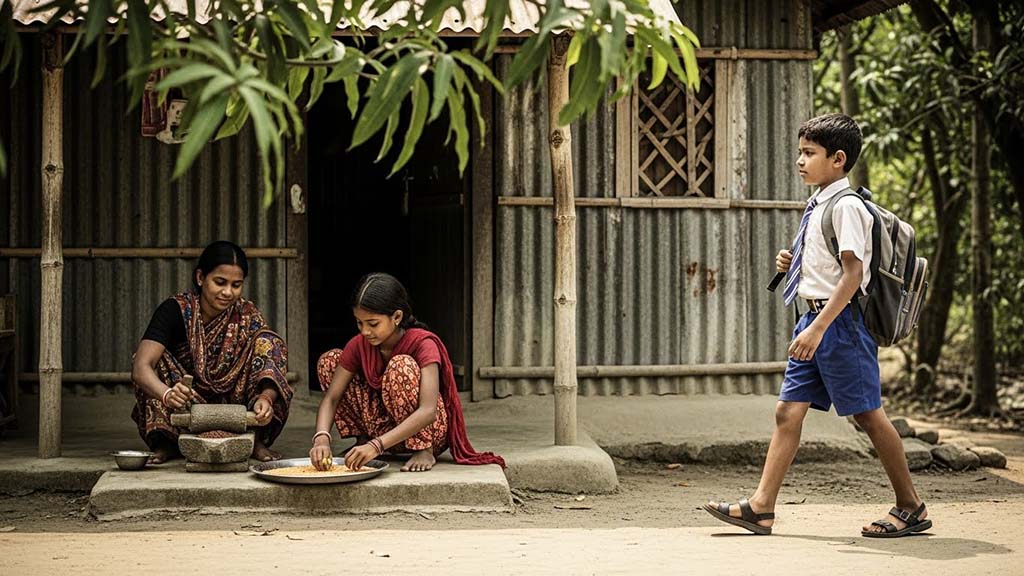
Gender discrimination means treating boys and girls unfairly because of their sex. In many places around the world, including Bangladesh, girls face more challenges than boys in education and work. For example, some families do not send their daughters to school because they think education is only for boys. Moreover, girls often have to do more household chores than their brothers. Furthermore, women earn less money than men for doing the same job. In our country, some people believe that boys are stronger and smarter than girls, which is completely wrong. However, girls can achieve anything boys can achieve if given equal opportunities. Therefore, we must treat everyone fairly regardless of their gender. When we stop gender discrimination, our families and society become stronger. Every child, whether boy or girl, deserves respect and equal chances to learn and succeed. Gender discrimination hurts both girls and boys and weakens our nation’s progress and development.
Vocabulary Table
| Bolded Words | Bangla Meaning |
|---|---|
| Gender discrimination | লিঙ্গভিত্তিক বৈষম্য |
| challenges | চ্যালেঞ্জ / কঠিনতা |
| Bangladesh | বাংলাদেশ |
| household chores | ঘরোয়া কাজ |
| opportunities | সুযোগ |
| regardless | নির্বিশেষে |
Gender Discrimination Paragraph – For Class 7 & 8 (250 words)
Gender discrimination is the unfair treatment of people based on their sex or gender. This serious problem affects millions of people worldwide and is very common in Bangladesh. In fact, girls in our country often face obstacles from the moment they are born. Many families prefer sons over daughters because of old traditions and beliefs. Consequently, girls receive less nutrition, healthcare, and education compared to boys in the same family. For example, in rural areas, families sometimes force girls to leave school and get married at a young age. Moreover, even when girls finish school, they struggle to find good jobs because employers discriminate against women workers. Additionally, women earn significantly lower salaries than men for identical work, which is deeply unfair and unjust. In schools, girls sometimes face harassment from classmates and teachers. However, many brave girls in Bangladesh are breaking these barriers and achieving great success in education, medicine, engineering, and business careers. Furthermore, the government has made laws to protect women’s rights and ensure equal treatment in workplaces. Therefore, we must work together to create a society where boys and girls receive equal respect, opportunities, and full support. Families, schools, and communities must all participate in ending this harmful practice. In conclusion, gender discrimination damages our nation’s development, and eliminating it requires everyone’s commitment and effort.
Vocabulary Table
| Bolded Words | Bangla Meaning |
|---|---|
| Gender discrimination | লিঙ্গভিত্তিক বৈষম্য |
| treatment | আচরণ |
| Bangladesh | বাংলাদেশ |
| obstacles | বাধা |
| traditions | ঐতিহ্য |
| beliefs | বিশ্বাস |
| nutrition | পুষ্টি |
| discriminate | বৈষম্য করা |
| salaries | বেতন |
| unfair | অন্যায় |
| unjust | অন্যায্য |
| harassment | হয়রানি |
| barriers | বাধা |
| success | সাফল্য |
| respect | সম্মান |
| development | উন্নয়ন |
Gender Discrimination Paragraph – For Class 9 & 10 (350 words)
Gender discrimination is a deeply rooted social problem that involves the prejudice and unequal treatment of individuals based on their gender identity. This widespread issue continues to persist in many countries, especially in developing nations like Bangladesh, where patriarchal values have influenced society for centuries. In fact, girls in Bangladesh face multiple disadvantages starting from childhood, including limited access to quality education, forced marriages, and restricted career opportunities. For example, recent studies show that approximately one-third of girls in rural Bangladesh are married before the age of eighteen, which prevents them from completing school and achieving personal development goals. Furthermore, even educated women struggle significantly in the job market because employers often prioritize men for leadership positions and offer women lower compensation for identical work and responsibilities. Moreover, girls regularly experience discrimination in schools through sexual harassment, bullying, and being discouraged from pursuing subjects like mathematics and science. Additionally, women in Bangladesh face domestic violence and limited access to legal protection, which perpetuates the cycle of inequality and injustice across generations. However, positive changes are occurring as many organizations and activists work tirelessly to promote gender equality through education and awareness campaigns in communities. Consequently, an increasing number of girls in Bangladesh are breaking traditional stereotypes and achieving remarkable success in medicine, engineering, business, government, and politics. Furthermore, the government has introduced several policies and laws to protect women’s rights, including the Domestic Violence Protection Act and equal pay legislation for workers. Therefore, creating a truly equal society requires active commitment from every member of our communities. We must challenge outdated thinking, support girls’ education, and ensure women have equal opportunities in all areas of society. In conclusion, ending gender discrimination is essential for Bangladesh’s development and prosperity, as it allows every individual to contribute their talents and abilities without facing limitations based on their gender identity.
Vocabulary Table
| Bolded Words | Bangla Meaning |
|---|---|
| Gender discrimination | লিঙ্গভিত্তিক বৈষম্য |
| rooted | গভীরভাবে প্রতিষ্ঠিত |
| prejudice | পূর্বধারণা |
| unequal treatment | অসমান আচরণ |
| persist | থেকে যাওয়া / অব্যাহত থাকা |
| Bangladesh | বাংলাদেশ |
| patriarchal | পুরুষপ্রধান |
| influenced | প্রভাবিত করেছে |
| disadvantages | অসুবিধা |
| marriages | বিবাহ |
| restricted | সীমাবদ্ধ |
| prevents | প্রতিরোধ করে |
| market | বাজার |
| prioritize | অগ্রাধিকার দেওয়া |
| compensation | ক্ষতিপূরণ / পারিশ্রমিক |
| discrimination | বৈষম্য |
| harassment | হয়রানি |
| bullying | ধমকানো |
| subjects | বিষয় |
| domestic violence | পারিবারিক সহিংসতা |
| legal protection | আইনি সুরক্ষা |
| perpetuates | স্থায়ী করে |
| activists | কর্মী |
| promote | প্রচার করা |
| awareness campaigns | সচেতনতা অভিযান |
| breaking | ভেঙে ফেলা |
| stereotypes | রূঢ় ধারণা |
| remarkable | উল্লেখযোগ্য |
| Domestic Violence Protection Act | পারিবারিক সহিংসতা সুরক্ষা আইন |
| equal pay legislation | সমান পারিশ্রমিক আইন |
| commitment | প্রতিশ্রুতি |
| challenge | চ্যালেঞ্জ করা |
| development | উন্নয়ন |
| limitations | সীমাবদ্ধতা |
Gender Discrimination Paragraph – For Class 11 & 12 (450 words)
Gender discrimination, also known as sexism, represents a fundamental violation of human rights that systematically disadvantages individuals based on their gender. This deeply entrenched social problem continues to manifest in various forms across economic, political, educational, and social spheres, particularly in developing nations like Bangladesh, where socioeconomic factors intersect with traditional gender roles to perpetuate cycles of persistent inequality. In fact, Bangladesh ranks among the countries with the highest rates of child marriage, gender-based violence, and educational disparity, with approximately forty-seven percent of girls married before age eighteen, effectively denying them educational advancement and autonomous life choices. Furthermore, the labor market in Bangladesh demonstrates significant wage gaps, with women earning approximately twenty percent less than men for comparable work, a phenomenon that economists attribute to both direct discrimination and structural barriers that impede women’s career progression. Moreover, girls face systemic marginalization in STEM education through cultural narratives that stereotype women as naturally unsuited for technical fields, thereby reducing female representation in engineering, mathematics, and science—fields crucial for Bangladesh’s technological advancement and future growth. Additionally, women’s political participation remains severely limited, with female representation in parliament at merely twenty-three percent, constraining women’s ability to influence policy-making and legislative decisions affecting their fundamental rights. However, significant progress has emerged through the advocacy of grassroots organizations, NGOs, and feminist movements that have successfully campaigned for legal reforms, including the Women’s Rights and Gender Equality Law and compulsory education initiatives. Consequently, increasing numbers of women have begun challenging entrenched patriarchal structures, with remarkable achievements in education, entrepreneurship, and professional fields demonstrating that gender discrimination represents a societal construct that can be dismantled through concerted effort. Therefore, addressing gender discrimination requires multifaceted approaches including comprehensive awareness programs, strengthening implementation of existing laws, transforming educational curricula to promote gender sensitivity, and fostering cultural shifts that valorize women’s contributions equally. In conclusion, achieving genuine gender equality in Bangladesh necessitates sustained commitment from governmental institutions, educational establishments, civil society, and individuals to dismantle systemic inequalities and establish a society where every person, irrespective of gender, possesses equal opportunities, rights, and dignity to realize their full potential.
Vocabulary Table
| Bolded Words | Bangla Meaning |
|---|---|
| Gender discrimination | লিঙ্গভিত্তিক বৈষম্য |
| sexism | যৌনতাবাদ |
| fundamental violation | মৌলিক লঙ্ঘন |
| systematically | পদ্ধতিগতভাবে |
| disadvantages | অসুবিধা |
| entrenched | গভীরভাবে প্রতিষ্ঠিত |
| manifest | প্রকাশিত হয় |
| developing nations | উন্নয়নশীল দেশ |
| Bangladesh | বাংলাদেশ |
| socioeconomic | সামাজিক-অর্থনৈতিক |
| intersect | ছেদ করে |
| traditional | ঐতিহ্যবাহী |
| gender roles | লিঙ্গভূমিকা |
| perpetuate | স্থায়ী করা |
| child marriage | শিশু বিবাহ |
| gender-based violence | লিঙ্গভিত্তিক সহিংসতা |
| educational disparity | শিক্ষাগত বৈষম্য |
| denying | অস্বীকার করা |
| autonomous | স্বাধীন |
| labor market | শ্রম বাজার |
| demonstrates | প্রদর্শন করে |
| wage gaps | মজুরি ব্যবধান |
| comparable | তুলনীয় |
| direct discrimination | সরাসরি বৈষম্য |
| structural barriers | কাঠামোগত বাধা |
| impede | বাধা দেওয়া |
| progression | অগ্রগতি |
| systemic | পদ্ধতিগত |
| marginalization | প্রান্তিকীকরণ |
| cultural narratives | সাংস্কৃতিক আখ্যান |
| stereotype | রূঢ় ধারণা |
| reducing | কমানো |
| representation | প্রতিনিধিত্ব |
| technological advancement | প্রযুক্তিগত অগ্রগতি |
| political participation | রাজনৈতিক অংশগ্রহণ |
| severely limited | গুরুতরভাবে সীমাবদ্ধ |
| parliament | সংসদ |
| constraining | সীমাবদ্ধ করা |
| influence | প্রভাবিত করা |
| legislative | আইনি |
| advocacy | সমর্থন |
| grassroots organizations | তৃণমূল সংস্থা |
| NGOs | এনজিও |
| feminist movements | নারীবাদী আন্দোলন |
| campaigned | প্রচার করা |
| Women’s Rights and Gender Equality Law | নারী অধিকার ও লৈঙ্গিক সমতা আইন |
| compulsory education initiatives | বাধ্যতামূলক শিক্ষা উদ্যোগ |
| challenging | চ্যালেঞ্জ করা |
| entrepreneurship | উদ্যোক্তা |
| patriarchal structures | পুরুষপ্রধান কাঠামো |
| societal construct | সামাজিক গঠন |
| dismantled | ভেঙে ফেলা |
| multifaceted | বহুমুখী |
| awareness programs | সচেতনতা কর্মসূচি |
| implementation | বাস্তবায়ন |
| transforming | রূপান্তরিত করা |
| fostering | লালন-পালন করা |
| valorize | মূল্য দেওয়া |
| contributions | অবদান |
| commitment | প্রতিশ্রুতি |
| dismantle | ভেঙে দেওয়া |
| irrespective | নির্বিশেষে |
| opportunities | সুযোগ |
Frequently Asked Questions (FAQ) on Gender Discrimination Paragraph
Q1: What is the main cause of gender discrimination in Bangladesh?
Gender discrimination in Bangladesh is caused by traditional patriarchal values, cultural beliefs that favor sons over daughters, and lack of education about human rights. These factors have been perpetuated for generations through family structures.
Q2: How does gender discrimination affect girls’ education in Bangladesh?
Gender discrimination limits girls’ education through child marriage, heavy household work, unsafe schools, and family preference to spend money on boys’ education. Many girls drop out early, missing crucial learning and career opportunities.
Q3: What is the relationship between gender discrimination and poverty?
Gender discrimination and poverty are deeply connected. Discriminated women earn less money and have fewer job opportunities, keeping families trapped in poverty and perpetuating disadvantage across generations.
Q4: How can families help reduce gender discrimination at home?
Families can reduce discrimination by treating all children equally in education, household chores, and decision-making. They should encourage girls’ confidence, teach boys to respect women, and provide equal support for all children’s goals.
Q5: What laws exist in Bangladesh to protect against gender discrimination?
Bangladesh has laws including the Domestic Violence (Prevention and Protection) Act, Equal Remuneration for Men and Women Workers Act, Child Marriage Restraint Act, and Women’s Rights and Gender Equality Law to protect women’s rights and ensure equal treatment.
Q6: How does gender discrimination affect women’s employment in Bangladesh?
In Bangladesh’s job market, women face discrimination through lower salaries, limited career advancement, sexual harassment, and employer prejudice. Many qualified women are confined to lower-paying jobs regardless of their abilities and qualifications.
Q7: What role can education play in eliminating gender discrimination?
Education fights gender discrimination by teaching young people about equality, human rights, and respect for all genders. Schools can promote gender sensitivity, encourage girls in all subjects, and help students challenge harmful stereotypes and beliefs.
Q8: How can boys and men contribute to ending gender discrimination?
Boys and men can help by respecting women’s opinions, sharing household work equally, and opposing harassment and violence. They should support girls’ education and careers, and challenge other men who discriminate against women.
Q9: What international organizations work against gender discrimination in Bangladesh?
Organizations like UNICEF, Human Rights Watch, Amnesty International, BRAC, and Grameen Bank work in Bangladesh to promote girls’ education, prevent child marriage, and protect women’s rights through various programs and advocacy efforts.
Q10: What can young people like you do to fight gender discrimination?
Young people can fight discrimination by treating everyone equally, speaking up against unfair treatment, and supporting girls who face challenges. You can also choose careers based on ability, educate others about equality, and participate in awareness activities.