

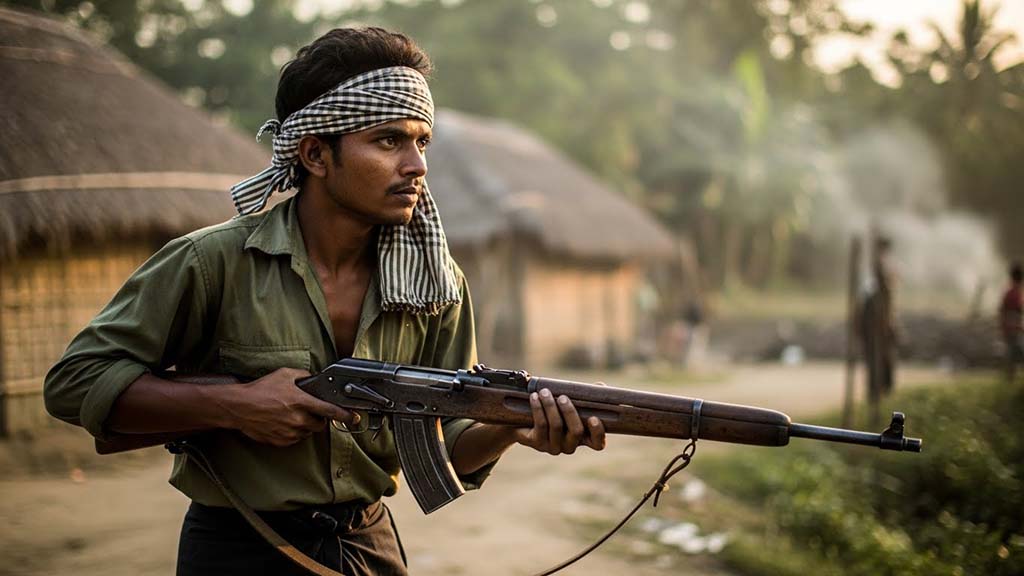
বাংলাদেশি শিক্ষার্থীদের Liberation War of Bangladesh Composition টি খুব সহজ ভাষায় প্রস্তুত করা হয়েছে। গুরুত্বপূর্ণ শব্দগুলো Bold করে প্রতিটি Paragraph এর পরে শব্দার্থসহ হয়েছে, যাতে শিক্ষার্থীরা সহজে বুঝে শিখতে পারে। এখানে ক্লাস স্ট্যান্ডার্ড অনুযায়ী প্যারাগ্রাফগুলো লেখা হয়েছে। তবে শিক্ষার্থী তার চাহিদা ও সক্ষমতা অনুযায়ী ছোট বা বড় যেকোনো প্যারাগ্রাফ বেছে নিয়ে শিখতে পারে। প্রতিটি Composition মানসম্মত ও শেখার জন্য উপযোগী।
Liberation War of Bangladesh Composition – For Class 6 & 7 (200 words)
The Liberation War of Bangladesh was fought in 1971. It was a war for our freedom and independence. Before 1971, Bangladesh was called East Pakistan. The people of East Pakistan were not treated well by West Pakistan. We had to fight to become a free country.
The war started on March 26, 1971. Bangabandhu Sheikh Mujibur Rahman declared independence. Moreover, Pakistani army started attacking innocent people. They killed many men, women, and children. Furthermore, our brave freedom fighters called Mukti Bahini fought against the enemy with great courage.
The war lasted for nine months. In addition, India helped us during the war. Many people lost their lives and homes. However, our freedom fighters never gave up. They fought in every part of Bangladesh. Moreover, three million people became martyrs during this war.
Finally, on December 16, 1971, Pakistan surrendered to Bangladesh and India. Therefore, we got our independence. This day is celebrated as Victory Day every year. The Liberation War is the most important event in our history. We should always remember the sacrifices of our freedom fighters and martyrs.
Key Vocabulary
| English Word | Bangla Meaning |
|---|---|
| Liberation War | মুক্তিযুদ্ধ |
| Freedom | স্বাধীনতা |
| Independence | স্বাধীনতা |
| Bangabandhu | বঙ্গবন্ধু |
| Declared | ঘোষণা করেছিলেন |
| Pakistani | পাকিস্তানি |
| Attacking | আক্রমণ করা |
| Freedom fighters | মুক্তিযোদ্ধা |
| Mukti Bahini | মুক্তিবাহিনী |
| Courage | সাহস |
| Three million | ত্রিশ লক্ষ |
| Martyrs | শহীদ |
| Surrendered | আত্মসমর্পণ করেছিল |
| Victory Day | বিজয় দিবস |
| Important | গুরুত্বপূর্ণ |
| Sacrifices | ত্যাগ |
Liberation War of Bangladesh Composition – For Class 7 & 8 (300 words)
The Liberation War of Bangladesh in 1971 is the most glorious chapter in our history. It was a war for freedom, dignity, and self-determination. After 24 years of exploitation and discrimination by West Pakistan, the people of East Pakistan decided to fight for independence. This nine-month war changed our destiny forever.
The roots of the Liberation War go back to 1947. When Pakistan was created, it had two parts separated by 1,000 miles. Moreover, West Pakistan treated East Pakistan like a colony. They discriminated against our language, culture, and economy. Furthermore, after the election of 1970, when Awami League won, the Pakistani rulers refused to give power. In addition, on March 7, 1971, Bangabandhu Sheikh Mujibur Rahman gave a historic speech that inspired the whole nation.
The war officially started on March 26, 1971, when Bangabandhu declared independence. The Pakistani army started Operation Searchlight and killed thousands of innocent people. Moreover, they burned houses and destroyed villages. Furthermore, our brave freedom fighters, known as Mukti Bahini, formed eleven sectors and fought with great bravery. In addition, India supported us with military and humanitarian help.
The war was very brutal. The Pakistani army killed three million people and dishonored many women. However, our freedom fighters never lost hope. Moreover, students, teachers, farmers, and workers all joined the fight. Furthermore, on December 16, 1971, Pakistan surrendered to the joint forces of Bangladesh and India at Ramna Race Course in Dhaka.
Therefore, December 16 is celebrated as our Victory Day. The Liberation War taught us the value of freedom and unity. We must always honor our martyrs and freedom fighters. Moreover, we should work hard to build the prosperous Bangladesh they dreamed of.
Key Vocabulary
| English Word | Bangla Meaning |
|---|---|
| Liberation War | মুক্তিযুদ্ধ |
| Glorious | গৌরবময় |
| Freedom | স্বাধীনতা |
| Dignity | মর্যাদা |
| Self-determination | আত্মনিয়ন্ত্রণ |
| Exploitation | শোষণ |
| Discrimination | বৈষম্য |
| Independence | স্বাধীনতা |
| Destiny | ভাগ্য |
| Roots | শিকড় |
| Colony | উপনিবেশ |
| Discriminated | বৈষম্য করেছিল |
| Culture | সংস্কৃতি |
| Economy | অর্থনীতি |
| Election | নির্বাচন |
| Awami League | আওয়ামী লীগ |
| Pakistani | পাকিস্তানি |
| Bangabandhu | বঙ্গবন্ধু |
| Historic | ঐতিহাসিক |
| Inspired | অনুপ্রাণিত করেছিল |
| Operation Searchlight | অপারেশন সার্চলাইট |
| Destroyed | ধ্বংস করেছিল |
| Freedom fighters | মুক্তিযোদ্ধা |
| Mukti Bahini | মুক্তিবাহিনী |
| Eleven sectors | এগারো সেক্টর |
| Bravery | বীরত্ব |
| Supported | সমর্থন করেছিল |
| Military | সামরিক |
| Humanitarian | মানবিক |
| Brutal | নিষ্ঠুর |
| Three million | ত্রিশ লক্ষ |
| Dishonored | সম্মানহানি করেছিল |
| Surrendered | আত্মসমর্পণ করেছিল |
| Ramna Race Course | রমনা রেসকোর্স |
| Victory Day | বিজয় দিবস |
| Unity | ঐক্য |
| Martyrs | শহীদ |
| Prosperous | সমৃদ্ধশালী |
Liberation War of Bangladesh Composition – For Class 9 & 10 (400 words)
The Liberation War of Bangladesh in 1971 is the most significant and glorious event in our national history. It was a heroic struggle for freedom, self-determination, and national identity. After enduring 24 years of systematic exploitation, economic deprivation, and cultural suppression by West Pakistan, the people of East Pakistan rose up to create an independent nation. This nine-month war was marked by supreme sacrifices, unparalleled courage, and unwavering determination.
The seeds of the Liberation War were sown in 1947 when Pakistan was created. West Pakistan, despite being geographically separated by 1,000 miles, dominated East Pakistan in every aspect. Moreover, they discriminated against our Bangla language, leading to the Language Movement of 1952. Furthermore, East Pakistan’s resources were used to develop West Pakistan while we remained poor. In addition, political power was always kept in the hands of West Pakistani rulers.
The immediate cause of the war was the general election of 1970. Bangabandhu Sheikh Mujibur Rahman’s Awami League won an absolute majority in the National Assembly. However, the Pakistani military rulers refused to hand over power. Moreover, on March 7, 1971, Bangabandhu delivered his historic speech at Ramna Race Course, which became the call for independence. Furthermore, he said, “The struggle this time is for our freedom, the struggle this time is for our independence.”
On the night of March 25, 1971, the Pakistani army launched Operation Searchlight, a brutal military crackdown on innocent civilians. They killed students, teachers, and common people in Dhaka and other cities. Moreover, Bangabandhu declared independence on March 26, 1971. Furthermore, our brave freedom fighters, the Mukti Bahini, organized themselves into eleven sectors and fought with extraordinary courage. In addition, India provided crucial military and humanitarian support.
The war witnessed unprecedented atrocities. The Pakistani army and their collaborators, the Razakars, Al-Badr, and Al-Shams, committed genocide, killing approximately three million people. Moreover, they violated the honor of about 200,000 women. Furthermore, about ten million people took refuge in India.
Despite the overwhelming odds, our freedom fighters fought bravely. Students, farmers, workers, and people from all walks of life joined the war. Moreover, on December 16, 1971, the Pakistani army surrendered to the joint forces of Bangladesh and India. Therefore, Bangladesh was born as an independent nation.
The Liberation War is our greatest achievement. It teaches us the values of patriotism, sacrifice, and unity. We must remember our martyrs and freedom fighters who gave us this free country. Moreover, we should work together to build the prosperous and developed Bangladesh they dreamed of.
Key Vocabulary
| English Word | Bangla Meaning |
|---|---|
| Liberation War | মুক্তিযুদ্ধ |
| Significant | তাৎপর্যপূর্ণ |
| Glorious | গৌরবময় |
| Heroic | বীরত্বপূর্ণ |
| Freedom | স্বাধীনতা |
| Self-determination | আত্মনিয়ন্ত্রণ |
| National identity | জাতীয় পরিচয় |
| Systematic | পদ্ধতিগত |
| Exploitation | শোষণ |
| Economic | অর্থনৈতিক |
| Deprivation | বঞ্চনা |
| Cultural | সাংস্কৃতিক |
| Suppression | দমন |
| Supreme | সর্বোচ্চ |
| Sacrifices | ত্যাগ |
| Unparalleled | অতুলনীয় |
| Courage | সাহস |
| Unwavering | অটল |
| Determination | দৃঢ় সংকল্প |
| Seeds | বীজ |
| Dominated | আধিপত্য করেছিল |
| Discriminated | বৈষম্য করেছিল |
| Language Movement | ভাষা আন্দোলন |
| Resources | সম্পদ |
| Political | রাজনৈতিক |
| Immediate | তাৎক্ষণিক |
| General election | সাধারণ নির্বাচন |
| Bangabandhu | বঙ্গবন্ধু |
| Awami League | আওয়ামী লীগ |
| Absolute | পরম |
| Majority | সংখ্যাগরিষ্ঠতা |
| National Assembly | জাতীয় পরিষদ |
| Pakistani | পাকিস্তানি |
| Military | সামরিক |
| Historic | ঐতিহাসিক |
| Ramna Race Course | রমনা রেসকোর্স |
| Call | আহ্বান |
| Operation Searchlight | অপারেশন সার্চলাইট |
| Brutal | নিষ্ঠুর |
| Crackdown | দমন |
| Civilians | সাধারণ মানুষ |
| Freedom fighters | মুক্তিযোদ্ধা |
| Mukti Bahini | মুক্তিবাহিনী |
| Eleven sectors | এগারো সেক্টর |
| Extraordinary | অসাধারণ |
| Crucial | অত্যন্ত গুরুত্বপূর্ণ |
| Humanitarian | মানবিক |
| Unprecedented | নজিরবিহীন |
| Atrocities | নৃশংসতা |
| Collaborators | দোসর |
| Razakars | রাজাকার |
| Al-Badr | আল-বদর |
| Al-Shams | আল-শামস |
| Genocide | গণহত্যা |
| Three million | ত্রিশ লক্ষ |
| Violated | লঙ্ঘন করেছিল |
| Honor | সম্মান |
| Refuge | আশ্রয় |
| Overwhelming | অপ্রতিরোধ্য |
| Surrendered | আত্মসমর্পণ করেছিল |
| Joint forces | যৌথ বাহিনী |
| Achievement | অর্জন |
| Patriotism | দেশপ্রেম |
| Sacrifice | ত্যাগ |
| Unity | ঐক্য |
| Martyrs | শহীদ |
| Prosperous | সমৃদ্ধশালী |
| Developed | উন্নত |
Liberation War of Bangladesh Composition – For Class 11 & 12 (500 words)
The Liberation War of Bangladesh in 1971 stands as one of the most remarkable and heroic struggles for freedom and self-determination in modern history. It was a culmination of decades of systematic exploitation, economic deprivation, political marginalization, and cultural suppression by West Pakistan. This nine-month war transformed a subjugated people into a proud, independent nation. The sacrifices made during this period remain unparalleled, with three million martyrs giving their lives and countless others enduring unimaginable suffering to secure our sovereignty.
The historical background of the Liberation War dates back to 1947 when Pakistan was created based on the two-nation theory. Despite being the majority population, the people of East Pakistan faced consistent discrimination in all spheres of life. Moreover, the Language Movement of 1952 was the first major manifestation of Bengali nationalism, when students and common people sacrificed their lives to protect their mother tongue. Furthermore, economic disparities were stark—East Pakistan’s resources, particularly jute and tea, were used to develop West Pakistan while we remained impoverished. In addition, political power remained concentrated in the hands of West Pakistani military and bureaucratic elites, who treated East Pakistan as a colony.
The immediate catalyst for the war was the general election of December 1970. Bangabandhu Sheikh Mujibur Rahman’s Awami League won a landslide victory, securing 160 out of 162 seats from East Pakistan and an absolute majority in the National Assembly. However, the Pakistani military regime, led by General Yahya Khan, refused to transfer power. Moreover, on March 7, 1971, Bangabandhu delivered his iconic speech at the Ramna Race Course (now Suhrawardy Udyan), which became the clarion call for independence. Furthermore, his words, “This time the struggle is for our emancipation, this time the struggle is for our independence,” electrified the entire nation.
On the night of March 25, 1971, the Pakistani army launched Operation Searchlight, a meticulously planned military operation aimed at crushing Bengali resistance. They brutally attacked Dhaka University, killed students and teachers, and perpetrated mass atrocities throughout the country. Moreover, in the early hours of March 26, Bangabandhu declared Bangladesh’s independence before being arrested. Furthermore, the Provisional Government of Bangladesh was formed in Mujibnagar on April 17, 1971, providing formal structure to the liberation struggle.
The war witnessed unprecedented heroism and sacrifice. Our freedom fighters, the Mukti Bahini, organized into eleven sectors under the command of brave military officers and fought guerrilla warfare against a much stronger enemy. Moreover, the Pakistani army and their local collaborators—Razakars, Al-Badr, and Al-Shams—committed heinous crimes including genocide, systematic rape, and ethnic cleansing. Furthermore, approximately three million people were martyred, about 200,000 women were violated, and ten million people took refuge in India.
India played a crucial role in supporting our liberation struggle. The Indian government provided shelter to refugees, trained freedom fighters, and finally intervened militarily in December 1971. Moreover, the joint command of Bangladeshi freedom fighters and Indian forces proved decisive. Furthermore, on December 16, 1971, the Pakistani army surrendered at the Ramna Race Course, and Bangladesh emerged as an independent nation.
The Liberation War represents our collective consciousness and national identity. It teaches us the invaluable lessons of patriotism, unity, sacrifice, and resilience. We owe our existence as a free nation to the martyrs and freedom fighters who fought with unwavering courage. Therefore, it is our sacred duty to preserve the spirit of the Liberation War, uphold democratic values, and build a prosperous, equitable, and inclusive Bangladesh that fulfills the dreams of our founding fathers. The legacy of 1971 must inspire every generation to work tirelessly for the nation’s progress and dignity.
Key Vocabulary
| English Word | Bangla Meaning |
|---|---|
| Liberation War | মুক্তিযুদ্ধ |
| Remarkable | উল্লেখযোগ্য |
| Heroic | বীরত্বপূর্ণ |
| Freedom | স্বাধীনতা |
| Self-determination | আত্মনিয়ন্ত্রণ |
| Culmination | চূড়ান্ত পরিণতি |
| Systematic | পদ্ধতিগত |
| Exploitation | শোষণ |
| Economic | অর্থনৈতিক |
| Deprivation | বঞ্চনা |
| Political | রাজনৈতিক |
| Marginalization | প্রান্তিকীকরণ |
| Cultural | সাংস্কৃতিক |
| Suppression | দমন |
| Transformed | রূপান্তরিত করেছিল |
| Subjugated | পরাধীন |
| Sacrifices | ত্যাগ |
| Unparalleled | অতুলনীয় |
| Three million | ত্রিশ লক্ষ |
| Martyrs | শহীদ |
| Unimaginable | অকল্পনীয় |
| Sovereignty | সার্বভৌমত্ব |
| Historical | ঐতিহাসিক |
| Background | পটভূমি |
| Two-nation theory | দ্বিজাতি তত্ত্ব |
| Majority | সংখ্যাগরিষ্ঠ |
| Population | জনসংখ্যা |
| Consistent | ধারাবাহিক |
| Discrimination | বৈষম্য |
| Spheres | ক্ষেত্র |
| Language Movement | ভাষা আন্দোলন |
| Manifestation | প্রকাশ |
| Nationalism | জাতীয়তাবাদ |
| Sacrificed | আত্মত্যাগ করেছিলেন |
| Disparities | বৈষম্য |
| Resources | সম্পদ |
| Jute | পাট |
| Tea | চা |
| Impoverished | দরিদ্র |
| Concentrated | কেন্দ্রীভূত |
| Military | সামরিক |
| Bureaucratic | আমলাতান্ত্রিক |
| Elites | অভিজাত শ্রেণী |
| Colony | উপনিবেশ |
| Immediate | তাৎক্ষণিক |
| Catalyst | প্রভাবক |
| General election | সাধারণ নির্বাচন |
| Bangabandhu | বঙ্গবন্ধু |
| Awami League | আওয়ামী লীগ |
| Landslide | ভূমিধস |
| Victory | বিজয় |
| Absolute | পরম |
| Majority | সংখ্যাগরিষ্ঠতা |
| National Assembly | জাতীয় পরিষদ |
| Pakistani | পাকিস্তানি |
| Regime | শাসন |
| Iconic | প্রতীকী |
| Ramna Race Course | রমনা রেসকোর্স |
| Clarion call | প্রবল আহ্বান |
| Electrified | বিদ্যুতায়িত করেছিল |
| Operation Searchlight | অপারেশন সার্চলাইট |
| Meticulously | সূক্ষ্মভাবে |
| Planned | পরিকল্পিত |
| Operation | অভিযান |
| Crushing | চূর্ণ করা |
| Resistance | প্রতিরোধ |
| Brutally | নিষ্ঠুরভাবে |
| Perpetrated | সংঘটিত করেছিল |
| Mass | ব্যাপক |
| Atrocities | নৃশংসতা |
| Arrested | গ্রেফতার করা হয়েছিল |
| Provisional | অস্থায়ী |
| Government | সরকার |
| Mujibnagar | মুজিবনগর |
| Formal | আনুষ্ঠানিক |
| Structure | কাঠামো |
| Liberation | মুক্তি |
| Unprecedented | নজিরবিহীন |
| Heroism | বীরত্ব |
| Sacrifice | ত্যাগ |
| Freedom fighters | মুক্তিযোদ্ধা |
| Mukti Bahini | মুক্তিবাহিনী |
| Organized | সংগঠিত |
| Eleven sectors | এগারো সেক্টর |
| Command | নেতৃত্ব |
| Officers | কর্মকর্তা |
| Fought | যুদ্ধ করেছিলেন |
| Guerrilla | গেরিলা |
| Collaborators | দোসর |
| Razakars | রাজাকার |
| Al-Badr | আল-বদর |
| Al-Shams | আল-শামস |
| Heinous | জঘন্য |
| Genocide | গণহত্যা |
| Systematic | পদ্ধতিগত |
| Rape | ধর্ষণ |
| Ethnic cleansing | জাতিগত নিধন |
| Martyred | শহীদ হয়েছিলেন |
| Violated | লঙ্ঘিত |
| Refuge | আশ্রয় |
| Crucial | অত্যন্ত গুরুত্বপূর্ণ |
| Shelter | আশ্রয় |
| Refugees | শরণার্থী |
| Trained | প্রশিক্ষণ দিয়েছিল |
| Intervened | হস্তক্ষেপ করেছিল |
| Militarily | সামরিকভাবে |
| Joint | যৌথ |
| Command | নেতৃত্ব |
| Decisive | নিষ্পত্তিমূলক |
| Surrendered | আত্মসমর্পণ করেছিল |
| Emerged | উত্থিত হয়েছিল |
| Collective | সমষ্টিগত |
| Consciousness | চেতনা |
| National identity | জাতীয় পরিচয় |
| Invaluable | অমূল্য |
| Patriotism | দেশপ্রেম |
| Unity | ঐক্য |
| Resilience | সহনশীলতা |
| Existence | অস্তিত্ব |
| Unwavering | অটল |
| Courage | সাহস |
| Sacred | পবিত্র |
| Duty | কর্তব্য |
| Preserve | সংরক্ষণ করা |
| Spirit | চেতনা |
| Uphold | বহাল রাখা |
| Democratic | গণতান্ত্রিক |
| Prosperous | সমৃদ্ধশালী |
| Equitable | ন্যায়সঙ্গত |
| Inclusive | অন্তর্ভুক্তিমূলক |
| Fulfills | পূরণ করে |
| Founding | প্রতিষ্ঠাতা |
| Legacy | উত্তরাধিকার |
| Inspire | অনুপ্রাণিত করা |
| Tirelessly | অক্লান্তভাবে |
| Progress | অগ্রগতি |
| Dignity | মর্যাদা |
Exam Style FAQ’s on Liberation War of Bangladesh Composition
Q1: When did the Liberation War of Bangladesh take place?
Answer: The Liberation War of Bangladesh took place in 1971. It started on March 26, 1971, and ended on December 16, 1971, lasting nine months. This war resulted in the birth of independent Bangladesh.
Q2: Why did the Liberation War happen?
Answer: The Liberation War happened because West Pakistan systematically exploited, discriminated against, and suppressed East Pakistan for 24 years. After winning the 1970 election, when they refused to transfer power to Bangabandhu Sheikh Mujibur Rahman, the people rose up for independence.
Q3: What was Operation Searchlight?
Answer: Operation Searchlight was a brutal military operation launched by the Pakistani army on March 25, 1971. It aimed to crush Bengali resistance by killing students, intellectuals, and common people throughout East Pakistan.
Q4: Who were the Mukti Bahini?
Answer: Mukti Bahini were the freedom fighters of Bangladesh who fought against the Pakistani army during the Liberation War. They were organized into eleven sectors and fought guerrilla warfare with extraordinary courage and determination.
Q5: What was Bangabandhu’s role in the Liberation War?
Answer: Bangabandhu Sheikh Mujibur Rahman was the leader of the independence movement. His historic March 7, 1971 speech inspired the nation, and he declared independence on March 26, 1971, before being arrested by Pakistani forces.
Q6: How many people died in the Liberation War?
Answer: Approximately three million people were martyred during the Liberation War. In addition, about 200,000 women were violated, and ten million people took refuge in India during the nine-month conflict.
Q7: What role did India play in the Liberation War?
Answer: India played a crucial role by providing shelter to ten million refugees, training freedom fighters, and finally intervening militarily in December 1971. The joint command of Bangladeshi and Indian forces proved decisive in winning the war.
Q8: Who were the Razakars, Al-Badr, and Al-Shams?
Answer: They were local collaborators who sided with the Pakistani army during the Liberation War. They committed heinous crimes including genocide, torture, and killing of intellectuals, helping the Pakistani forces suppress the independence movement.
Q9: When did Bangladesh achieve independence?
Answer: Bangladesh achieved independence on December 16, 1971, when the Pakistani army surrendered to the joint forces of Bangladesh and India at Ramna Race Course (now Suhrawardy Udyan) in Dhaka. This day is celebrated as Victory Day.
Q10: Why is the Liberation War important for Bangladesh?
Answer: The Liberation War is the foundation of our national identity and sovereignty. It teaches us the values of patriotism, sacrifice, unity, and courage. It represents our collective consciousness and the supreme sacrifices made by martyrs and freedom fighters for our independence.