



বাংলাদেশি শিক্ষার্থীদের Civic Engagement Paragraph টি খুব সহজ ভাষায় প্রস্তুত করা হয়েছে। গুরুত্বপূর্ণ শব্দগুলো Bold করে প্রতিটি Paragraph এর পরে শব্দার্থসহ হয়েছে, যাতে শিক্ষার্থীরা সহজে বুঝে শিখতে পারে। এখানে ক্লাস স্ট্যান্ডার্ড অনুযায়ী প্যারাগ্রাফগুলো লেখা হয়েছে। তবে শিক্ষার্থী তার চাহিদা ও সক্ষমতা অনুযায়ী ছোট বা বড় যেকোনো প্যারাগ্রাফ বেছে নিয়ে শিখতে পারে। প্রতিটি Paragraph মানসম্মত ও শেখার জন্য উপযোগী।
Civic Engagement Paragraph – For Class 6 & 7 (150+ words)
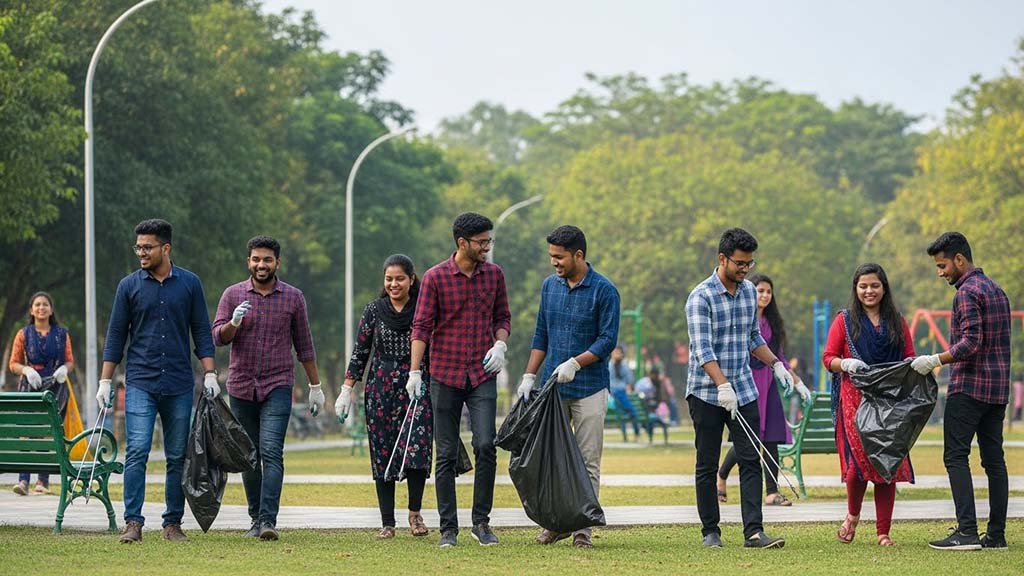
Civic engagement means taking part in activities that help our community and country. It is about being a good citizen and caring for others. When we join in community work, we make our society better. For example, students can clean their school or local park. They can help old people cross the road. Also, they can plant trees in their neighborhood. Voting is another important way to show civic engagement. When people vote, they choose their leaders. Moreover, attending community meetings helps us understand local problems. We can share our ideas and find solutions together. Volunteering at events like book fairs or health camps is also civic engagement. It teaches us to work as a team. Furthermore, following rules and respecting others are simple ways to be engaged. When everyone participates, the community becomes strong and happy. So, civic engagement is our duty as responsible citizens. It helps build a better Bangladesh for all.
Vocabulary Table:
| Word | Bangla Meaning |
|---|---|
| Civic engagement | নাগরিক অংশগ্রহণ |
| Community | সমাজ/এলাকা |
| Country | দেশ |
| Citizen | নাগরিক |
| Voting | ভোট দেওয়া |
| Community meetings | সামাজিক সভা |
| Volunteering | স্বেচ্ছাসেবা |
Civic Engagement Paragraph – For Class 7 & 8 (250+ words)
Civic engagement is the active participation of citizens in improving their society and nation. It means taking responsibility for making our community a better place to live. When people engage in civic activities, they show they care about others and their surroundings. There are many ways to practice civic engagement in our daily lives. For example, students can participate in cleanliness drives in their schools and neighborhoods. They can organize awareness programs about health, education, or environment. Also, young people can help in literacy programs to teach those who cannot read or write. Volunteering during natural disasters like floods is another important form of civic engagement. Moreover, attending local meetings and expressing opinions on community issues shows active citizenship. When citizens vote in elections, they participate in choosing honest leaders who will work for development. Furthermore, respecting traffic rules and helping disabled people are simple acts of civic duty. Social media can also be used for civic engagement by spreading awareness about important causes. However, we must use it responsibly and share only truthful information. Additionally, protecting public property and keeping our environment clean reflect our commitment to society. When young people engage in these activities, they learn teamwork and leadership skills. They understand the value of service and sacrifice. Therefore, civic engagement is essential for building a strong, developed, and united Bangladesh. It creates responsible citizens who care for their nation and work together for progress and peace.
Vocabulary Table:
| Word | Bangla Meaning |
|---|---|
| Civic engagement | নাগরিক অংশগ্রহণ |
| Participation | অংশগ্রহণ |
| Society | সমাজ |
| Nation | জাতি |
| Responsibility | দায়িত্ব |
| Cleanliness drives | পরিচ্ছন্নতা অভিযান |
| Awareness programs | সচেতনতা কর্মসূচি |
| Literacy programs | সাক্ষরতা কর্মসূচি |
| Volunteering | স্বেচ্ছাসেবা |
| Local meetings | স্থানীয় সভা |
| Elections | নির্বাচন |
| Social media | সামাজিক যোগাযোগ মাধ্যম |
Civic Engagement Paragraph – For Class 9 & 10 (300+ words)
Civic engagement refers to the active involvement of individuals in activities that address issues of public concern and contribute to the common good of society. It is a fundamental aspect of democracy where citizens take responsibility for their community’s welfare and development. Through civic engagement, people can influence government policies, solve local problems, and create positive social change. There are various forms of civic engagement practiced in Bangladesh and around the world. Voting in elections is the most basic and important form, as it allows citizens to choose their representatives and hold them accountable. Beyond voting, people can participate in community organizations, youth clubs, and non-governmental organizations (NGOs) that work for social causes. For example, many students in Bangladesh volunteer with organizations working on education, health, and women’s empowerment. Also, attending town hall meetings and public hearings enables citizens to voice their opinions on local issues like road construction or waste management. Moreover, advocacy and activism are powerful tools for civic engagement. When people raise their voices against injustice or corruption, they contribute to a fair society. Furthermore, digital civic engagement has become increasingly important in modern times. Through online petitions, social campaigns, and digital platforms, young people can mobilize support for important causes quickly. However, responsible use of technology is crucial to avoid spreading misinformation. Additionally, participating in blood donation camps, tree plantation drives, and disaster relief efforts demonstrates active citizenship. Students can also engage civically by starting clubs focused on environmental protection or cultural preservation in their schools. When citizens are actively engaged, communities become more inclusive and resilient. They develop stronger bonds and work together to solve problems effectively. Civic engagement also promotes transparency in governance and reduces corruption by keeping officials under public scrutiny. It empowers marginalized groups by giving them a voice in decision-making processes. Therefore, civic engagement is not just a right but a duty of every citizen. It strengthens democratic values, builds social capital, and ensures sustainable development. By actively participating in civic life, we can build a prosperous, just, and harmonious Bangladesh for future generations.
Vocabulary Table:
| Word | Bangla Meaning |
|---|---|
| Civic engagement | নাগরিক অংশগ্রহণ |
| Involvement | সংযুক্তি/জড়িত হওয়া |
| Public concern | জনস্বার্থ |
| Common good | সাধারণ কল্যাণ |
| Democracy | গণতন্ত্র |
| Responsibility | দায়িত্ব |
| Welfare | কল্যাণ |
| Government policies | সরকারি নীতি |
| Voting | ভোট প্রদান |
| Accountable | জবাবদিহিমূলক |
| Community organizations | সামাজিক সংগঠন |
| Youth clubs | যুব ক্লাব |
| Non-governmental organizations | বেসরকারি সংস্থা |
| Town hall meetings | নগর সভা |
| Public hearings | জনশুনানি |
| Advocacy | সমর্থন/পক্ষ সমর্থন |
| Activism | সক্রিয়তাবাদ |
| Online petitions | অনলাইন আবেদন |
| Social campaigns | সামাজিক প্রচারণা |
| Misinformation | ভুল তথ্য |
| Blood donation camps | রক্তদান শিবির |
| Tree plantation drives | বৃক্ষরোপণ অভিযান |
| Disaster relief efforts | দুর্যোগ 構ত্রাণ প্রচেষ্টা |
| Inclusive | অন্তর্ভুক্তিমূলক |
| Resilient | স্থিতিস্থাপক |
| Transparency | স্বচ্ছতা |
Civic Engagement Paragraph – For Class 11 & 12 (400+ words)
Civic engagement represents the multifaceted participation of citizens in the political, social, and cultural life of their communities, aimed at improving collective well-being and strengthening democratic institutions. It encompasses a wide range of activities through which individuals express their civic duty, exercise their rights, and contribute to the public sphere. In a developing nation like Bangladesh, civic engagement plays a crucial role in addressing socio-economic challenges, promoting social justice, and ensuring sustainable development. The concept extends far beyond merely casting votes during elections; it includes active involvement in policy-making processes, grassroots movements, community service, and advocacy for marginalized groups. Political participation forms the cornerstone of civic engagement in any democracy. Citizens exercise this through voting, joining political parties, campaigning for candidates, and holding elected officials accountable for their actions. However, civic engagement also manifests in non-political forms that are equally significant. For instance, volunteering with civil society organizations, participating in neighborhood associations, and contributing to charitable causes all represent meaningful civic activities. Moreover, youth engagement has become increasingly vital in contemporary Bangladesh. Young people organize climate strikes, lead anti-corruption movements, and use digital platforms to mobilize public opinion on critical issues. Furthermore, civic engagement promotes social cohesion by bringing together people from diverse backgrounds to work toward common goals. When citizens collaborate on community projects like establishing libraries, organizing health camps, or improving local infrastructure, they build trust and solidarity. Additionally, civic engagement serves as a check on government power and helps prevent authoritarianism. Through freedom of expression, peaceful protests, and investigative journalism, citizens can expose wrongdoing and demand reforms. The rise of digital technology has transformed civic engagement in profound ways. Social media platforms, online forums, and mobile applications enable citizens to organize, communicate, and advocate more efficiently than ever before. However, this digital revolution also presents challenges, including echo chambers, polarization, and the spread of fake news. Therefore, digital literacy and critical thinking skills are essential for effective civic engagement in the 21st century. Educational institutions play a pivotal role in fostering civic values among students. Schools and universities should integrate civic education into their curricula, teaching students about their rights, responsibilities, and the importance of active citizenship. When students participate in student governments, debate clubs, and community service programs, they develop leadership qualities and social consciousness. Furthermore, civic engagement contributes to economic development by creating social capital and promoting entrepreneurship within communities. Research shows that societies with high levels of civic engagement experience better governance, lower corruption, and greater economic prosperity. Therefore, civic engagement is indispensable for building a progressive, equitable, and democratic Bangladesh. It empowers citizens, strengthens institutions, and ensures that development benefits all segments of society, particularly the poor and marginalized. By actively participating in civic life, we fulfill our obligations as responsible citizens and contribute to the collective advancement of our nation.
Vocabulary Table:
| Word | Bangla Meaning |
|---|---|
| Civic engagement | নাগরিক অংশগ্রহণ |
| Participation | অংশগ্রহণ |
| Political | রাজনৈতিক |
| Social | সামাজিক |
| Cultural | সাংস্কৃতিক |
| Well-being | কল্যাণ |
| Democratic institutions | গণতান্ত্রিক প্রতিষ্ঠান |
| Civic duty | নাগরিক কর্তব্য |
| Public sphere | জনপরিসর |
| Socio-economic challenges | আর্থ-সামাজিক চ্যালেঞ্জ |
| Social justice | সামাজিক ন্যায়বিচার |
| Sustainable development | টেকসই উন্নয়ন |
| Policy-making processes | নীতি প্রণয়ন প্রক্রিয়া |
| Grassroots movements | তৃণমূল আন্দোলন |
| Advocacy | সমর্থন/পক্ষ সমর্থন |
| Political participation | রাজনৈতিক অংশগ্রহণ |
| Political parties | রাজনৈতিক দল |
| Accountable | জবাবদিহিমূলক |
| Civil society organizations | নাগরিক সমাজ সংগঠন |
| Neighborhood associations | পাড়া সমিতি |
| Charitable causes | দাতব্য কাজ |
| Youth engagement | যুব অংশগ্রহণ |
| Climate strikes | জলবায়ু ধর্মঘট |
| Anti-corruption movements | দুর্নীতিবিরোধী আন্দোলন |
| Digital platforms | ডিজিটাল প্ল্যাটফর্ম |
| Social cohesion | সামাজিক সংহতি |
| Solidarity | সংহতি |
| Authoritarianism | একনায়কতন্ত্র |
| Freedom of expression | মতপ্রকাশের স্বাধীনতা |
| Peaceful protests | শান্তিপূর্ণ বিক্ষোভ |
| Investigative journalism | অনুসন্ধানী সাংবাদিকতা |
| Social media platforms | সামাজিক যোগাযোগ মাধ্যম |
| Echo chambers | প্রতিধ্বনি কক্ষ |
| Polarization | মেরুকরণ |
| Fake news | মিথ্যা সংবাদ |
| Digital literacy | ডিজিটাল সাক্ষরতা |
| Critical thinking | সমালোচনামূলক চিন্তা |
| Civic education | নাগরিক শিক্ষা |
| Student governments | ছাত্র সরকার |
| Debate clubs | বিতর্ক ক্লাব |
| Economic development | অর্থনৈতিক উন্নয়ন |
| Social capital | সামাজিক পুঁজি |
| Entrepreneurship | উদ্যোক্তা |
FAQ Section on Civic Engagement Paragraph
Q1: What is civic engagement?
Answer: Civic engagement is when citizens actively participate in community activities to improve society. It includes voting, volunteering, and helping others for the common good.
Q2: Why is civic engagement important for students?
Answer: Students learn responsibility, teamwork, and leadership through civic engagement. It helps them become aware citizens who care about their community and country.
Q3: What are some examples of civic engagement in Bangladesh?
Answer: Examples include volunteering in cleanliness drives, planting trees, helping in disaster relief, and participating in awareness programs. Students can also join youth clubs and community organizations.
Q4: How does voting relate to civic engagement?
Answer: Voting is a fundamental form of civic engagement where citizens choose their leaders. It allows people to participate in democracy and hold officials accountable.
Q5: Can young people participate in civic engagement?
Answer: Yes, young people can participate through school clubs, community service, online campaigns, and volunteering. They are crucial for bringing fresh ideas and energy to civic activities.
Q6: What is the difference between civic engagement and volunteering?
Answer: Volunteering is one form of civic engagement focused on unpaid service. Civic engagement is broader and includes voting, advocacy, activism, and community participation.
Q7: How does technology help in civic engagement?
Answer: Technology enables citizens to organize campaigns, spread awareness, sign online petitions, and communicate quickly. Social media platforms help mobilize support for important causes.
Q8: What role do NGOs play in civic engagement?
Answer: NGOs organize programs for education, health, and social development. They provide opportunities for citizens to volunteer and contribute to community welfare.
Q9: How does civic engagement strengthen democracy?
Answer: Civic engagement keeps government accountable, promotes transparency, and ensures citizen participation in decision-making. It prevents corruption and protects democratic values.
Q10: What are some challenges to civic engagement in Bangladesh?
Answer: Challenges include lack of awareness, limited resources, political obstacles, and digital misinformation. However, education and youth participation can overcome these barriers.