





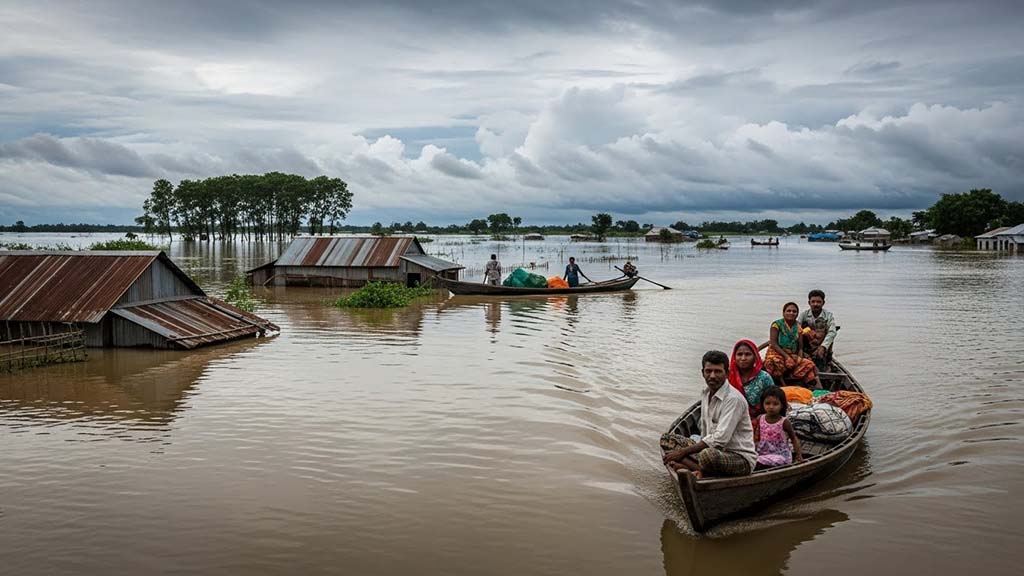
The Flood in Bangladesh Composition for Class 6 & 7 (200 words)
Introduction: Flood is a common natural disaster in Bangladesh. Every year, many parts of our country go under water during the rainy season. Floods bring a lot of suffering to people. Bangladesh faces floods because of heavy rain and overflowing rivers. The low land and river system make flooding a regular problem here. Floods destroy homes, crops, and roads.
Causes of Floods: There are several causes of floods in Bangladesh. Heavy rainfall during monsoon is the main cause. Rivers like Padma, Meghna, and Jamuna overflow and flood nearby areas. Bangladesh is a low-lying country, so water cannot drain out easily. Melting snow from the Himalayas also increases river water. Cutting down trees and filling up ponds make floods worse.
Effects of Floods: Floods cause terrible problems for people. Thousands of people lose their homes and become homeless. Crops get damaged, causing food shortage. Roads and bridges get broken. Many people and animals die. After floods, diseases like diarrhea and fever spread quickly. Schools close and children cannot study.
Conclusion: Floods are a big problem for Bangladesh. We need to plant more trees, build strong embankments, and stop river pollution. By working together, we can reduce flood damage.
Key Vocabulary:
| English Word | Bangla Meaning |
|---|---|
| natural disaster | প্রাকৃতিক দুর্যোগ |
| suffering | দুর্ভোগ |
| destroy | ধ্বংস করা |
| rainfall | বৃষ্টিপাত |
| drain | নিষ্কাশন হওয়া |
| homeless | গৃহহীন |
| damaged | ক্ষতিগ্রস্ত |
| diarrhea | ডায়রিয়া |
| embankments | বাঁধ |
| pollution | দূষণ |
The Flood in Bangladesh Composition for Class 7 & 8 (300 words)
Introduction: Flood is one of the most devastating natural disasters in Bangladesh. Almost every year, different parts of the country experience floods during the monsoon season. Being a riverine country with many rivers and low-lying land, Bangladesh is highly vulnerable to flooding. Floods bring immense suffering to millions of people. They disrupt normal life, destroy property, and cause economic loss. Understanding the causes and effects of floods helps us prepare better and reduce damage.
Causes of Floods: Bangladesh faces floods due to various reasons. The main cause is heavy rainfall during the monsoon months from June to September. The country has about 230 rivers that carry huge amounts of water during this time. When rivers cannot hold excess water, they overflow and flood the surrounding areas. Bangladesh receives water from upstream countries, especially India, which adds to the flood situation. The melting of Himalayan snow increases river water levels. Deforestation and unplanned urbanization have made floods worse. When trees are cut down, soil cannot absorb water properly. Filling up water bodies and building on floodplains also increase flooding. Poor drainage systems in cities cause waterlogging during heavy rains.
Effects of Floods: Floods create terrible problems for Bangladesh. Millions of people lose their homes and livelihood. Agricultural lands go under water, destroying rice, jute, and vegetable crops. This leads to food shortage and higher prices. Roads, bridges, schools, and hospitals get damaged, making transportation and services difficult. Many people die from drowning or flood-related diseases. After floods, contaminated water spreads diseases like cholera, diarrhea, and skin infections. Children cannot attend school for weeks. The economy suffers badly as business activities stop.
Conclusion: Floods are a serious challenge for Bangladesh. We must build strong embankments, improve drainage systems, plant trees, and create early warning systems. The government and people should work together to make Bangladesh more resilient against floods and protect lives and property.
Key Vocabulary:
| English Word | Bangla Meaning |
|---|---|
| devastating | ধ্বংসাত্মক |
| vulnerable | ঝুঁকিপূর্ণ |
| immense | বিশাল |
| disrupt | ব্যাহত করা |
| economic | আর্থিক |
| surrounding | পার্শ্ববর্তী |
| deforestation | বন উজাড় |
| urbanization | নগরায়ণ |
| floodplains | বন্যাপ্রবণ সমতল ভূমি |
| drainage | নিষ্কাশন |
| waterlogging | জলাবদ্ধতা |
| livelihood | জীবিকা |
| shortage | ঘাটতি |
| transportation | পরিবহন |
| flood-related | বন্যা-সম্পর্কিত |
| contaminated | দূষিত |
| diarrhea | ডায়রিয়া |
| economy | অর্থনীতি |
| resilient | স্থিতিস্থাপক |
The Flood in Bangladesh Composition for SSC or Class 9 & 10 (400 words)
Introduction: Bangladesh is one of the most flood-prone countries in the world. Located in the delta region of three major rivers—the Ganges, Brahmaputra, and Meghna—the country experiences floods almost every year. Floods are a regular phenomenon that affects millions of people and causes tremendous damage to life, property, and the economy. While floods are natural events, their intensity and frequency have increased in recent years due to climate change and human activities. Understanding flood patterns, causes, and impacts is crucial for developing effective strategies to manage this recurring disaster. Bangladesh’s geographical location and flat terrain make it particularly susceptible to flooding, affecting approximately 20-25% of the country annually.
Causes of Floods in Bangladesh: Several factors contribute to flooding in Bangladesh. The primary cause is excessive monsoon rainfall between June and September. During this period, heavy rains fill up rivers beyond their capacity. Bangladesh has a complex river system with over 230 rivers, and when they overflow, vast areas get submerged. The country receives about 80% of its annual rainfall during the monsoon season. Another significant cause is upstream water flow from neighboring countries, particularly India and Nepal. During heavy rains in the Himalayan region and the Indian states, massive amounts of water flow into Bangladesh through various rivers. Deforestation in the upstream areas reduces the land’s ability to absorb water, increasing runoff. The melting of Himalayan glaciers due to global warming adds extra water to rivers. Within Bangladesh, urbanization and industrial development have reduced natural drainage systems. Filling up wetlands, ponds, and canals for construction prevents natural water absorption. River siltation reduces river depth and water-carrying capacity. Poor river management and inadequate embankments also worsen the situation. Climate change has increased the unpredictability of rainfall patterns, leading to sudden flash floods.
Effects of Floods in Bangladesh: The impacts of floods are devastating and widespread. Millions of people become homeless and seek shelter in relief camps or on higher ground. Agricultural devastation is severe, with rice paddies, vegetable fields, and fish farms completely destroyed. Bangladesh loses thousands of crores of taka in crop damage annually. Food insecurity follows floods, causing prices to rise sharply. Infrastructure damage includes roads, bridges, schools, hospitals, and government buildings. Transportation becomes impossible, isolating affected communities. Floods claim many lives through drowning and subsequent health crises. Contaminated water supplies lead to outbreaks of waterborne diseases like cholera, diarrhea, and typhoid. Children suffer from malnutrition as food becomes scarce. Education is severely disrupted as schools remain closed for extended periods. The livestock sector suffers heavy losses. Floods also cause psychological trauma among affected populations.
Conclusion: Floods remain a major challenge for Bangladesh’s development. While we cannot stop floods completely, we can minimize their impact through better planning. Building stronger embankments, improving early warning systems, preserving wetlands, controlling deforestation, and implementing sustainable river management are essential steps. International cooperation with upstream countries for fair water sharing is also necessary. By combining traditional knowledge with modern technology, Bangladesh can build greater resilience against floods and protect its people and prosperity.
Key Vocabulary:
| English Word | Bangla Meaning |
|---|---|
| phenomenon | ঘটনা |
| tremendous | প্রচণ্ড |
| economy | অর্থনীতি |
| intensity | তীব্রতা |
| frequency | ঘনত্ব/পুনরাবৃত্তি |
| crucial | অত্যন্ত গুরুত্বপূর্ণ |
| effective | কার্যকর |
| susceptible | সংবেদনশীল |
| monsoon | বর্ষাকাল |
| capacity | ধারণক্ষমতা |
| deforestation | বন উজাড় |
| runoff | প্রবাহিত পানি |
| urbanization | নগরায়ণ |
| industrial | শিল্প |
| drainage | নিষ্কাশন |
| canals | খাল |
| siltation | পলি জমা |
| management | ব্যবস্থাপনা |
| inadequate | অপর্যাপ্ত |
| unpredictability | অনিশ্চয়তা |
| flash floods | আকস্মিক বন্যা |
| devastating | ধ্বংসাত্মক |
| widespread | ব্যাপক |
| shelter | আশ্রয় |
| devastation | ধ্বংসলীলা |
| crores | কোটি |
| insecurity | নিরাপত্তাহীনতা |
| infrastructure | অবকাঠামো |
| isolating | বিচ্ছিন্ন করা |
| crises | সংকট |
| contaminated | দূষিত |
| outbreaks | প্রাদুর্ভাব |
| diarrhea | ডায়রিয়া |
| typhoid | টাইফয়েড |
| malnutrition | অপুষ্টি |
| scarce | দুর্লভ |
| livestock | গবাদিপশু |
| psychological | মানসিক |
| minimize | কমিয়ে আনা |
| preserving | সংরক্ষণ করা |
| sustainable | টেকসই |
| international cooperation | আন্তর্জাতিক সহযোগিতা |
| traditional | ঐতিহ্যবাহী |
| resilience | স্থিতিস্থাপকতা |
| prosperity | সমৃদ্ধি |
The Flood in Bangladesh Composition for HSC or Class 11 & 12 (500 words)
Introduction: Bangladesh is recognized globally as one of the most flood-vulnerable nations, with flooding being an almost annual occurrence that shapes the country’s socio-economic landscape. Situated in the largest delta in the world, formed by the confluence of the Ganges, Brahmaputra, and Meghna rivers, Bangladesh’s geographical position makes it exceptionally susceptible to flooding. Approximately 80% of the country consists of floodplains and delta regions, with much of the land lying only a few meters above sea level. While floods are a natural part of Bangladesh’s ecological cycle and have historically enriched agricultural lands through silt deposition, their increasing frequency, intensity, and unpredictability in recent decades have transformed them into major humanitarian and economic catastrophes. Climate change, unplanned urbanization, and upstream water management issues have exacerbated this age-old challenge. Understanding the complex dynamics of flooding in Bangladesh is essential for developing comprehensive strategies to protect the lives and livelihoods of millions.
Causes of Floods in Bangladesh: The causes of flooding in Bangladesh are multifaceted and interconnected. Geographically, Bangladesh’s location in a funnel-shaped river basin creates a natural convergence point for massive water volumes from upstream regions. During the monsoon season (June-September), the country receives exceptionally heavy rainfall, with some areas recording over 3,000mm annually. This seasonal precipitation coincides with snow melt from the Himalayas, dramatically increasing river discharge. The flat topography and low elevation prevent efficient water drainage, causing water to spread across vast areas. Anthropogenic factors have significantly worsened the situation. Deforestation in the upstream catchment areas of India, Nepal, and Bhutan has reduced natural water retention capacity, increasing surface runoff. River sedimentation caused by soil erosion has reduced river depth and flow capacity. Within Bangladesh, rapid urbanization has led to the destruction of wetlands, filling of water bodies, and encroachment on river banks and floodplains. Poor urban planning and inadequate drainage systems cause severe waterlogging in cities like Dhaka and Chittagong. The construction of embankments and polders has sometimes disrupted natural water flow patterns. Climate change has introduced greater variability in rainfall patterns, causing both prolonged droughts and sudden intense rainfall. Transboundary water issues, particularly the unilateral construction of dams and barrages in upstream countries, have created artificial flood peaks. River morphology changes, including river course alteration and bank erosion, contribute to flooding. The poor maintenance of existing flood control infrastructure and river dredging neglect further compound the problem.
Effects of Floods in Bangladesh: The ramifications of floods in Bangladesh are profound and far-reaching. Humanitarianly, floods displace millions annually, with the 1998 flood affecting approximately 30 million people. Loss of life occurs through drowning, post-flood diseases, and malnutrition. Economically, floods cause substantial damage, sometimes exceeding billions of dollars. Agricultural losses are catastrophic, destroying rice, jute, and vegetable crops during critical growing periods. Food insecurity and inflation follow major floods. Infrastructure devastation includes roads, bridges, schools, and hospitals, impeding recovery efforts. Health impacts are severe, with contaminated water causing epidemics of cholera, diarrhea, typhoid, and hepatitis. Children suffer from malnutrition and interrupted education. The livestock and fisheries sectors experience heavy losses. Floods also cause environmental damage, including soil degradation, sedimentation of water bodies, and loss of biodiversity. Psychologically, affected populations experience trauma, anxiety, and depression. Women and children are particularly vulnerable to exploitation during displacement. The long-term socio-economic impact includes increased poverty, migration to urban areas, and loss of productive assets. Cultural heritage sites and historical structures suffer irreparable damage.
Conclusion: Addressing Bangladesh’s flood challenge requires a holistic and multi-dimensional approach. Structural measures like strengthening embankments, constructing retention basins, and improving drainage systems must be complemented by non-structural approaches including early warning systems, community-based disaster preparedness, and sustainable land use planning. Regional cooperation with upstream countries for equitable water sharing and coordinated river basin management is imperative. Climate adaptation strategies, including building climate-resilient infrastructure and diversifying livelihoods, are essential. Preserving wetlands and natural drainage channels, controlling deforestation, and implementing strict regulations against river encroachment will reduce flood risks. Investment in technology for accurate flood forecasting and real-time monitoring can save lives. Education and awareness programs can enhance community resilience. While Bangladesh cannot eliminate floods entirely, through integrated planning, international cooperation, and sustained investment in flood management, the country can significantly reduce their devastating impact and protect its people’s lives and livelihoods.
Key Vocabulary:
| English Word | Bangla Meaning |
|---|---|
| occurrence | ঘটনা |
| socio-economic | আর্থ-সামাজিক |
| confluence | সংযোগস্থল |
| susceptible | ঝুঁকিপূর্ণ |
| floodplains | প্লাবনভূমি |
| ecological | পরিবেশগত |
| enriched | সমৃদ্ধ করেছে |
| silt deposition | পলি সঞ্চয় |
| frequency | পুনরাবৃত্তি |
| intensity | তীব্রতা |
| unpredictability | অনিশ্চয়তা |
| humanitarian | মানবিক |
| catastrophes | বিপর্যয় |
| exacerbated | আরও খারাপ করেছে |
| dynamics | গতিবিদ্যা |
| essential | অপরিহার্য |
| comprehensive | ব্যাপক |
| livelihoods | জীবিকা |
| multifaceted | বহুমুখী |
| interconnected | আন্তঃসংযুক্ত |
| funnel-shaped | ফানেল-আকৃতির |
| convergence | সমাবেশ |
| seasonal | মৌসুমী |
| precipitation | বৃষ্টিপাত |
| topography | ভূ-প্রকৃতি |
| elevation | উচ্চতা |
| drainage | নিষ্কাশন |
| anthropogenic | মানবসৃষ্ট |
| deforestation | বন উজাড় |
| catchment | অববাহিকা |
| retention | ধারণ |
| surface runoff | ভূপৃষ্ঠের পানি প্রবাহ |
| sedimentation | পলি জমা |
| erosion | ক্ষয় |
| urbanization | নগরায়ণ |
| encroachment | দখল |
| inadequate | অপর্যাপ্ত |
| waterlogging | জলাবদ্ধতা |
| embankments | বাঁধ |
| polders | পোল্ডার |
| variability | পরিবর্তনশীলতা |
| prolonged | দীর্ঘস্থায়ী |
| transboundary | আন্তঃসীমান্ত |
| unilateral | একতরফা |
| artificial | কৃত্রিম |
| morphology | আকৃতিবিদ্যা |
| alteration | পরিবর্তন |
| infrastructure | অবকাঠামো |
| dredging | ড্রেজিং |
| neglect | অবহেলা |
| compound | জটিল করা |
| ramifications | প্রভাব |
| profound | গভীর |
| far-reaching | সুদূরপ্রসারী |
| displace | উচ্ছেদ করা |
| post-flood | বন্যা-পরবর্তী |
| malnutrition | অপুষ্টি |
| substantial | যথেষ্ট |
| catastrophic | বিপর্যয়কর |
| food insecurity | খাদ্য নিরাপত্তাহীনতা |
| inflation | মুদ্রাস্ফীতি |
| devastation | ধ্বংসলীলা |
| impeding | বাধা দেওয়া |
| contaminated | দূষিত |
| epidemics | মহামারী |
| diarrhea | ডায়রিয়া |
| typhoid | টাইফয়েড |
| hepatitis | হেপাটাইটিস |
| livestock | গবাদিপশু |
| environmental | পরিবেশগত |
| degradation | অবক্ষয় |
| biodiversity | জীববৈচিত্র্য |
| psychologically | মানসিকভাবে |
| vulnerable | ঝুঁকিপূর্ণ |
| exploitation | শোষণ |
| poverty | দারিদ্র্য |
| productive | উৎপাদনশীল |
| cultural heritage | সাংস্কৃতিক ঐতিহ্য |
| holistic | সামগ্রিক |
| multi-dimensional | বহুমাত্রিক |
| structural | কাঠামোগত |
| retention | ধারণ |
| complemented | পরিপূরক |
| non-structural | অ-কাঠামোগত |
| community-based | সম্প্রদায়-ভিত্তিক |
| sustainable | টেকসই |
| regional cooperation | আঞ্চলিক সহযোগিতা |
| equitable | ন্যায়সঙ্গত |
| coordinated | সমন্বিত |
| imperative | অত্যাবশ্যক |
| adaptation | অভিযোজন |
| climate-resilient | জলবায়ু-সহনশীল |
| diversifying | বৈচিত্র্যকরণ |
| preserving | সংরক্ষণ |
| regulations | নিয়মকানুন |
| accurate | নির্ভুল |
| forecasting | পূর্বাভাস |
| community resilience | সম্প্রদায় স্থিতিস্থাপকতা |
| integrated | সমন্বিত |
| international cooperation | আন্তর্জাতিক সহযোগিতা |
| sustained | অব্যাহত |
| devastating | ধ্বংসাত্মক |
Exam-Style FAQs on The Flood in Bangladesh
Q1: Why is Bangladesh called a flood-prone country? Answer: Bangladesh is flood-prone because it is located in a river delta with low-lying land, has over 230 rivers, receives heavy monsoon rainfall, and gets upstream water from neighboring countries.
Q2: What are the main causes of floods in Bangladesh? Answer: The main causes are excessive monsoon rainfall, river overflow, upstream water flow from India and Nepal, deforestation, poor drainage systems, and climate change.
Q3: Which months are considered the flood season in Bangladesh? Answer: The flood season in Bangladesh is typically from June to September during the monsoon period when heavy rainfall occurs.
Q4: How do floods affect agriculture in Bangladesh? Answer: Floods destroy rice paddies, vegetable fields, and other crops, causing food shortage, increasing prices, and creating economic losses worth thousands of crores of taka.
Q5: What diseases spread after floods? Answer: Waterborne diseases like cholera, diarrhea, typhoid, hepatitis, and skin infections spread rapidly after floods due to contaminated water supplies.
Q6: How does deforestation contribute to flooding? Answer: Deforestation reduces the land’s ability to absorb rainwater, increases surface runoff, and causes soil erosion, which leads to more severe flooding.
Q7: What are some solutions to reduce flood damage in Bangladesh? Answer: Solutions include building strong embankments, improving drainage systems, planting trees, preserving wetlands, developing early warning systems, and international cooperation for water management.
Q8: How do floods affect education in Bangladesh? Answer: Floods close schools for extended periods, damage educational infrastructure, disrupt examinations, and prevent children from attending classes, causing long-term educational setbacks.
Q9: What is the economic impact of floods in Bangladesh? Answer: Floods cause billions of dollars in damage, destroy crops and infrastructure, disrupt business activities, increase unemployment, and push many families into poverty.
Q10: Why is international cooperation important for flood management? Answer: International cooperation is important because Bangladesh shares rivers with upstream countries like India and Nepal, so coordinated water management and fair water sharing can reduce flood severity.