



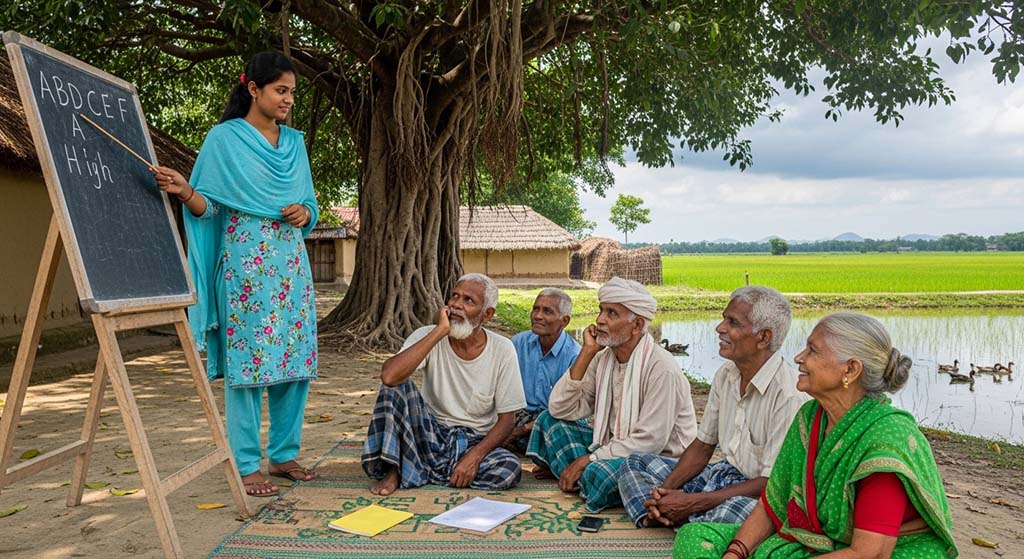
Eradicate Illiteracy from Bangladesh – Dialogue for Class 6 & 7 (100 words)
Mina: Hello Rahim! Our teacher said illiteracy is a big problem in Bangladesh. What does it mean?
Rahim: Illiteracy means people cannot read or write. They don’t go to school.
Mina: Why is it bad?
Rahim: Illiterate people cannot get good jobs. They cannot read signs or write letters. Their life becomes hard.
Mina: How can we solve this problem?
Rahim: We need more schools in villages. Education should be free. We should help poor children go to school.
Mina: What can we do as students?
Rahim: We can teach our helpers or workers at home. We can tell people about the importance of education.
Key Vocabulary:
| English Word | Bangla Meaning |
|---|---|
| illiteracy | নিরক্ষরতা |
| problem | সমস্যা |
| read | পড়া |
| write | লেখা |
| school | স্কুল |
| illiterate | নিরক্ষর |
| jobs | চাকরি |
| signs | চিহ্ন |
| hard | কঠিন |
| solve | সমাধান করা |
| schools | স্কুল |
| villages | গ্রাম |
| education | শিক্ষা |
| free | বিনামূল্যে |
| children | শিশু |
| helpers | সাহায্যকারী |
| workers | কর্মী |
| importance | গুরুত্ব |
Eradicate Illiteracy from Bangladesh – Dialogue for Class 7 & 8 (200 words)
Asif: Salaam, Rupa! I read that Bangladesh still has many illiterate people. Is it true?
Rupa: Yes, Asif. Though we have improved, many people, especially in rural areas, cannot read or write.
Asif: What are the main reasons for illiteracy?
Rupa: There are several reasons. First, poverty—poor families cannot afford to send children to school. Second, lack of schools in remote areas. Third, child labor—children work instead of studying.
Asif: What are the effects of illiteracy?
Rupa: Illiterate people face many difficulties. They cannot get skilled jobs. They remain poor. They cannot help their children with studies. Development of the country becomes slow.
Asif: How can we remove illiteracy from Bangladesh?
Rupa: We need several steps. Government should build more schools. Education must be completely free up to class 10. We should give scholarships to poor students. Adult education programs can help older people learn.
Asif: What role can we play?
Rupa: We can create awareness in our community. We can teach illiterate people in our neighborhood. We can encourage our friends not to drop out of school. Organizations can run night schools for working people.
Asif: Great ideas! Let’s start teaching the children in our area who don’t go to school.
Key Vocabulary:
| English Word | Bangla Meaning |
|---|---|
| illiterate | নিরক্ষর |
| improved | উন্নতি করেছে |
| rural | গ্রামীণ |
| areas | এলাকা |
| reasons | কারণ |
| poverty | দারিদ্র্য |
| families | পরিবার |
| afford | সামর্থ্য থাকা |
| remote | প্রত্যন্ত |
| labor | শ্রম |
| effects | প্রভাব |
| illiterate | নিরক্ষর |
| difficulties | অসুবিধা |
| skilled | দক্ষ |
| poor | দরিদ্র |
| development | উন্নয়ন |
| slow | ধীর |
| remove | দূর করা |
| several | কয়েকটি |
| steps | পদক্ষেপ |
| government | সরকার |
| free | বিনামূল্যে |
| scholarships | বৃত্তি |
| adult | প্রাপ্তবয়স্ক |
| programs | কর্মসূচি |
| awareness | সচেতনতা |
| community | সম্প্রদায় |
| neighborhood | প্রতিবেশী |
| encourage | উৎসাহিত করা |
| organizations | সংস্থা |
Eradicate Illiteracy from Bangladesh – Dialogue for Class 9 & 10 / SSC (300 words)
Farhan: Assalamu alaikum, Shirin! I’m preparing a report on illiteracy in Bangladesh for our school project. Can you help me understand this issue better?
Shirin: Walaikum assalam! Sure. Illiteracy is one of Bangladesh’s major challenges. Though our literacy rate has increased to around 75%, still millions remain uneducated.
Farhan: What are the root causes of illiteracy in our country?
Shirin: The causes are complex. Economic poverty is the biggest factor—poor families need children to work for survival. Many rural areas lack proper educational facilities. Early marriage, especially for girls, forces them to leave school. Some parents don’t understand the value of education. Natural disasters like floods also disrupt education.
Farhan: What are the consequences of high illiteracy?
Shirin: The impact is severe. Illiterate people cannot participate in the economy effectively. They face unemployment and remain trapped in poverty. Our country loses skilled workforce. Social progress becomes limited. Illiterate people are more vulnerable to exploitation and cannot exercise their rights properly.
Farhan: How can we eradicate illiteracy from Bangladesh?
Shirin: We need a comprehensive approach. First, the government must ensure compulsory and free education for all. Second, we should establish more schools in remote areas with qualified teachers. Third, awareness campaigns about education’s importance are needed. Fourth, poverty reduction programs help families afford education.
Farhan: What else can be done?
Shirin: We should give financial support like stipends and free books to poor students. Adult literacy programs can help older generations. Technical and vocational training can attract students who don’t like traditional studies. NGOs and community organizations should work together with the government.
Farhan: Can students like us contribute?
Shirin: Absolutely! We can volunteer to teach in informal schools. We can conduct awareness sessions in our localities. We can help street children and working children learn basic reading and writing. Every small effort counts.
Farhan: What role does technology play?
Shirin: Technology is very helpful now. Online education platforms can reach remote areas. Mobile applications make learning easier and interesting. Digital libraries provide resources to everyone.
Farhan: Thank you! This information will help me make an excellent report. Let’s work together to make Bangladesh fully literate.
Key Vocabulary:
| English Word | Bangla Meaning |
|---|---|
| report | প্রতিবেদন |
| project | প্রকল্প |
| issue | বিষয় |
| challenges | চ্যালেঞ্জ |
| literacy | সাক্ষরতা |
| rate | হার |
| uneducated | অশিক্ষিত |
| root | মূল |
| causes | কারণ |
| complex | জটিল |
| economic | অর্থনৈতিক |
| poverty | দারিদ্র্য |
| survival | বেঁচে থাকা |
| rural | গ্রামীণ |
| educational | শিক্ষাগত |
| facilities | সুবিধা |
| leave | ছেড়ে যাওয়া |
| understand | বুঝতে |
| value | মূল্য |
| disasters | দুর্যোগ |
| disrupt | বিঘ্নিত করা |
| consequences | পরিণাম |
| impact | প্রভাব |
| severe | তীব্র |
| illiterate | নিরক্ষর |
| participate | অংশগ্রহণ করা |
| economy | অর্থনীতি |
| effectively | কার্যকরভাবে |
| unemployment | বেকারত্ব |
| trapped | আটকা পড়া |
| skilled | দক্ষ |
| workforce | কর্মশক্তি |
| social | সামাজিক |
| progress | অগ্রগতি |
| limited | সীমিত |
| vulnerable | দুর্বল |
| exploitation | শোষণ |
| exercise | ব্যবহার করা |
| eradicate | নির্মূল করা |
| comprehensive | ব্যাপক |
| approach | দৃষ্টিভঙ্গি |
| government | সরকার |
| ensure | নিশ্চিত করা |
| compulsory | বাধ্যতামূলক |
| free | বিনামূল্যে |
| establish | প্রতিষ্ঠা করা |
| remote | প্রত্যন্ত |
| qualified | যোগ্য |
| awareness | সচেতনতা |
| campaigns | অভিযান |
| importance | গুরুত্ব |
| reduction | হ্রাস |
| programs | কর্মসূচি |
| financial | আর্থিক |
| support | সহায়তা |
| stipends | বৃত্তি |
| adult | প্রাপ্তবয়স্ক |
| generations | প্রজন্ম |
| technical | কারিগরি |
| vocational | বৃত্তিমূলক |
| training | প্রশিক্ষণ |
| traditional | ঐতিহ্যবাহী |
| NGOs | এনজিও |
| community | সম্প্রদায় |
| organizations | সংস্থা |
| contribute | অবদান রাখা |
| volunteer | স্বেচ্ছাসেবক |
| informal | অনানুষ্ঠানিক |
| conduct | পরিচালনা করা |
| sessions | অধিবেশন |
| localities | এলাকা |
| basic | মৌলিক |
| effort | প্রচেষ্টা |
| technology | প্রযুক্তি |
| online | অনলাইন |
| platforms | প্ল্যাটফর্ম |
| applications | অ্যাপ্লিকেশন |
| easier | সহজ |
| interesting | আকর্ষণীয় |
| digital | ডিজিটাল |
| libraries | গ্রন্থাগার |
| resources | সম্পদ |
| literate | সাক্ষর |
Eradicate Illiteracy from Bangladesh – Dialogue for Class 11 & 12 / HSC (400 words)
Nabila: Assalamu alaikum, Tanvir! I’m working on my assignment about socioeconomic development in Bangladesh. Illiteracy seems to be a major barrier. What’s your perspective on this?
Tanvir: Walaikum assalam, Nabila! You’ve identified a critical issue. Despite significant progress in recent decades, illiteracy remains a formidable obstacle to Bangladesh’s transformation into a developed nation.
Nabila: Could you analyze the multifaceted causes behind persistent illiteracy?
Tanvir: Certainly! The causes are interconnected. Structural poverty is fundamental—nearly 20% of our population lives below the poverty line, making education expenditure unaffordable. Geographical disparities are evident; remote haor, char, and hill areas lack adequate infrastructure. Gender discrimination persists—girls face early marriage and social restrictions. The quality of education is often poor with untrained teachers and inadequate resources. Migration for work disrupts children’s schooling.
Nabila: What are the far-reaching implications of illiteracy for our national development?
Tanvir: The consequences are profound. Economically, illiteracy limits productivity and restricts Bangladesh’s competitiveness in the global market. It perpetuates intergenerational poverty. Socially, it reinforces inequality and marginalization. Illiterate citizens cannot fully participate in democratic processes or understand their rights. Health outcomes deteriorate as illiterate people lack awareness about hygiene and disease prevention. The demographic dividend we expect from our young population cannot be realized without education.
Nabila: What comprehensive strategies should be implemented to eradicate illiteracy?
Tanvir: We need a holistic, multi-sectoral approach. First, policy reforms—making education genuinely free including books, uniforms, and meals. Constitutional provisions for compulsory education must be enforced rigorously. Second, infrastructure development—establishing schools within walking distance in all areas with proper facilities. Third, teacher quality enhancement through rigorous training and better compensation. Fourth, targeted interventions for marginalized groups—stipends for girls, special programs for ethnic minorities.
Nabila: How can technology and innovation help?
Tanvir: Technology offers unprecedented opportunities. Digital literacy programs can reach remote areas through mobile networks. Interactive learning applications make education engaging. Open educational resources democratize access to quality content. E-learning platforms can supplement classroom teaching. However, we must address the digital divide to ensure equitable access.
Nabila: What role should civil society and private sector play?
Tanvir: They’re crucial. NGOs like BRAC and Jagorani Chakra have demonstrated effective models of community-based education. Corporate social responsibility initiatives can fund infrastructure and scholarships. Public-private partnerships can enhance efficiency. Community mobilization creates ownership and sustainability.
Nabila: What about adult illiteracy?
Tanvir: That’s equally important. We need flexible, contextual adult literacy programs integrated with vocational training. Evening schools, workplace literacy programs, and functional literacy courses tied to livelihood skills work well. Mass media campaigns can create motivation.
Nabila: As future leaders, what’s our responsibility?
Tanvir: We must advocate for education as a fundamental right. We can volunteer in literacy programs, tutor underprivileged children, and raise awareness. We should pressure policymakers for adequate budgetary allocation. Remember, universal literacy is not just a humanitarian goal but an economic imperative for Bangladesh’s prosperity.
Nabila: Your insights are invaluable. Together, we can work toward a fully literate Bangladesh where every citizen has equal opportunity to succeed.
Key Vocabulary:
| English Word | Bangla Meaning |
|---|---|
| assignment | নিয়োগ/দায়িত্ব |
| socioeconomic | আর্থসামাজিক |
| development | উন্নয়ন |
| barrier | বাধা |
| perspective | দৃষ্টিভঙ্গি |
| identified | চিহ্নিত |
| critical | সমালোচনামূলক |
| significant | উল্লেখযোগ্য |
| progress | অগ্রগতি |
| formidable | ভয়ঙ্কর |
| obstacle | বাধা |
| transformation | রূপান্তর |
| developed | উন্নত |
| analyze | বিশ্লেষণ করা |
| multifaceted | বহুমুখী |
| causes | কারণ |
| persistent | অবিরাম |
| interconnected | আন্তঃসংযুক্ত |
| structural | কাঠামোগত |
| poverty | দারিদ্র্য |
| fundamental | মৌলিক |
| population | জনসংখ্যা |
| poverty | দারিদ্র্য |
| expenditure | ব্যয় |
| unaffordable | অসাধ্য |
| geographical | ভৌগোলিক |
| disparities | বৈষম্য |
| evident | স্পষ্ট |
| remote | প্রত্যন্ত |
| haor | হাওর |
| char | চর |
| hill | পাহাড় |
| adequate | পর্যাপ্ত |
| infrastructure | অবকাঠামো |
| gender | লিঙ্গ |
| discrimination | বৈষম্য |
| persists | অব্যাহত থাকে |
| social | সামাজিক |
| restrictions | নিষেধাজ্ঞা |
| quality | মান |
| poor | দরিদ্র |
| untrained | প্রশিক্ষণহীন |
| inadequate | অপর্যাপ্ত |
| resources | সম্পদ |
| migration | স্থানান্তর |
| disrupts | ব্যাহত করে |
| far-reaching | সুদূরপ্রসারী |
| implications | প্রভাব |
| national | জাতীয় |
| consequences | পরিণাম |
| profound | গভীর |
| economically | অর্থনৈতিকভাবে |
| limits | সীমিত করে |
| productivity | উৎপাদনশীলতা |
| restricts | সীমাবদ্ধ করে |
| competitiveness | প্রতিযোগিতা |
| global | বৈশ্বিক |
| market | বাজার |
| perpetuates | স্থায়ী করে |
| intergenerational | আন্তঃপ্রজন্ম |
| socially | সামাজিকভাবে |
| reinforces | শক্তিশালী করে |
| inequality | অসমতা |
| marginalization | প্রান্তিকীকরণ |
| citizens | নাগরিক |
| participate | অংশগ্রহণ করা |
| democratic | গণতান্ত্রিক |
| processes | প্রক্রিয়া |
| understand | বুঝতে |
| rights | অধিকার |
| outcomes | ফলাফল |
| deteriorate | অবনতি হয় |
| awareness | সচেতনতা |
| hygiene | স্বাস্থ্যবিধি |
| disease | রোগ |
| prevention | প্রতিরোধ |
| demographic | জনসংখ্যাগত |
| dividend | লভ্যাংশ |
| realized | উপলব্ধি করা |
| comprehensive | ব্যাপক |
| strategies | কৌশল |
| implemented | বাস্তবায়িত |
| eradicate | নির্মূল করা |
| holistic | সামগ্রিক |
| multi-sectoral | বহু-খাতভিত্তিক |
| approach | দৃষ্টিভঙ্গি |
| policy | নীতি |
| reforms | সংস্কার |
| genuinely | প্রকৃতপক্ষে |
| free | বিনামূল্যে |
| uniforms | ইউনিফর্ম |
| meals | খাবার |
| constitutional | সাংবিধানিক |
| provisions | বিধান |
| compulsory | বাধ্যতামূলক |
| enforced | প্রয়োগ করা |
| rigorously | কঠোরভাবে |
| infrastructure | অবকাঠামো |
| establishing | প্রতিষ্ঠা করা |
| distance | দূরত্ব |
| proper | যথাযথ |
| facilities | সুবিধা |
| quality | মান |
| enhancement | উন্নতি |
| rigorous | কঠোর |
| training | প্রশিক্ষণ |
| compensation | ক্ষতিপূরণ |
| targeted | লক্ষ্যবস্তু |
| interventions | হস্তক্ষেপ |
| marginalized | প্রান্তিক |
| stipends | বৃত্তি |
| special | বিশেষ |
| programs | কর্মসূচি |
| ethnic | জাতিগত |
| minorities | সংখ্যালঘু |
| technology | প্রযুক্তি |
| innovation | উদ্ভাবন |
| unprecedented | অভূতপূর্ব |
| opportunities | সুযোগ |
| digital | ডিজিটাল |
| literacy | সাক্ষরতা |
| networks | নেটওয়ার্ক |
| interactive | ইন্টারঅ্যাক্টিভ |
| learning | শেখা |
| applications | অ্যাপ্লিকেশন |
| engaging | আকর্ষক |
| open | খোলা |
| educational | শিক্ষাগত |
| democratize | গণতন্ত্রীকরণ করা |
| access | প্রবেশাধিকার |
| platforms | প্ল্যাটফর্ম |
| supplement | পরিপূরক |
| classroom | শ্রেণিকক্ষ |
| address | সমাধান করা |
| divide | বিভাজন |
| ensure | নিশ্চিত করা |
| equitable | সমান |
| civil | নাগরিক |
| society | সমাজ |
| private | ব্যক্তিগত |
| sector | খাত |
| crucial | গুরুত্বপূর্ণ |
| NGOs | এনজিও |
| demonstrated | প্রদর্শিত |
| effective | কার্যকর |
| models | মডেল |
| community-based | সম্প্রদায়-ভিত্তিক |
| corporate | কর্পোরেট |
| responsibility | দায়িত্ব |
| initiatives | উদ্যোগ |
| fund | তহবিল |
| scholarships | বৃত্তি |
| public-private | সরকারি-বেসরকারি |
| partnerships | অংশীদারিত্ব |
| enhance | বৃদ্ধি করা |
| efficiency | দক্ষতা |
| mobilization | সংগঠন |
| ownership | মালিকানা |
| sustainability | টেকসই |
| adult | প্রাপ্তবয়স্ক |
| flexible | নমনীয় |
| contextual | প্রাসঙ্গিক |
| integrated | সমন্বিত |
| vocational | বৃত্তিমূলক |
| workplace | কর্মস্থল |
| functional | কার্যকরী |
| livelihood | জীবিকা |
| skills | দক্ষতা |
| media | মাধ্যম |
| campaigns | অভিযান |
| motivation | প্রেরণা |
| future | ভবিষ্যৎ |
| leaders | নেতা |
| responsibility | দায়িত্ব |
| advocate | সমর্থন করা |
| fundamental | মৌলিক |
| volunteer | স্বেচ্ছাসেবক |
| tutor | শিক্ষক |
| underprivileged | সুবিধাবঞ্চিত |
| pressure | চাপ |
| policymakers | নীতিনির্ধারক |
| budgetary | বাজেট সংক্রান্ত |
| allocation | বরাদ্দ |
| universal | সার্বজনীন |
| humanitarian | মানবিক |
| economic | অর্থনৈতিক |
| imperative | অপরিহার্য |
| prosperity | সমৃদ্ধি |
| insights | অন্তর্দৃষ্টি |
| invaluable | অমূল্য |
| literate | সাক্ষর |
| equal | সমান |
| opportunity | সুযোগ |
| succeed | সফল হওয়া |
Exam-Style FAQs on How to Eradicate Illiteracy from Bangladesh- Dialogue
Q1: What is illiteracy? Answer: Illiteracy means the inability to read and write, which prevents people from accessing information and opportunities in life.
Q2: What are the main causes of illiteracy in Bangladesh? Answer: Main causes include poverty, lack of schools in rural areas, child labor, early marriage, and lack of awareness about education’s importance.
Q3: How does illiteracy affect national development? Answer: Illiteracy limits productivity, perpetuates poverty, restricts economic growth, reduces skilled workforce, and hampers social progress and democratic participation.
Q4: What steps should the government take to remove illiteracy? Answer: Government should ensure free compulsory education, build more schools in remote areas, provide qualified teachers, and give scholarships to poor students.
Q5: How can students help eradicate illiteracy? Answer: Students can volunteer to teach illiterate people, conduct awareness campaigns, help street children learn, and encourage friends not to drop out.
Q6: What is the role of NGOs in removing illiteracy? Answer: NGOs run community-based education programs, establish informal schools, provide adult literacy training, and create awareness about education’s importance.
Q7: How can technology help reduce illiteracy? Answer: Technology provides online education platforms, mobile learning applications, digital libraries, and e-learning resources that can reach remote areas easily.
Q8: Why is female education important for reducing illiteracy? Answer: Educated mothers ensure their children get education, breaking the cycle of intergenerational illiteracy and promoting overall family development.
Q9: What is adult literacy and why is it important? Answer: Adult literacy programs teach reading and writing to grown-up people who missed education earlier, helping them improve their lives and livelihoods.
Q10: What is the current literacy rate in Bangladesh? Answer: Bangladesh’s literacy rate is approximately 75%, meaning still about 25% of the population cannot read or write properly.