





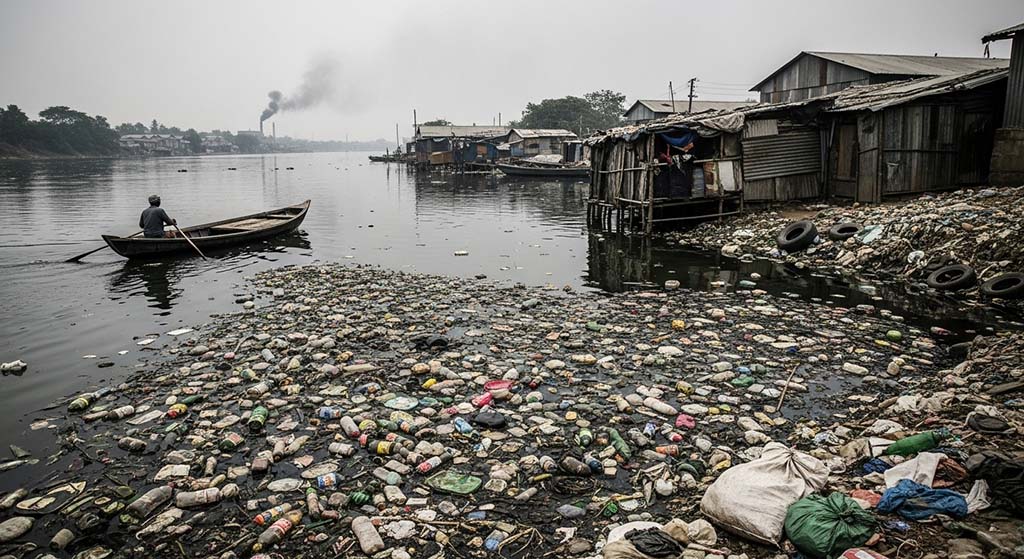
Water Pollution Paragraph For Class 6/7 (150 words)
Water pollution is the contamination of water bodies. It is a serious problem in Bangladesh. Rivers, ponds, and lakes are becoming polluted every day. Many things cause water pollution. Factories throw waste into rivers. People throw garbage into water. Farmers use chemical fertilizers that mix with water. Boats and ships also pollute water with oil. Polluted water is very harmful. It spreads many diseases like diarrhea and cholera. People and animals get sick from drinking dirty water. Fish die in polluted water. Crops get damaged when contaminated water is used for irrigation. We must stop water pollution. Factories should treat their waste before throwing it. People should not throw garbage into water. The government should make strict laws. We should keep our rivers and ponds clean. Clean water is essential for our survival.
Key Vocabulary:
| Word | Bangla Meaning |
|---|---|
| Contamination | দূষণ |
| Contaminated | দূষিত |
| Irrigation | সেচ |
| Essential | অপরিহার্য |
Water Pollution Paragraph For Class 7/8 (250 words)
Water pollution means mixing harmful substances with water. It is one of the biggest environmental problems in Bangladesh. Our rivers, canals, ponds, and groundwater are getting polluted rapidly. This pollution threatens our health and environment. Clean water is necessary for life, but we are losing it fast.
There are many causes of water pollution in our country. Industrial waste is the main cause. Factories dump chemicals, toxic materials, and waste directly into rivers. The textile and leather industries are major polluters. Agricultural activities also contribute to pollution. Farmers use chemical fertilizers and pesticides that wash into water bodies during rain. Domestic sewage from homes and cities flows into rivers without proper treatment. People throw plastic bags, bottles, and garbage into water. Oil spills from boats and ships pollute rivers. Arsenic in groundwater is another serious problem in Bangladesh.
The effects of water pollution are devastating. Polluted water causes serious health problems. Diseases like cholera, typhoid, dysentery, and diarrhea spread through dirty water. Skin diseases are common. Arsenic poisoning affects millions of people in Bangladesh. Water pollution also harms aquatic life. Fish and other water animals die. This affects the livelihood of fishermen. Agriculture suffers when polluted water is used for irrigation. The natural beauty of rivers is destroyed.
We need urgent action to solve this problem. Industries must install waste treatment plants. The government should enforce environmental laws strictly. People should be aware of pollution dangers. We should stop throwing garbage into water. Proper sewage systems should be built in cities. Alternative methods should replace chemical fertilizers. Community participation is important. If we all work together, we can save our water resources.
Key Vocabulary:
| Word | Bangla Meaning |
|---|---|
| Toxic | বিষাক্ত |
| Polluters | দূষণকারী |
| Pesticides | কীটনাশক |
| Devastating | ধ্বংসাত্মক |
| Livelihood | জীবিকা |
| Enforce | প্রয়োগ করা |
| Aware | সচেতন |
| Sewage | নর্দমা বর্জ্য |
| Participation | অংশগ্রহণ |
Water Pollution Paragraph For SSC Level (350 words)
Water pollution refers to the contamination of water bodies with harmful substances that degrade water quality and make it toxic to humans and the environment. In Bangladesh, this environmental crisis has reached alarming proportions. Our major rivers like the Buriganga, Shitalakhya, Turag, and Meghna are severely polluted. Even groundwater, which millions depend on for drinking, contains dangerous levels of arsenic. This situation poses serious threats to public health, agriculture, and biodiversity.
The sources of water pollution in Bangladesh are diverse and widespread. Industrial pollution is the primary culprit. Thousands of factories, particularly in the textile, leather, and pharmaceutical sectors, discharge untreated effluents directly into rivers. These effluents contain heavy metals, chemicals, and toxic dyes. Agricultural runoff is another major source. The excessive use of chemical fertilizers and pesticides contaminates surface and groundwater. Urban areas contribute through domestic sewage. Most cities lack adequate sewage treatment facilities, so raw sewage flows into water bodies. Solid waste management is poor. Plastic and other garbage clog waterways and release harmful substances. Oil spills from vessels and illegal sand mining disturb aquatic ecosystems. Natural arsenic contamination in groundwater affects approximately 20 million people in Bangladesh.
The consequences of water pollution are multifaceted and severe. Health impacts are the most immediate. Waterborne diseases like cholera, typhoid, hepatitis, and dysentery claim thousands of lives annually. Arsenic poisoning causes skin lesions, cancer, and organ damage. Children are particularly vulnerable, suffering from stunted growth and developmental problems. Economically, water pollution damages the fishing industry. Rivers that once teemed with fish now support little aquatic life. This affects the livelihoods of millions who depend on fishing. Agriculture suffers as contaminated water reduces crop yields. Tourism potential of rivers is destroyed. Environmental degradation is profound. Aquatic biodiversity is declining rapidly. Many fish species have become extinct. River ecosystems are collapsing.
Addressing water pollution requires comprehensive measures. The government must enforce the Environmental Conservation Act strictly. Industries should be required to install Effluent Treatment Plants (ETPs). Heavy penalties should be imposed on polluters. Public awareness campaigns are essential. People must understand their role in preventing pollution. Infrastructure development is crucial. Cities need modern sewage treatment plants. Solid waste management systems should be improved. Agricultural practices need reform. Organic farming should be encouraged. Community involvement through local organizations can monitor and protect water sources. International cooperation and funding can support large-scale projects. Research into affordable water purification technologies is needed. By implementing these solutions systematically, we can restore our water resources and ensure a healthy future for Bangladesh.
Key Vocabulary:
| Word | Bangla Meaning |
|---|---|
| Toxic | বিষাক্ত |
| Alarming | শঙ্কাজনক |
| Biodiversity | জীববৈচিত্র্য |
| Widespread | ব্যাপক |
| Culprit | অপরাধী |
| Sectors | খাত |
| Effluents | তরল বর্জ্য |
| Ecosystems | বাস্তুতন্ত্র |
| Consequences | পরিণাম |
| Multifaceted | বহুমুখী |
| Vulnerable | ঝুঁকিপূর্ণ |
Water Pollution Paragraph For HSC Level (450 words)
Water pollution, defined as the contamination of aquatic bodies with substances that harm organisms and degrade ecosystem quality, represents one of the most pressing environmental challenges confronting Bangladesh. As a densely populated deltaic nation with extensive river systems, Bangladesh is particularly susceptible to water pollution. The Ganges-Brahmaputra-Meghna basin, which sustains millions of lives, faces unprecedented contamination levels. This crisis threatens not only human health but also the ecological integrity and economic viability of the nation. Understanding the sources, impacts, and solutions to water pollution is imperative for sustainable development.
The etiology of water pollution in Bangladesh is complex, involving multiple anthropogenic and natural factors. Industrial discharge constitutes the most significant pollutant source. The textile and garment sector, which drives Bangladesh’s economy, generates massive quantities of untreated effluents containing toxic dyes, heavy metals like chromium and lead, and chemical residues. The leather processing industry in Hazaribagh, Dhaka, has rendered the Buriganga River virtually lifeless. Pharmaceutical and chemical industries similarly contribute hazardous waste. Agricultural intensification has led to excessive application of synthetic fertilizers and pesticides. Nitrogen and phosphorus from fertilizers cause eutrophication, depleting oxygen and killing aquatic life. Pesticide residues accumulate in water and enter the food chain. Rapid urbanization without adequate infrastructure planning has created sewage disposal crises. Major cities like Dhaka and Chittagong discharge approximately 80% of sewage directly into rivers without treatment. Solid waste mismanagement compounds the problem. Plastic debris, which takes centuries to decompose, pervades water bodies, releasing microplastics and toxic additives. Maritime activities contribute through oil spills and ballast water discharge. A unique challenge in Bangladesh is natural arsenic contamination of groundwater, affecting tube wells in 61 of 64 districts. This geological phenomenon, combined with human-induced pollution, creates a dire situation.
The ramifications of water pollution are extensive and catastrophic. From a public health perspective, water pollution is a leading cause of morbidity and mortality. The World Health Organization estimates that approximately 40% of diseases in Bangladesh are waterborne. Cholera, typhoid fever, dysentery, and hepatitis A are endemic. Chronic arsenic exposure causes arsenicosis, manifesting as skin lesions, cardiovascular disease, and various cancers. Studies indicate that over 20 million Bangladeshis drink arsenic-contaminated water daily. Children exposed to lead and other heavy metals suffer cognitive impairments and developmental delays. Economically, water pollution devastates the fishing industry. Bangladesh’s inland fisheries, once among the world’s most productive, have declined dramatically. Rivers like the Buriganga, Turag, and Shitalakhya are virtually dead zones. This affects the livelihoods of millions who depend on fishing for income and nutrition. Agriculture bears significant costs. Polluted irrigation water reduces crop yields and contaminates food products. The tourism industry suffers as polluted rivers and beaches deter visitors. Environmentally, water pollution drives biodiversity loss. The Ganges River dolphin, an iconic species, is critically endangered. Many fish species have disappeared. Wetland ecosystems, crucial for flood control and biodiversity, are degrading. Water pollution also exacerbates climate change impacts by reducing the capacity of aquatic ecosystems to sequester carbon. Socially, water scarcity and quality issues create inequity. Poor communities bear disproportionate burdens, lacking resources for water treatment.
Mitigating water pollution demands a multi-pronged, collaborative approach involving government action, industrial responsibility, and public engagement. Regulatory enforcement is paramount. The existing Environmental Conservation Act and Water Pollution Control Ordinance must be rigorously implemented. The Department of Environment should conduct regular inspections and impose substantial penalties on violators. All industries must be mandated to install and operate Effluent Treatment Plants. Economic incentives, such as tax breaks for compliant industries and green certifications, can encourage voluntary pollution reduction. Technological innovation offers solutions. Research institutions should develop cost-effective water treatment technologies suitable for Bangladesh’s context. Phytoremediation, using plants to absorb pollutants, shows promise for treating contaminated water. Bioremediation employing microorganisms can break down organic pollutants. Infrastructure development is critical. Cities need comprehensive sewage treatment facilities. The government should invest in modern solid waste management systems, including recycling and waste-to-energy plants. In agriculture, promoting organic farming and integrated pest management reduces chemical input. Extension services should educate farmers about sustainable practices. For arsenic mitigation, alternative safe water sources like rainwater harvesting and deep tube wells should be expanded. Community-based approaches empower local action. River protection committees, comprising local residents, can monitor pollution and organize clean-up drives. Educational campaigns in schools and communities raise awareness about pollution’s impacts and individual responsibilities. International cooperation can provide technical expertise and financial support. Partnerships with organizations like the World Bank and Asian Development Bank can fund large-scale projects. Finally, paradigm shifts in consumption patterns are necessary. Reducing plastic use, properly disposing of waste, and conserving water are individual contributions to the solution. Water pollution in Bangladesh is not insurmountable. With political will, adequate resources, technological innovation, and public participation, we can restore our water resources. The health of our rivers determines the health of our nation. Protecting them is not merely an environmental obligation but a prerequisite for sustainable development and intergenerational equity.
Key Vocabulary:
| Word | Bangla Meaning |
|---|---|
| Susceptible | সংবেদনশীল |
| Unprecedented | অভূতপূর্ব |
| Imperative | অপরিহার্য |
| Etiology | কারণ বিজ্ঞান |
| Eutrophication | পুষ্টি সমৃদ্ধকরণ |
| Urbanization | নগরায়ণ |
| Pervades | ব্যাপ্ত হয় |
| Microplastics | ক্ষুদ্র প্লাস্টিক |
| Phenomenon | ঘটনা |
| Dire | ভয়াবহ |
| Catastrophic | বিপর্যয়কর |
| Morbidity | অসুস্থতা |
| Endemic | স্থানীয় |
| Inequity | অসমতা |
| Disproportionate | অসামঞ্জস্যপূর্ণ |
| Mitigating | প্রশমন করা |
| Collaborative | সহযোগিতামূলক |
| Rigorously | কঠোরভাবে |
| Phytoremediation | উদ্ভিদ দ্বারা বিশুদ্ধকরণ |
| Bioremediation | জৈবিক বিশুদ্ধকরণ |
| Integrated | সমন্বিত |
| Paradigm | দৃষ্টান্ত |
| Prerequisite | পূর্বশর্ত |
Exam-Style FAQs on Water Pollution
Q1: What is water pollution? Answer: Water pollution is the contamination (দূষণ) of water bodies with harmful substances that make water unsafe for use.
Q2: What are the main sources of water pollution in Bangladesh? Answer: Industrial waste, agricultural chemicals, domestic sewage (নর্দমা বর্জ্য), plastic garbage, and arsenic contamination are main sources.
Q3: How does industrial waste pollute water? Answer: Factories discharge toxic (বিষাক্ত) chemicals, heavy metals, and untreated effluents (তরল বর্জ্য) directly into rivers.
Q4: What diseases are caused by water pollution? Answer: Cholera, typhoid, dysentery, hepatitis, and arsenic poisoning are common waterborne diseases in Bangladesh.
Q5: How does water pollution affect fisheries? Answer: Polluted water kills fish and destroys aquatic ecosystems (বাস্তুতন্ত্র), affecting fishermen’s livelihoods (জীবিকা).
Q6: What is eutrophication? Answer: Eutrophication is excess nutrients in water causing algae growth that depletes oxygen and kills aquatic life.
Q7: What steps should industries take to reduce pollution? Answer: Industries should install Effluent Treatment Plants (ETPs) and treat waste before discharge into water bodies.
Q8: How can individuals help prevent water pollution? Answer: By not throwing garbage in water, reducing plastic use, and participating (অংশগ্রহণ করা) in clean-up campaigns.
Q9: What is the arsenic problem in Bangladesh? Answer: Natural arsenic in groundwater contaminates (দূষিত করে) tube wells, affecting millions and causing serious health problems.
Q10: Why is water pollution control important? Answer: Clean water is essential (অপরিহার্য) for health, agriculture, fisheries, and maintaining biodiversity (জীববৈচিত্র্য) for sustainable development.