




Female Education Paragraph for Class 6 & 7 (150 words)
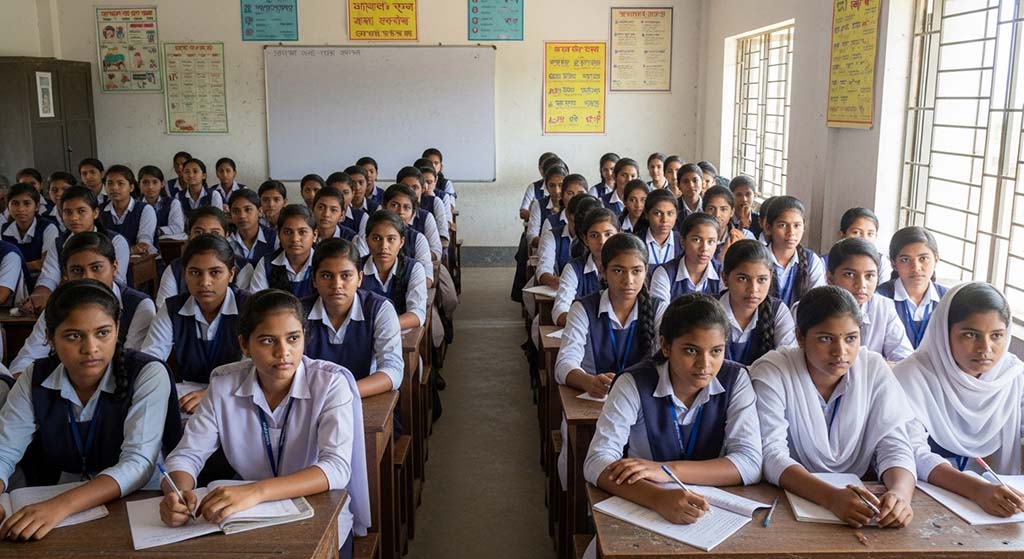
Female education means educating girls and women. It is very important for the progress of our country. An educated woman can help her family and society in many ways. She can take better care of her children and teach them good values. She can also work and earn money to support her family. In the past, many people did not send their daughters to school because of old beliefs and poverty. But now the situation is changing. The government has made education free for girls up to class 12. Many scholarships are given to female students. Despite this progress, some families in villages still do not send their girls to school. They think girls should only do housework and get married early. This is wrong. Every girl has the right to education. Educated women can become doctors, teachers, engineers, and leaders. They can help build a better Bangladesh. We must support female education.
Key Vocabulary:
| English Word | Bangla Meaning |
|---|---|
| progress | অগ্রগতি |
| values | মূল্যবোধ |
| beliefs | বিশ্বাস |
| scholarships | বৃত্তি |
| right | অধিকার |
Female Education Paragraph for Class 7 & 8 (250 words)
Female education refers to providing educational opportunities to girls and women so they can develop their skills and potential. It is one of the most important factors for the development of any nation. When women are educated, the whole society benefits. An educated mother can raise her children better, teach them properly, and help them with their studies. She understands the importance of nutrition, health, and hygiene for her family. Female education also helps reduce poverty. Educated women can get good jobs and contribute to the family income. They can become teachers, doctors, engineers, administrators, and business owners. In Bangladesh, the government has taken several steps to promote female education. Girls receive free education up to class 12 in government schools. The government provides stipends and scholarships to encourage families to send their daughters to school. Many schools have been built in rural areas to improve access. Despite these efforts, several challenges remain. Some families still follow old traditions and believe that girls should only learn housework. Poverty forces many families to marry their daughters early instead of sending them to school. In some areas, there are not enough schools or female teachers. Social barriers and gender discrimination also prevent many girls from continuing their education. However, the situation is improving. More girls are now going to school and pursuing higher education. We need to change people’s attitudes and make everyone understand that female education is essential for national development. Both boys and girls should have equal opportunities to learn and grow.
Key Vocabulary:
| English Word | Bangla Meaning |
|---|---|
| opportunities | সুযোগ |
| potential | সম্ভাবনা |
| benefits | উপকৃত হয় |
| nutrition | পুষ্টি |
| hygiene | স্বাস্থ্যবিধি |
| contribute | অবদান রাখা |
| engineers | প্রকৌশলী |
| administrators | প্রশাসক |
| stipends | উপবৃত্তি |
| access | প্রবেশাধিকার |
| challenges | চ্যালেঞ্জ |
| traditions | ঐতিহ্য |
| Poverty | দারিদ্র্য |
| Social barriers | সামাজিক বাধা |
| gender discrimination | লিঙ্গ বৈষম্য |
| pursuing | অনুসরণ করা |
| attitudes | মনোভাব |
| essential | অপরিহার্য |
| opportunities | সুযোগ |
Female Education Paragraph for SSC Level & Class 9 & 10 (350 words)
Female education is the process of providing equal educational opportunities and resources to girls and women, enabling them to develop their intellectual, social, and economic capabilities. It is universally recognized as a fundamental human right and a critical factor in achieving sustainable development. In Bangladesh, female education has been identified as a key priority for national advancement, as it directly impacts various aspects of society including economic growth, health, population control, and social equality. The importance of female education cannot be overstated. Educated women make better decisions about their health and their children’s wellbeing. They have better knowledge about nutrition, vaccination, and hygiene, which leads to healthier families and lower child mortality rates. Research shows that children of educated mothers perform better in school and are more likely to continue their education. Economically, female education increases productivity and contributes significantly to GDP growth. Educated women have better employment prospects and can earn higher incomes, reducing family poverty. They also participate more actively in social and political life, bringing diverse perspectives to decision-making processes. Bangladesh has made remarkable progress in promoting female education over the past few decades. The government has implemented several programs including free tuition for girls up to class 12, stipend programs, school feeding programs, and construction of girls’ schools in rural areas. Female enrollment rates have increased dramatically, and in many cases, girls now outnumber boys in primary and secondary education. The country has achieved gender parity in primary and secondary school enrollment. However, significant challenges persist. Rural-urban disparities remain, with girls in remote areas having less access to quality education. Socio-cultural barriers including conservative attitudes, early marriage, dowry practices, and gender stereotypes continue to hinder female education. Safety concerns, lack of separate facilities for girls, insufficient female teachers, and poverty also create obstacles. Many girls drop out after puberty due to lack of proper sanitation facilities in schools. Early marriage remains a major problem, with many families preferring to marry their daughters rather than invest in their education. To overcome these challenges, a comprehensive approach is needed. Beyond government initiatives, society must change its mindset regarding women’s roles. Communities should be educated about the benefits of female education. More schools with proper facilities should be built in rural areas. The practice of early marriage must be stopped through strict enforcement of laws. Awareness campaigns should target parents and community leaders. Ensuring quality education, safety, and supportive learning environments is essential. Female education is not just about individual empowerment; it is about transforming society and ensuring equitable development for all.
Key Vocabulary:
| English Word | Bangla Meaning |
|---|---|
| resources | সম্পদ |
| intellectual | বুদ্ধিবৃত্তিক |
| economic | অর্থনৈতিক |
| capabilities | সক্ষমতা |
| universally | সর্বজনীনভাবে |
| recognized | স্বীকৃত |
| fundamental | মৌলিক |
| critical | সংকটপূর্ণ |
| sustainable | টেকসই |
| identified | চিহ্নিত |
| priority | অগ্রাধিকার |
| advancement | অগ্রগতি |
| directly | সরাসরি |
| population | জনসংখ্যা |
| equality | সমতা |
| overstated | অতিরঞ্জিত |
| wellbeing | কল্যাণ |
| nutrition | পুষ্টি |
| vaccination | টিকাকরণ |
| hygiene | স্বাস্থ্যবিধি |
| mortality | মৃত্যুহার |
| Economically | অর্থনৈতিকভাবে |
| productivity | উৎপাদনশীলতা |
| contributes | অবদান রাখে |
| employment | কর্মসংস্থান |
| prospects | সম্ভাবনা |
| incomes | আয় |
| participate | অংশগ্রহণ করা |
| perspectives | দৃষ্টিভঙ্গি |
| remarkable | উল্লেখযোগ্য |
| implemented | বাস্তবায়ন করা |
| stipend | উপবৃত্তি |
| construction | নির্মাণ |
| enrollment | ভর্তি |
| outnumber | ছাড়িয়ে যাওয়া |
| secondary | মাধ্যমিক |
| gender parity | লিঙ্গ সমতা |
| enrollment | ভর্তি |
| Rural-urban | গ্রাম-শহর |
| disparities | বৈষম্য |
| Socio-cultural | আর্থ-সামাজিক |
| barriers | বাধা |
| conservative | রক্ষণশীল |
| attitudes | মনোভাব |
| dowry | যৌতুক |
| gender stereotypes | লিঙ্গ স্টিরিওটাইপ |
| hinder | বাধা দেওয়া |
| facilities | সুবিধা |
| insufficient | অপর্যাপ্ত |
| obstacles | প্রতিবন্ধক |
| sanitation | স্যানিটেশন |
| facilities | সুবিধা |
| overcome | অতিক্রম করা |
| comprehensive | ব্যাপক |
| mindset | মানসিকতা |
| educated | শিক্ষিত |
| benefits | সুবিধা |
| enforcement | প্রয়োগ |
| Awareness | সচেতনতা |
| Ensuring | নিশ্চিত করা |
| supportive | সহায়ক |
| essential | অপরিহার্য |
| empowerment | ক্ষমতায়ন |
| transforming | রূপান্তরিত করা |
| equitable | ন্যায্য |
Female Education Paragraph for HSC Level & Class 11 & 12 (450 words)
Female education constitutes a cornerstone of sustainable development and social progress, representing not merely an individual right but a collective imperative for societal transformation. The systematic education of women and girls encompasses far more than literacy and numeracy; it involves the cultivation of critical thinking, empowerment, and the dismantling of patriarchal structures that have historically marginalized half of humanity. In the context of Bangladesh, female education has emerged as a pivotal mechanism for achieving economic prosperity, demographic transition, improved public health outcomes, and the realization of gender equality enshrined in both national and international frameworks. The multifaceted significance of female education manifests across numerous dimensions of human development. Empirical research consistently demonstrates that educated women have fewer, healthier, and better-educated children, creating intergenerational benefits that compound over time. Maternal education is the single strongest predictor of child survival, with each additional year of female education correlating with a 5-10% reduction in child mortality. Educated women exhibit greater autonomy in reproductive decisions, leading to optimal child spacing and lower fertility rates, thereby contributing to demographic dividends that accelerate economic development. Economically, female education yields substantial returns. Studies indicate that each additional year of schooling for girls increases their future earnings by 10-20%. At the macro level, countries that achieve gender parity in education experience accelerated GDP growth, with some estimates suggesting that eliminating educational gender gaps could increase GDP by 1-2% annually. Women’s economic participation diversifies labor markets, enhances productivity, and stimulates innovation. Furthermore, educated women are better equipped to adapt to technological changes and participate in the formal economy, moving beyond subsistence agriculture and informal sector work that characterizes much of women’s employment in developing contexts. Bangladesh has achieved notable success in promoting female education through comprehensive policy interventions. The introduction of the Female Stipend Program in 1994 revolutionized female enrollment by providing financial incentives for families to keep girls in school. This program, combined with free tuition, school feeding programs, community schools, and recruitment of female teachers, has led to remarkable changes. Primary school enrollment for girls now approaches 100%, and girls’ enrollment in secondary education surpasses that of boys in many regions. These achievements have positioned Bangladesh as a success story in South Asia, demonstrating that even resource-constrained countries can make significant progress through targeted interventions. However, persistent challenges continue to undermine the full realization of female educational potential. Quantitative increases in enrollment have not always translated into qualitative learning outcomes, with many girls attending school but not acquiring functional literacy and numeracy skills. Regional disparities remain pronounced, with rural areas, particularly in northern and coastal regions, experiencing lower enrollment and higher dropout rates. Socio-cultural barriers rooted in patriarchal norms continue to devalue female education. Gender-based violence, including harassment during commutes to school, creates unsafe environments that deter girls’ attendance. The practice of child marriage, though legally prohibited, remains prevalent, with approximately 59% of girls married before age 18, effectively terminating their education. Poverty compels families to prioritize male education when resources are scarce, as boys are seen as future breadwinners while girls’ education is viewed as a poor investment given patrilocal marriage practices. Infrastructure deficiencies, particularly lack of adequate sanitation facilities for menstruating girls, cause absenteeism and dropout. The scarcity of female teachers, especially in rural areas, limits role models and raises parental concerns about sending daughters to male-dominated educational institutions. Curriculum and pedagogical approaches often reinforce gender stereotypes, channeling girls toward traditional “feminine” subjects and discouraging pursuit of STEM (Science, Technology, Engineering, and Mathematics) fields. Addressing these multifaceted challenges requires a holistic, multi-sectoral approach. Beyond quantitative expansion of educational access, focus must shift toward ensuring quality education that develops critical thinking and marketable skills. Curriculum reforms should eliminate gender biases and promote positive representations of women in diverse roles. Investing in infrastructure, particularly WASH (Water, Sanitation, and Hygiene) facilities, is essential for retaining adolescent girls. Strengthening enforcement of child marriage prohibition laws and implementing comprehensive sexuality education can empower girls with knowledge about their rights. Economic interventions, including conditional cash transfers and vocational training programs, can make female education economically attractive to families. Community engagement and awareness campaigns must challenge entrenched gender norms and demonstrate the tangible benefits of female education. Recruiting and training female teachers, particularly from local communities, creates role models and addresses cultural sensitivities. Mentorship programs and career counseling can encourage girls to pursue non-traditional fields and higher education. Digital literacy programs and ICT integration in education can open new horizons for female learners. In conclusion, female education represents a transformative investment with cascading benefits across generations and sectors. Bangladesh’s progress demonstrates both the feasibility and impact of prioritizing female education, while persistent challenges underscore the need for sustained commitment and innovative approaches. Achieving comprehensive female education requires not merely policy interventions but fundamental shifts in societal attitudes and structures. As empirical evidence unequivocally shows, investing in female education is essentially investing in the future prosperity, health, and equality of nations. The empowerment of women through education is not only a moral imperative but the most effective strategy for achieving sustainable development and creating equitable, prosperous societies.
Key Vocabulary:
| English Word | Bangla Meaning |
|---|---|
| constitutes | গঠন করে |
| cornerstone | ভিত্তিপ্রস্তর |
| sustainable | টেকসই |
| collective | যৌথ |
| imperative | অপরিহার্য |
| societal transformation | সামাজিক রূপান্তর |
| systematic | পদ্ধতিগত |
| encompasses | অন্তর্ভুক্ত করে |
| literacy | সাক্ষরতা |
| numeracy | গণনা দক্ষতা |
| involves | জড়িত |
| cultivation | চাষ |
| critical | সমালোচনামূলক |
| empowerment | ক্ষমতায়ন |
| dismantling | ভাঙা |
| patriarchal | পিতৃতান্ত্রিক |
| marginalized | প্রান্তিক |
| emerged | আবির্ভূত |
| pivotal | মূখ্য |
| mechanism | প্রক্রিয়া |
| economic | অর্থনৈতিক |
| prosperity | সমৃদ্ধি |
| demographic | জনসংখ্যাগত |
| transition | রূপান্তর |
| realization | উপলব্ধি |
| gender equality | লিঙ্গ সমতা |
| enshrined | প্রতিষ্ঠিত |
| frameworks | কাঠামো |
| multifaceted | বহুমুখী |
| significance | তাৎপর্য |
| manifests | প্রকাশ পায় |
| dimensions | মাত্রা |
| Empirical | অভিজ্ঞতালব্ধ |
| consistently | ধারাবাহিকভাবে |
| demonstrates | প্রদর্শন করে |
| intergenerational | আন্তঃপ্রজন্মীয় |
| compound | যৌগিক |
| predictor | পূর্বাভাসক |
| survival | বেঁচে থাকা |
| correlating | সম্পর্কযুক্ত |
| mortality | মৃত্যুহার |
| exhibit | প্রদর্শন করা |
| autonomy | স্বায়ত্তশাসন |
| reproductive | প্রজনন |
| optimal | সর্বোত্তম |
| fertility | উর্বরতা |
| contributing | অবদান রাখা |
| demographic | জনসংখ্যাগত |
| dividends | লভ্যাংশ |
| accelerate | ত্বরান্বিত করা |
| Economically | অর্থনৈতিকভাবে |
| substantial | উল্লেখযোগ্য |
| macro | সামগ্রিক |
| countries | দেশ |
| gender parity | লিঙ্গ সমতা |
| accelerated | ত্বরান্বিত |
| eliminating | নির্মূল করা |
| educational | শিক্ষাগত |
| gender gaps | লিঙ্গ ব্যবধান |
| economic participation | অর্থনৈতিক অংশগ্রহণ |
| diversifies | বৈচিত্র্যময় করে |
| labor markets | শ্রমবাজার |
| enhances | বৃদ্ধি করে |
| productivity | উৎপাদনশীলতা |
| stimulates | উদ্দীপিত করে |
| innovation | উদ্ভাবন |
| equipped | সজ্জিত |
| formal | আনুষ্ঠানিক |
| subsistence | জীবিকা |
| informal | অনানুষ্ঠানিক |
| characterizes | বৈশিষ্ট্যযুক্ত |
| employment | কর্মসংস্থান |
| contexts | প্রসঙ্গ |
| notable | উল্লেখযোগ্য |
| comprehensive | ব্যাপক |
| interventions | হস্তক্ষেপ |
| introduction | প্রবর্তন |
| Stipend | উপবৃত্তি |
| revolutionized | বিপ্লব ঘটিয়েছে |
| enrollment | ভর্তি |
| financial incentives | আর্থিক প্রণোদনা |
| community | সম্প্রদায় |
| recruitment | নিয়োগ |
| remarkable | উল্লেখযোগ্য |
| Primary | প্রাথমিক |
| enrollment | ভর্তি |
| secondary | মাধ্যমিক |
| surpasses | ছাড়িয়ে যায় |
| demonstrating | প্রদর্শন করা |
| constrained | সীমাবদ্ধ |
| targeted | লক্ষ্যবস্তু |
| interventions | হস্তক্ষেপ |
| persistent | অবিরাম |
| undermine | দুর্বল করা |
| realization | উপলব্ধি |
| educational | শিক্ষাগত |
| potential | সম্ভাবনা |
| Quantitative | পরিমাণগত |
| enrollment | ভর্তি |
| translated | অনুবাদ করা |
| qualitative | গুণগত |
| outcomes | ফলাফল |
| attending | উপস্থিত |
| acquiring | অর্জন করা |
| functional | কার্যকরী |
| literacy | সাক্ষরতা |
| numeracy | গণনা দক্ষতা |
| Regional | আঞ্চলিক |
| disparities | বৈষম্য |
| pronounced | উচ্চারিত |
| rural | গ্রামীণ |
| particularly | বিশেষভাবে |
| northern | উত্তরাঞ্চলীয় |
| coastal | উপকূলীয় |
| enrollment | ভর্তি |
| dropout | ঝরে পড়া |
| Socio-cultural | আর্থ-সামাজিক |
| barriers | বাধা |
| patriarchal | পিতৃতান্ত্রিক |
| norms | নিয়ম |
| devalue | অবমূল্যায়ন করা |
| Gender-based | লিঙ্গভিত্তিক |
| harassment | হয়রানি |
| commutes | যাতায়াত |
| unsafe | অনিরাপদ |
| deter | নিরুৎসাহিত করা |
| attendance | উপস্থিতি |
| child marriage | বাল্যবিবাহ |
| prohibited | নিষিদ্ধ |
| prevalent | প্রচলিত |
| effectively | কার্যকরভাবে |
| terminating | সমাপ্ত করা |
| Poverty | দারিদ্র্য |
| compels | বাধ্য করে |
| prioritize | অগ্রাধিকার দেওয়া |
| resources | সম্পদ |
| scarce | দুর্লভ |
| breadwinners | উপার্জনকারী |
| investment | বিনিয়োগ |
| patrilocal | পিতৃস্থানীয় |
| marriage | বিবাহ |
| Infrastructure | অবকাঠামো |
| deficiencies | ঘাটতি |
| adequate | পর্যাপ্ত |
| sanitation | স্যানিটেশন |
| facilities | সুবিধা |
| menstruating | ঋতুমতী |
| absenteeism | অনুপস্থিতি |
| dropout | ঝরে পড়া |
| scarcity | ঘাটতি |
| limits | সীমাবদ্ধ করে |
| role models | রোল মডেল |
| parental | পিতামাতার |
| male-dominated | পুরুষ-প্রধান |
| Curriculum | পাঠ্যক্রম |
| pedagogical | শিক্ষাগত |
| reinforce | শক্তিশালী করা |
| gender stereotypes | লিঙ্গ স্টিরিওটাইপ |
| channeling | প্রবাহিত করা |
| traditional | ঐতিহ্যবাহী |
| discouraging | নিরুৎসাহিত করা |
| pursuit | অনুসরণ |
| STEM | বিজ্ঞান প্রযুক্তি প্রকৌশল গণিত |
| Addressing | মোকাবেলা |
| multifaceted | বহুমুখী |
| holistic | সামগ্রিক |
| multi-sectoral | বহু-খাত |
| quantitative | পরিমাণগত |
| expansion | সম্প্রসারণ |
| access | প্রবেশাধিকার |
| quality | মান |
| critical | সমালোচনামূলক |
| marketable | বাজারযোগ্য |
| Curriculum | পাঠ্যক্রম |
| eliminate | নির্মূল করা |
| gender | লিঙ্গ |
| biases | পক্ষপাত |
| positive | ইতিবাচক |
| representations | প্রতিনিধিত্ব |
| diverse | বৈচিত্র্যময় |
| Investing | বিনিয়োগ |
| infrastructure | অবকাঠামো |
| WASH | জল স্যানিটেশন স্বাস্থ্যবিধি |
| Sanitation | স্যানিটেশন |
| Hygiene | স্বাস্থ্যবিধি |
| facilities | সুবিধা |
| essential | অপরিহার্য |
| adolescent | কিশোর |
| Strengthening | শক্তিশালীকরণ |
| prohibition | নিষেধ |
| laws | আইন |
| comprehensive | ব্যাপক |
| sexuality | যৌনতা |
| empower | ক্ষমতায়ন |
| Economic | অর্থনৈতিক |
| interventions | হস্তক্ষেপ |
| conditional | শর্তসাপেক্ষ |
| transfers | স্থানান্তর |
| vocational | বৃত্তিমূলক |
| economically | অর্থনৈতিকভাবে |
| attractive | আকর্ষণীয় |
| Community engagement | সম্প্রদায় সম্পৃক্ততা |
| awareness | সচেতনতা |
| entrenched | গভীর |
| gender norms | লিঙ্গ নিয়ম |
| demonstrate | প্রদর্শন করা |
| tangible | বাস্তব |
| benefits | সুবিধা |
| Recruiting | নিয়োগ |
| communities | সম্প্রদায় |
| role models | রোল মডেল |
| cultural | সাংস্কৃতিক |
| sensitivities | সংবেদনশীলতা |
| Mentorship | পরামর্শদান |
| career counseling | ক্যারিয়ার কাউন্সেলিং |
| encourage | উৎসাহিত করা |
| non-traditional | অপ্রচলিত |
| higher | উচ্চতর |
| Digital literacy | ডিজিটাল সাক্ষরতা |
| ICT integration | আইসিটি একীকরণ |
| horizons | দিগন্ত |
| conclusion | উপসংহার |
| transformative | রূপান্তরকারী |
| investment | বিনিয়োগ |
| cascading | ক্রমবর্ধমান |
| benefits | সুবিধা |
| generations | প্রজন্ম |
| demonstrates | প্রদর্শন করে |
| feasibility | সম্ভাব্যতা |
| impact | প্রভাব |
| prioritizing | অগ্রাধিকার দেওয়া |
| persistent | অবিরাম |
| underscore | জোর দেওয়া |
| sustained | টেকসই |
| commitment | প্রতিশ্রুতি |
| innovative | উদ্ভাবনী |
| approaches | পদ্ধতি |
| Achieving | অর্জন |
| comprehensive | ব্যাপক |
| policy | নীতি |
| interventions | হস্তক্ষেপ |
| fundamental | মৌলিক |
| shifts | পরিবর্তন |
| societal | সামাজিক |
| attitudes | মনোভাব |
| structures | কাঠামো |
| empirical | অভিজ্ঞতালব্ধ |
| unequivocally | দ্ব্যর্থহীনভাবে |
| essentially | মূলত |
| prosperity | সমৃদ্ধি |
| health | স্বাস্থ্য |
| equality | সমতা |
| empowerment | ক্ষমতায়ন |
| moral | নৈতিক |
| imperative | অপরিহার্য |
| effective | কার্যকর |
| strategy | কৌশল |
| achieving | অর্জন |
| sustainable | টেকসই |
| equitable | ন্যায্য |
| prosperous | সমৃদ্ধ |
Exam-Style FAQs on Female Education
Q1: What is female education and why is it important?
Answer: Female education means providing equal educational opportunities to girls and women. It is important because it benefits the whole society, reduces poverty, improves child health, and contributes to economic development.
Key Vocabulary: opportunities = সুযোগ, benefits = উপকৃত হয়, poverty = দারিদ্র্য, contributes = অবদান রাখে, economic = অর্থনৈতিক
Q2: How does female education benefit families and society?
Answer: Educated mothers raise healthier children, understand nutrition and hygiene, help with studies, make better decisions, and can contribute to family income through employment.
Key Vocabulary: nutrition = পুষ্টি, hygiene = স্বাস্থ্যবিধি, contribute = অবদান রাখা, income = আয়, employment = কর্মসংস্থান
Q3: What steps has the Bangladesh government taken to promote female education?
Answer: The government provides free education for girls up to class 12, stipends and scholarships, school feeding programs, and has built schools in rural areas with female teachers.
Key Vocabulary: stipends = উপবৃত্তি, scholarships = বৃত্তি, rural = গ্রামীণ
Q4: What are the main challenges to female education in Bangladesh?
Answer: Main challenges include socio-cultural barriers, conservative attitudes, early marriage, poverty, dowry practices, gender stereotypes, lack of sanitation facilities, insufficient female teachers, and safety concerns.
Key Vocabulary: socio-cultural barriers = আর্থ-সামাজিক বাধা, conservative = রক্ষণশীল, attitudes = মনোভাব, dowry = যৌতুক, gender stereotypes = লিঙ্গ স্টিরিওটাইপ, sanitation = স্যানিটেশন, insufficient = অপর্যাপ্ত
Q5: How does female education impact economic development?
Answer: Female education increases productivity, contributes to GDP growth, provides better employment prospects, enables women to earn higher incomes, and helps reduce family poverty.
Key Vocabulary: productivity = উৎপাদনশীলতা, contributes = অবদান রাখে, GDP = জিডিপি, employment = কর্মসংস্থান, prospects = সম্ভাবনা, incomes = আয়, poverty = দারিদ্র্য
Q6: What is the relationship between female education and child mortality?
Answer: Maternal education is the strongest predictor of child survival. Each additional year of female education correlates with a 5-10% reduction in child mortality rates.
Key Vocabulary: maternal = মাতৃসূত্রীয়, predictor = পূর্বাভাসক, survival = বেঁচে থাকা, correlates = সম্পর্কযুক্ত, mortality = মৃত্যুহার
Q7: How does early marriage affect female education?
Answer: Early marriage effectively terminates girls’ education. In Bangladesh, approximately 59% of girls are married before age 18, preventing them from continuing their studies and limiting their potential.
Key Vocabulary: early marriage = বাল্যবিবাহ, effectively = কার্যকরভাবে, terminates = সমাপ্ত করা, preventing = প্রতিরোধ করা, potential = সম্ভাবনা
Q8: What progress has Bangladesh made in female education enrollment?
Answer: Bangladesh has achieved remarkable progress with primary school enrollment for girls approaching 100%, and girls’ secondary enrollment surpassing boys in many regions, achieving gender parity.
Key Vocabulary: remarkable = উল্লেখযোগ্য, enrollment = ভর্তি, approaching = কাছাকাছি, surpassing = ছাড়িয়ে যাওয়া, gender parity = লিঙ্গ সমতা
Q9: What solutions can overcome challenges to female education?
Answer: Solutions include changing societal mindsets, enforcing child marriage prohibition laws, building schools with proper WASH facilities, recruiting female teachers, providing stipends, conducting awareness campaigns, and eliminating curriculum gender biases.
Key Vocabulary: mindsets = মানসিকতা, enforcing = প্রয়োগ, prohibition = নিষেধ, WASH = জল স্যানিটেশন স্বাস্থ্যবিধি, facilities = সুবিধা, recruiting = নিয়োগ, stipends = উপবৃত্তি, awareness = সচেতনতা, biases = পক্ষপাত
Q10: Why is female education called a transformative investment?
Answer: Female education is transformative because it creates cascading benefits across generations and sectors, empowers women, ensures sustainable development, reduces poverty, improves health outcomes, and creates equitable, prosperous societies.
Key Vocabulary: transformative = রূপান্তরকারী, investment = বিনিয়োগ, cascading = ক্রমবর্ধমান, benefits = সুবিধা, generations = প্রজন্ম, empowers = ক্ষমতায়ন, sustainable = টেকসই, equitable = ন্যায্য, prosperous = সমৃদ্ধ