




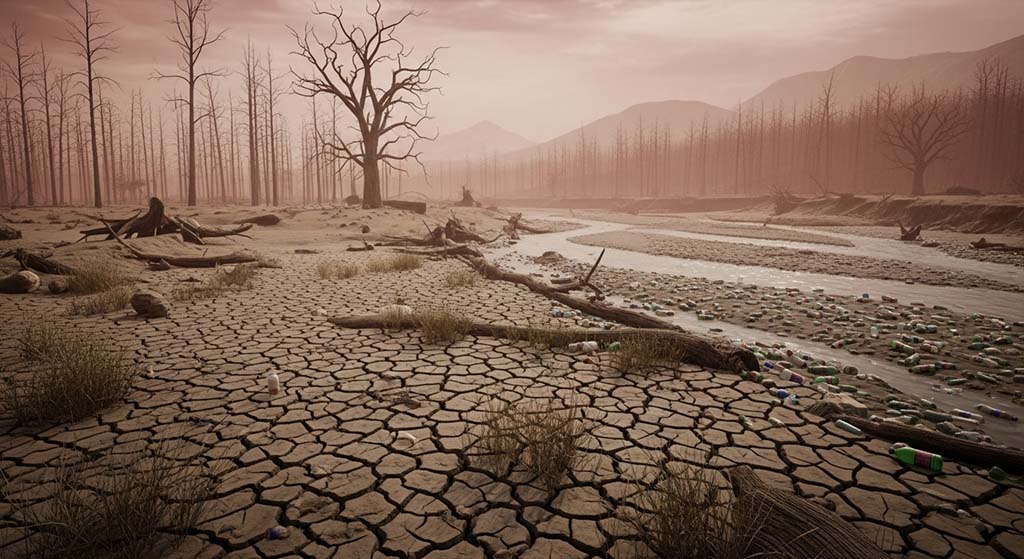
বাংলাদেশি শিক্ষার্থীদেরClimate Change Paragraph টি খুব সহজ ভাষায় প্রস্তুত করা হয়েছে। গুরুত্বপূর্ণ শব্দগুলো Bold করে প্রতিটি Paragraph এর পরে শব্দার্থসহ হয়েছে, যাতে শিক্ষার্থীরা সহজে বুঝে শিখতে পারে। এখানে ক্লাস স্ট্যান্ডার্ড অনুযায়ী প্যারাগ্রাফগুলো লেখা হয়েছে। তবে শিক্ষার্থী তার চাহিদা ও সক্ষমতা অনুযায়ী ছোট বা বড় যেকোনো প্যারাগ্রাফ বেছে নিয়ে শিখতে পারে। প্রতিটি Paragraph মানসম্মত ও শেখার জন্য উপযোগী।
Climate Change Paragraph – For Class 6 & 7 (158 words)
Climate change means the long-term change in Earth’s weather patterns and temperature. Our planet is getting warmer every year because of human activities. People burn fossil fuels like coal, oil, and gas for energy. Also, factories release harmful gases into the air. Moreover, we cut down millions of trees that clean our air. Because of these activities, greenhouse gases trap heat in the atmosphere. So, the Earth’s temperature keeps rising slowly. This warming causes many problems for Bangladesh. For example, sea levels are rising and flooding coastal areas. Then, we face more cyclones and storms during monsoon season. When temperatures rise, farmers struggle to grow crops properly. Also, many rivers dry up and people face water shortage. Moreover, extreme heat makes people sick with fever and other diseases. The animals and plants also suffer from climate change. Therefore, we must take care of our environment and stop polluting. Everyone should plant trees and use less energy to protect our future.
Vocabulary Table:
| English Word | Bangla Meaning |
|---|---|
| Climate change | জলবায়ু পরিবর্তন |
| Earth’s weather patterns | পৃথিবীর আবহাওয়ার ধরন |
| Temperature | তাপমাত্রা |
| Warmer | উষ্ণতর |
| Fossil fuels | জীবাশ্ম জ্বালানি |
| Gases | গ্যাস |
| Trees | গাছ |
| Greenhouse gases | গ্রিনহাউস গ্যাস |
| Problems | সমস্যা |
| Flooding | বন্যা |
| Cyclones | ঘূর্ণিঝড় |
| Storms | ঝড় |
| Rivers | নদী |
| Fever | জ্বর |
| Animals | প্রাণী |
| Plants | উদ্ভিদ |
| Environment | পরিবেশ |
| Plant trees | গাছ লাগানো |
Climate Change Paragraph – For Class 7 & 8 (268 words)
Climate change is one of the biggest environmental challenges facing our world today. It refers to the long-term changes in global temperature and weather patterns across the planet. The main cause of climate change is global warming, which happens when greenhouse gases trap heat in our atmosphere. Human activities are responsible for producing these harmful gases in large amounts. For example, burning coal, oil, and natural gas in power plants releases carbon dioxide into the air. Also, millions of vehicles on roads produce dangerous emissions every day. Moreover, deforestation removes trees that absorb carbon dioxide and produce oxygen. Then, industries and factories release toxic chemicals and smoke continuously. Because Bangladesh is a low-lying country, we face severe impacts of climate change. Our coastal regions experience frequent flooding as sea levels rise each year. When cyclones like Sidr and Aila hit our country, thousands of people lose their homes. Also, saltwater enters farmland and makes soil infertile for growing crops. Moreover, irregular rainfall patterns affect our agriculture and food production badly. Then, extreme heat during summer causes droughts in northern districts. When rivers like Padma and Jamuna change their course, riverbank erosion destroys villages. So, millions of climate refugees migrate to cities for survival. The Sundarbans, our natural shield against storms, is slowly disappearing underwater. Therefore, we need immediate action to combat climate change effectively. The government should promote renewable energy like solar and wind power. Also, people must reduce using plastic and recycle waste materials. Moreover, massive tree plantation programs should be organized across the country. If we work together with awareness and responsibility, we can protect Bangladesh from climate disasters.
Vocabulary Table:
| English Word | Bangla Meaning |
|---|---|
| Climate change | জলবায়ু পরিবর্তন |
| Environmental challenges | পরিবেশগত চ্যালেঞ্জ |
| Global temperature | বৈশ্বিক তাপমাত্রা |
| Global warming | বৈশ্বিক উষ্ণায়ন |
| Greenhouse gases | গ্রিনহাউস গ্যাস |
| Human activities | মানুষের কার্যকলাপ |
| Coal | কয়লা |
| Oil | তেল |
| Natural gas | প্রাকৃতিক গ্যাস |
| Carbon dioxide | কার্বন ডাই-অক্সাইড |
| Vehicles | যানবাহন |
| Emissions | নির্গমন |
| Deforestation | বন উজাড় |
| Industries | শিল্প |
| Toxic chemicals | বিষাক্ত রাসায়নিক |
| Low-lying country | নিম্নভূমির দেশ |
| Coastal regions | উপকূলীয় অঞ্চল |
| Cyclones | ঘূর্ণিঝড় |
| Saltwater | লবণাক্ত পানি |
| Infertile | অনুর্বর |
| Rainfall | বৃষ্টিপাত |
| Agriculture | কৃষি |
| Droughts | খরা |
| Riverbank erosion | নদীভাঙন |
| Climate refugees | জলবায়ু উদ্বাস্তু |
| Sundarbans | সুন্দরবন |
| Renewable energy | নবায়নযোগ্য শক্তি |
| Plastic | প্লাস্টিক |
| Recycle | পুনর্ব্যবহার |
| Tree plantation | বৃক্ষরোপণ |
| Awareness | সচেতনতা |
| Responsibility | দায়িত্ব |
Climate Change Paragraph – For Class 9 & 10 (372 words)
Climate change represents the most serious environmental crisis of our time, threatening the very existence of millions of people worldwide. It refers to significant and lasting changes in global climate patterns, particularly the steady increase in Earth’s average temperature over decades. The primary driver of modern climate change is anthropogenic activities, meaning changes caused by human actions rather than natural processes. Industrialization has led to massive burning of fossil fuels including coal, petroleum, and natural gas for electricity generation and transportation. Also, vehicular pollution from millions of cars, buses, and trucks releases enormous amounts of carbon dioxide and other pollutants daily. Moreover, large-scale deforestation for agriculture, urbanization, and industrial purposes eliminates forests that serve as natural carbon sinks. Then, livestock farming produces methane, another powerful greenhouse gas that contributes significantly to warming. Because greenhouse gases accumulate in the atmosphere, they create a blanket effect that traps solar heat. So, global temperatures have risen approximately 1.1 degrees Celsius since pre-industrial times. Bangladesh faces catastrophic consequences of climate change despite contributing minimally to global emissions. Our geographical location makes us extremely vulnerable to climate-related disasters and environmental changes. For example, rising sea levels threaten to submerge one-fifth of our country by 2050, displacing millions. Also, increased frequency and intensity of tropical cyclones cause massive destruction along coastal belts regularly. Moreover, salinity intrusion in southern regions destroys agricultural land and contaminates drinking water sources. Then, erratic monsoon patterns lead to either devastating floods or severe droughts across different regions. When glaciers in the Himalayas melt rapidly, rivers face water flow irregularities affecting entire ecosystems. So, our biodiversity suffers as many species lose their natural habitats permanently. The Sundarbans mangrove forest, a UNESCO World Heritage site, experiences frequent tidal surges and habitat loss. Therefore, comprehensive strategies are essential to address this crisis at national and global levels. The government must invest heavily in climate adaptation measures and disaster preparedness programs. Also, transitioning to clean energy sources like solar, wind, and hydroelectric power should be accelerated. Moreover, strict environmental regulations must be enforced to control industrial emissions and pollution. Then, massive afforestation drives should be undertaken to increase forest cover significantly. When communities receive proper education about sustainable practices, they can contribute to mitigation efforts. So, international cooperation and financial assistance from developed nations are crucial for vulnerable countries. If we implement effective policies, promote green technologies, and change our consumption patterns, we can limit temperature rise and secure a livable planet for future generations in Bangladesh and beyond.
Vocabulary Table:
| English Word | Bangla Meaning |
|---|---|
| Climate change | জলবায়ু পরিবর্তন |
| Environmental crisis | পরিবেশ সংকট |
| Global climate patterns | বৈশ্বিক জলবায়ু ধরন |
| Temperature | তাপমাত্রা |
| Anthropogenic activities | মানবসৃষ্ট কার্যকলাপ |
| Industrialization | শিল্পায়ন |
| Fossil fuels | জীবাশ্ম জ্বালানি |
| Vehicular pollution | যানবাহনের দূষণ |
| Carbon dioxide | কার্বন ডাই-অক্সাইড |
| Pollutants | দূষণকারী পদার্থ |
| Deforestation | বন উজাড় |
| Livestock farming | গবাদি পশু পালন |
| Methane | মিথেন |
| Greenhouse gases | গ্রিনহাউস গ্যাস |
| Catastrophic consequences | বিপর্যয়কর পরিণতি |
| Vulnerable | ঝুঁকিপূর্ণ |
| Intensity | তীব্রতা |
| Tropical cyclones | ক্রান্তীয় ঘূর্ণিঝড় |
| Salinity intrusion | লবণাক্ততা অনুপ্রবেশ |
| Monsoon | বর্ষাকাল |
| Irregularities | অনিয়মিততা |
| Biodiversity | জীববৈচিত্র্য |
| Sundarbans mangrove forest | সুন্দরবন ম্যানগ্রোভ বন |
| Tidal surges | জোয়ারের ঢেউ |
| Comprehensive strategies | ব্যাপক কৌশল |
| Climate adaptation | জলবায়ু অভিযোজন |
| Disaster preparedness | দুর্যোগ প্রস্তুতি |
| Clean energy | পরিচ্ছন্ন শক্তি |
| Environmental regulations | পরিবেশ বিধিমালা |
| Afforestation | বনায়ন |
| Sustainable practices | টেকসই চর্চা |
| International cooperation | আন্তর্জাতিক সহযোগিতা |
| Financial assistance | আর্থিক সহায়তা |
Climate Change Paragraph – For Class 11 & 12 (465 words)
Climate change constitutes the most pressing existential threat to humanity and ecosystems across the globe, fundamentally altering the planetary climate system that has remained relatively stable for millennia. This phenomenon encompasses long-term shifts in temperature, precipitation patterns, wind systems, and other meteorological indicators that define regional and global climates. The scientific consensus, supported by overwhelming empirical evidence, attributes contemporary climate change primarily to anthropogenic greenhouse gas emissions resulting from post-industrial revolution human activities. Fossil fuel combustion for energy production, transportation, and industrial processes releases unprecedented quantities of carbon dioxide, the primary greenhouse gas responsible for atmospheric warming. Also, methane emissions from agriculture, particularly rice paddies and livestock, and nitrous oxide from fertilizers significantly amplify the greenhouse effect. Moreover, massive deforestation and land-use changes eliminate crucial carbon sinks while simultaneously releasing stored carbon into the atmosphere. Then, industrial activities produce synthetic gases like chlorofluorocarbons that possess exceptionally high global warming potential. Because these gases accumulate faster than natural processes can absorb them, the atmospheric concentration has reached levels unseen for millions of years. So, global average temperatures have risen approximately 1.1°C above pre-industrial levels, triggering cascading effects throughout Earth’s systems. Bangladesh stands at the epicenter of climate vulnerability, facing multifaceted challenges that threaten national security, economic stability, and societal wellbeing. Our deltaic geography, with extensive low-lying coastal plains and dense population concentration, creates extraordinary susceptibility to climate impacts. For instance, sea-level rise projections indicate potential inundation of 17-20% of Bangladesh’s landmass by 2050, potentially displacing 30-35 million people. Also, increased cyclonic intensity and frequency have made coastal communities perpetually vulnerable to devastating storms and storm surges. Moreover, salinity intrusion extends deeper inland annually, rendering vast agricultural areas unproductive and contaminating freshwater aquifers. Then, glacial melt in the Himalayas disrupts river flow patterns, causing floods during monsoons and severe droughts in dry seasons. When erratic rainfall distribution occurs, agricultural productivity suffers dramatically, threatening food security for millions. So, climate-induced migration from rural to urban areas exacerbates existing infrastructure and resource pressures in cities. The Sundarbans ecosystem, serving as a natural barrier against cyclones, experiences accelerated degradation from rising salinity and temperatures. Therefore, holistic mitigation and adaptation strategies demand immediate implementation at local, national, and international scales. The government must prioritize renewable energy transition, targeting 40% clean energy by 2041 through solar, wind, and hydroelectric installations. Also, developing climate-resilient agriculture through drought-resistant crops, improved irrigation, and sustainable farming practices is essential for food security. Moreover, strengthening coastal infrastructure with embankments, polders, and mangrove reforestation can provide physical protection against storm surges. Then, establishing comprehensive early warning systems and evacuation protocols minimizes loss of life during disasters. When carbon pricing mechanisms and emission trading schemes are implemented, they create economic incentives for reducing pollution. So, investing in climate education and research builds national capacity for innovation and problem-solving. Furthermore, international climate finance through mechanisms like the Green Climate Fund must flow to vulnerable nations for adaptation projects. Additionally, promoting circular economy principles, reducing waste, and embracing sustainable consumption patterns at individual levels contribute significantly to mitigation. The Paris Agreement framework provides global cooperation structure, but ambitious nationally determined contributions require genuine political commitment and enforcement. If Bangladesh combines traditional indigenous knowledge with modern technology, strengthens governance structures, ensures gender-inclusive climate policies, and receives adequate international support, the nation can build resilience against climate impacts while contributing to global efforts for limiting temperature rise to 1.5°C, thereby securing a sustainable and equitable future for current and coming generations.
Vocabulary Table:
| English Word | Bangla Meaning |
|---|---|
| Climate change | জলবায়ু পরিবর্তন |
| Existential threat | অস্তিত্বের হুমকি |
| Planetary climate system | গ্রহীয় জলবায়ু ব্যবস্থা |
| Temperature | তাপমাত্রা |
| Precipitation patterns | বৃষ্টিপাতের ধরন |
| Meteorological | আবহাওয়া সংক্রান্ত |
| Anthropogenic greenhouse gas emissions | মানবসৃষ্ট গ্রিনহাউস গ্যাস নির্গমন |
| Fossil fuel combustion | জীবাশ্ম জ্বালানি দহন |
| Unprecedented quantities | অভূতপূর্ব পরিমাণ |
| Greenhouse gas | গ্রিনহাউস গ্যাস |
| Methane emissions | মিথেন নির্গমন |
| Nitrous oxide | নাইট্রাস অক্সাইড |
| Greenhouse effect | গ্রিনহাউস প্রভাব |
| Deforestation | বন উজাড় |
| Land-use changes | ভূমি ব্যবহার পরিবর্তন |
| Synthetic gases | কৃত্রিম গ্যাস |
| Chlorofluorocarbons | ক্লোরোফ্লোরোকার্বন |
| Global warming potential | বৈশ্বিক উষ্ণায়ন সম্ভাবনা |
| Pre-industrial levels | শিল্পপূর্ব স্তর |
| Epicenter | কেন্দ্রবিন্দু |
| Multifaceted challenges | বহুমুখী চ্যালেঞ্জ |
| Deltaic geography | ব-দ্বীপীয় ভূগোল |
| Susceptibility | সংবেদনশীলতা |
| Sea-level rise | সমুদ্রপৃষ্ঠের উচ্চতা বৃদ্ধি |
| Cyclonic intensity | ঘূর্ণিঝড়ের তীব্রতা |
| Storm surges | ঝড়ের ঢেউ |
| Salinity intrusion | লবণাক্ততা অনুপ্রবেশ |
| Glacial melt | হিমবাহ গলন |
| Erratic rainfall distribution | অনিয়মিত বৃষ্টিপাত বিতরণ |
| Climate-induced migration | জলবায়ু-প্ররোচিত অভিবাসন |
| Sundarbans ecosystem | সুন্দরবন বাস্তুতন্ত্র |
| Holistic mitigation | সামগ্রিক প্রশমন |
| Adaptation strategies | অভিযোজন কৌশল |
| Renewable energy transition | নবায়নযোগ্য শক্তি রূপান্তর |
| Climate-resilient agriculture | জলবায়ু-সহনশীল কৃষি |
| Sustainable farming practices | টেকসই কৃষি পদ্ধতি |
| Coastal infrastructure | উপকূলীয় অবকাঠামো |
| Mangrove reforestation | ম্যানগ্রোভ পুনর্বনায়ন |
| Early warning systems | আগাম সতর্কীকরণ ব্যবস্থা |
| Evacuation protocols | সরিয়ে নেওয়ার প্রক্রিয়া |
| Carbon pricing mechanisms | কার্বন মূল্য নির্ধারণ পদ্ধতি |
| Emission trading schemes | নির্গমন ব্যবসা পরিকল্পনা |
| Climate education | জলবায়ু শিক্ষা |
| Research | গবেষণা |
| International climate finance | আন্তর্জাতিক জলবায়ু অর্থায়ন |
| Green Climate Fund | সবুজ জলবায়ু তহবিল |
| Circular economy principles | বৃত্তাকার অর্থনীতি নীতি |
| Sustainable consumption | টেকসই ভোগ |
| Paris Agreement | প্যারিস চুক্তি |
| Nationally determined contributions | জাতীয়ভাবে নির্ধারিত অবদান |
| Indigenous knowledge | আদিবাসী জ্ঞান |
| Governance structures | শাসন কাঠামো |
| Gender-inclusive | লিঙ্গ-অন্তর্ভুক্তিমূলক |
| Resilience | স্থিতিস্থাপকতা |
FAQ Section on Climate Change Paragraph
Q1: What is climate change?
Answer: Climate change means long-term changes in Earth’s temperature and weather patterns caused mainly by human activities. It makes our planet warmer and creates extreme weather conditions everywhere.
Q2: What causes climate change?
Answer: Climate change is caused by burning fossil fuels, cutting down forests, and releasing greenhouse gases. Human activities like industry, transportation, and agriculture produce these harmful gases in the atmosphere.
Q3: How does climate change affect Bangladesh?
Answer: Bangladesh faces sea-level rise, frequent cyclones, floods, droughts, and salinity problems from climate change. Millions of people lose homes and farmland, causing migration to cities.
Q4: What are greenhouse gases?
Answer: Greenhouse gases like carbon dioxide, methane, and nitrous oxide trap heat in Earth’s atmosphere. These gases act like a blanket, making the planet warmer each year.
Q5: Why is Bangladesh vulnerable to climate change?
Answer: Bangladesh is a low-lying deltaic country with dense population and long coastline. Rising sea levels, cyclones, and floods affect us more than most other countries.
Q6: What is global warming?
Answer: Global warming is the increase in Earth’s average temperature caused by greenhouse gas emissions. It leads to melting ice caps, rising sea levels, and extreme weather patterns.
Q7: How can we reduce climate change effects?
Answer: We can plant more trees, use renewable energy, reduce plastic use, and recycle waste. Also, we should walk, cycle, or use public transport instead of private cars.
Q8: What is the Paris Agreement?
Answer: The Paris Agreement is an international treaty where countries agreed to limit global temperature rise. It aims to keep warming below 1.5°C through collective climate action.
Q9: What are the impacts of climate change on agriculture?
Answer: Climate change causes irregular rainfall, droughts, and salinity that damage crops and reduce production. Farmers struggle with unpredictable weather patterns and decreased soil fertility.
Q10: What is renewable energy?
Answer: Renewable energy comes from natural sources like sunlight, wind, and water that never run out. Solar panels, wind turbines, and hydroelectric power are clean alternatives to fossil fuels.