




বাংলাদেশি শিক্ষার্থীদের Dengue Fever – Dialogue টি খুব সহজ ভাষায় প্রস্তুত করা হয়েছে। গুরুত্বপূর্ণ শব্দগুলো Bold করে প্রতিটি Paragraph এর পরে শব্দার্থসহ হয়েছে, যাতে শিক্ষার্থীরা সহজে বুঝে শিখতে পারে। এখানে ক্লাস স্ট্যান্ডার্ড অনুযায়ী প্যারাগ্রাফগুলো লেখা হয়েছে। তবে শিক্ষার্থী তার চাহিদা ও সক্ষমতা অনুযায়ী ছোট বা বড় যেকোনো প্যারাগ্রাফ বেছে নিয়ে শিখতে পারে। প্রতিটি Dialogue মানসম্মত ও শেখার জন্য উপযোগী।
Dengue Fever – Dialogue For Class 6 & 7 (150+ words)
Setting: Two friends, Mina and Rupa, are talking in their school playground in Dhaka after hearing about dengue cases in their neighborhood.
Mina: Rupa, have you heard about dengue fever? Many people in our area are getting sick.
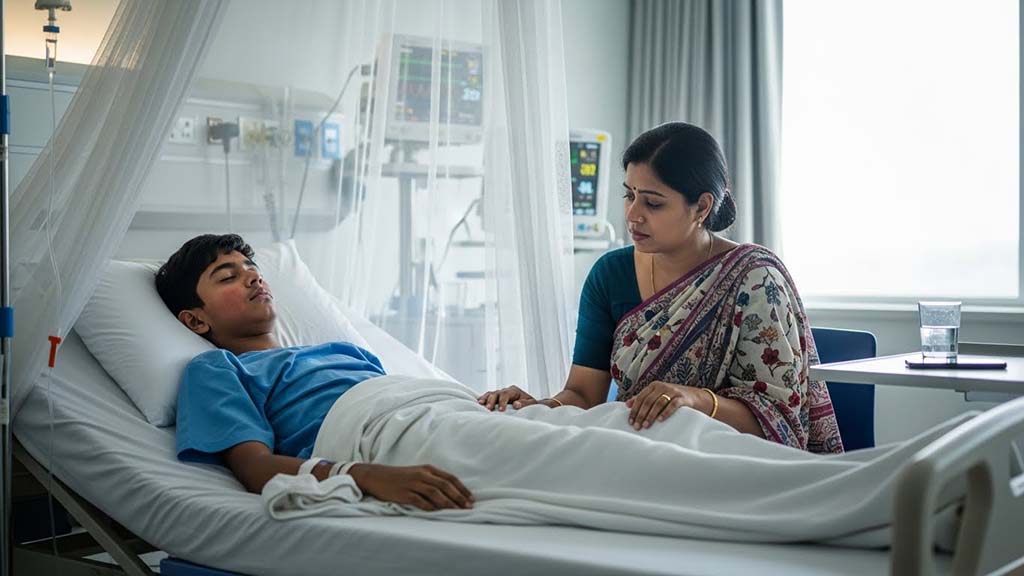
Rupa: Yes, my uncle is in the hospital with dengue. It’s very serious.
Mina: Oh no! How did he get it?
Rupa: The doctor said mosquitoes spread dengue. They bite people and make them sick.
Mina: Which type of mosquitoes? All mosquitoes?
Rupa: No, only Aedes mosquitoes. They have black and white stripes on their body.
Mina: When do these mosquitoes bite?
Rupa: They bite during the daytime, especially in the morning and afternoon.
Mina: What are the symptoms of dengue?
Rupa: High fever, severe headache, body pain, and sometimes rashes on the skin.
Mina: How can we prevent dengue?
Rupa: We must keep our homes clean, remove stagnant water, and use mosquito nets.
Mina: Let’s tell our families to be careful!
Rupa: Yes, prevention is better than cure!
Key Vocabulary
| English Word | Bangla Meaning |
|---|---|
| Dengue fever | ডেঙ্গু জ্বর |
| Hospital | হাসপাতাল |
| Mosquitoes | মশা |
| Aedes mosquitoes | এডিস মশা |
| Stripes | ডোরা |
| Daytime | দিনের বেলা |
| Symptoms | লক্ষণ |
| Fever | জ্বর |
| Headache | মাথাব্যথা |
| Pain | ব্যথা |
| Rashes | ফুসকুড়ি |
| Prevent | প্রতিরোধ করা |
| Clean | পরিষ্কার |
| Stagnant water | জমে থাকা পানি |
| Nets | জাল |
| Prevention | প্রতিরোধ |
Dengue Fever Dialogue – For Class 7 & 8 (200+ words)
Setting: A student named Tahmid visits his family doctor, Dr. Hasan, at a clinic in Chittagong to learn about dengue prevention after several students fell sick at his school.
Tahmid: Assalamu Alaikum, doctor. Can I ask you about dengue fever?
Dr. Hasan: Walaikum Assalam, Tahmid. Of course! What do you want to know?
Tahmid: Three students in my class are suffering from dengue. I’m worried. What exactly is dengue?
Dr. Hasan: Dengue is a viral disease spread by Aedes mosquitoes. These mosquitoes breed in clean, stagnant water.
Tahmid: What are the main symptoms I should watch for?
Dr. Hasan: The common symptoms are sudden high fever, severe headache, pain behind the eyes, joint and muscle pain, and nausea. Some people get skin rashes too.
Tahmid: Is dengue dangerous? Can people die from it?
Dr. Hasan: If treated early, most people recover. But severe dengue can cause bleeding and organ damage, which is life-threatening. That’s why early diagnosis is crucial.
Tahmid: How can we protect ourselves?
Dr. Hasan: The best protection is preventing mosquito breeding. Empty water containers, clean flower pots, cover water tanks, and use mosquito repellent. Wear full-sleeve clothes during the day.
Tahmid: Should we spray insecticides at home?
Dr. Hasan: Yes, but more importantly, remove all sources of stagnant water. Prevention is the key!
Tahmid: Thank you, doctor. I’ll share this information with my classmates.
Dr. Hasan: Excellent! Stay safe and alert!
Key Vocabulary
| English Word | Bangla Meaning |
|---|---|
| Dengue fever | ডেঙ্গু জ্বর |
| Suffering | ভুগছে |
| Viral disease | ভাইরাসজনিত রোগ |
| Aedes mosquitoes | এডিস মশা |
| Breed | বংশবিস্তার করা |
| Stagnant water | জমে থাকা পানি |
| Symptoms | লক্ষণ |
| Fever | জ্বর |
| Headache | মাথাব্যথা |
| Joint | হাড়ের জোড়া |
| Muscle pain | পেশী ব্যথা |
| Nausea | বমি বমি ভাব |
| Rashes | ফুসকুড়ি |
| Dangerous | বিপজ্জনক |
| Treated | চিকিৎসা করা |
| Bleeding | রক্তক্ষরণ |
| Organ damage | অঙ্গের ক্ষতি |
| Diagnosis | রোগ নির্ণয় |
| Protect | রক্ষা করা |
| Protection | সুরক্ষা |
| Breeding | প্রজনন |
| Flower pots | ফুলের টব |
| Tanks | ট্যাংক |
| Repellent | মশা তাড়ানোর ওষুধ |
| Insecticides | কীটনাশক |
| Sources | উৎস |
| Information | তথ্য |
Dengue Fever Dialogue – For Class 9 & 10 (300+ words)
Setting: A health awareness program at a community center in Dhaka where Fahim, a student volunteer, is discussing dengue prevention with Mrs. Sultana, a local resident, and her teenage daughter Priya.
Fahim: Good morning, everyone. Thank you for joining our dengue awareness program. Have you noticed any mosquito breeding spots around your home?
Mrs. Sultana: Good morning. Yes, we’ve had problems with mosquitoes this monsoon season. My neighbor was recently hospitalized with dengue.
Priya: I’m confused. Why is dengue so common in Bangladesh? We never had this problem before.
Fahim: Good question! Unplanned urbanization, poor waste management, and climate change have created ideal conditions for Aedes mosquitoes to thrive. They breed in clean water collected in containers, tires, and even coconut shells.
Mrs. Sultana: What are the warning signs we should watch for?
Fahim: The initial symptoms include sudden high fever (104°F or higher), severe headache, pain behind the eyes, joint and muscle pain, fatigue, nausea, vomiting, and skin rashes appearing 2-5 days after fever starts.
Priya: My friend had dengue last year. She said it felt like bone-breaking pain. Is that normal?
Fahim: Yes, dengue is sometimes called “breakbone fever” because of the intense pain. But the most dangerous form is severe dengue or dengue hemorrhagic fever, which causes bleeding, plasma leakage, and can lead to shock.
Mrs. Sultana: How can we know if someone has severe dengue?
Fahim: Watch for warning signs: severe abdominal pain, persistent vomiting, bleeding from nose or gums, blood in urine or stool, fatigue, and restlessness. If these appear, immediate hospitalization is necessary.
Priya: Is there any vaccine or medicine for dengue?
Fahim: Unfortunately, there’s no specific antiviral treatment. Treatment focuses on maintaining fluid levels and monitoring blood platelet counts. A vaccine exists but isn’t widely available yet in Bangladesh.
Mrs. Sultana: What should we do to protect our family?
Fahim: Follow the “10-minute rule“: spend 10 minutes weekly checking your home for water accumulation. Empty flower pots, clean rooftops, cover water storage containers, and use mosquito nets and repellents. Remember, Aedes mosquitoes are most active during early morning and late afternoon.
Priya: We’ll start a cleaning campaign in our neighborhood this weekend!
Fahim: Excellent! Community participation is essential to combat dengue effectively!
Key Vocabulary
| English Word | Bangla Meaning |
|---|---|
| Dengue awareness | ডেঙ্গু সচেতনতা |
| Mosquito breeding | মশার প্রজনন |
| Monsoon season | বর্ষাকাল |
| Hospitalized | হাসপাতালে ভর্তি |
| Unplanned urbanization | অপরিকল্পিত নগরায়ণ |
| Waste management | বর্জ্য ব্যবস্থাপনা |
| Climate change | জলবায়ু পরিবর্তন |
| Conditions | পরিস্থিতি |
| Aedes mosquitoes | এডিস মশা |
| Thrive | সমৃদ্ধ হওয়া |
| Warning signs | সতর্কতা লক্ষণ |
| Initial symptoms | প্রাথমিক লক্ষণ |
| Fever | জ্বর |
| Headache | মাথাব্যথা |
| Joint | হাড়ের জোড়া |
| Muscle pain | পেশী ব্যথা |
| Fatigue | ক্লান্তি |
| Nausea | বমি বমি ভাব |
| Vomiting | বমি |
| Rashes | ফুসকুড়ি |
| Bone-breaking pain | হাড় ভাঙা ব্যথা |
| Breakbone fever | হাড়ভাঙা জ্বর |
| Severe dengue | মারাত্মক ডেঙ্গু |
| Dengue hemorrhagic fever | ডেঙ্গু রক্তক্ষরণ জ্বর |
| Bleeding | রক্তক্ষরণ |
| Plasma leakage | প্লাজমা ক্ষরণ |
| Shock | শক |
| Abdominal pain | পেট ব্যথা |
| Persistent vomiting | ক্রমাগত বমি |
| Restlessness | অস্থিরতা |
| Immediate hospitalization | তাৎক্ষণিক হাসপাতালে ভর্তি |
| Vaccine | টিকা |
| Medicine | ওষুধ |
| Antiviral treatment | ভাইরাস বিরোধী চিকিৎসা |
| Maintaining | বজায় রাখা |
| Monitoring | পর্যবেক্ষণ করা |
| Blood platelet | রক্তের অনুচক্রিকা |
| 10-minute rule | ১০ মিনিট নিয়ম |
| Accumulation | জমা হওয়া |
| Storage | সংরক্ষণ |
| Mosquito nets | মশারি |
| Repellents | মশা তাড়ানোর ওষুধ |
| Active | সক্রিয় |
| Cleaning campaign | পরিচ্ছন্নতা অভিযান |
| Community participation | সম্প্রদায়ের অংশগ্রহণ |
| Combat | মোকাবেলা করা |
Dengue Fever Dialogue – For Class 11 & 12 (400+ words)
Setting: A television health program where journalist Nusrat interviews Dr. Ashraf, an infectious disease specialist at Dhaka Medical College Hospital, and Rifat, a dengue survivor and public health activist.
Nusrat: Good evening, viewers. Welcome to Health Watch. Today we’re discussing the dengue epidemic that’s affecting Bangladesh. Dr. Ashraf, can you explain why dengue has become such a serious public health crisis?
Dr. Ashraf: Good evening. Dengue has reached epidemic proportions in Bangladesh due to multiple factors. Rapid urbanization without proper infrastructure, inadequate vector control measures, climate change creating favorable breeding conditions, and lack of public awareness have all contributed to this crisis.
Nusrat: Rifat, you survived severe dengue last year. Can you share your experience?
Rifat: It was terrifying. I initially thought it was just regular fever, but within days, I developed hemorrhagic symptoms – bleeding gums, severe abdominal pain, and vomiting. My platelet count dropped to 20,000, which is dangerously low. Normal range is 150,000-400,000.
Dr. Ashraf: Rifat’s case highlights the importance of early detection and intervention. Dengue has four serotypes – DEN-1, DEN-2, DEN-3, and DEN-4. Infection with one type provides immunity to that type but increases the risk of severe dengue if infected with a different type later.
Nusrat: That’s alarming! What’s the current epidemiological situation in Bangladesh?
Dr. Ashraf: We’re seeing thousands of cases annually, with mortality rates rising during outbreak seasons. The Aedes aegypti mosquito, the primary vector, has adapted to urban environments. They breed in artificial containers and are highly anthropophilic, meaning they prefer human blood.
Rifat: After recovering, I started a grassroots campaign to combat dengue. We focus on community mobilization and preventive measures.
Nusrat: What are the key prevention strategies?
Dr. Ashraf: Prevention requires integrated vector management. This includes source reduction by eliminating breeding sites, biological control using larvivorous fish, chemical control through targeted insecticide application, and environmental management to reduce mosquito habitats.
Rifat: At the individual level, we promote the “4S strategy“: Search and destroy breeding places, Secure self-protection by wearing protective clothing, Seek early consultation for fever, and Say yes to fogging during outbreaks when authorities conduct it.
Nusrat: Dr. Ashraf, what about treatment protocols?
Dr. Ashraf: There’s no specific antiviral therapy for dengue. Treatment is supportive – maintaining hydration through oral or intravenous fluids, monitoring vital signs and platelet counts, and managing complications. We absolutely avoid aspirin and NSAIDs like ibuprofen as they increase bleeding risk. Only paracetamol is safe for fever.
Nusrat: What are the warning signs that require immediate medical attention?
Dr. Ashraf: The critical period is when fever subsides, typically on days 3-7. Warning signs include persistent vomiting, severe abdominal pain, lethargy, restlessness, mucosal bleeding, fluid accumulation, liver enlargement, and rapidly increasing hematocrit with decreasing platelets.
Rifat: I want to emphasize that dengue is preventable. Through consistent community efforts and individual responsibility, we can significantly reduce the disease burden.
Nusrat: What role does government policy play?
Dr. Ashraf: The government has launched national dengue control programs, but implementation remains challenging. We need better surveillance systems, intersectoral collaboration between health, environment, and urban planning departments, and increased funding for research and control measures.
Rifat: Schools and educational institutions should include dengue prevention education in their curriculum. Young people can be powerful change agents in their communities.
Nusrat: Any final message for our viewers?
Dr. Ashraf: Dengue is a collective challenge requiring collective action. Regular cleaning, proper waste disposal, and immediate medical consultation for fever can save lives. Remember, dengue is a notifiable disease – all cases must be reported to health authorities.
Rifat: Don’t wait until someone in your family gets sick. Start prevention today. Your 10 minutes of weekly effort can protect your entire neighborhood.
Nusrat: Thank you both for this informative discussion. Let’s work together to make Bangladesh dengue-free!
Key Vocabulary
| English Word | Bangla Meaning |
|---|---|
| Dengue epidemic | ডেঙ্গু মহামারী |
| Public health crisis | জনস্বাস্থ্য সংকট |
| Epidemic proportions | মহামারী আকার |
| Rapid urbanization | দ্রুত নগরায়ণ |
| Infrastructure | অবকাঠামো |
| Vector control | বাহক নিয়ন্ত্রণ |
| Climate change | জলবায়ু পরিবর্তন |
| Breeding conditions | প্রজনন পরিবেশ |
| Awareness | সচেতনতা |
| Contributed | অবদান রেখেছে |
| Terrifying | ভয়াবহ |
| Fever | জ্বর |
| Hemorrhagic symptoms | রক্তক্ষরণ লক্ষণ |
| Bleeding | রক্তপাত |
| Severe abdominal pain | তীব্র পেট ব্যথা |
| Vomiting | বমি |
| Platelet count | অনুচক্রিকার সংখ্যা |
| Detection | শনাক্তকরণ |
| Intervention | হস্তক্ষেপ |
| Serotypes | সেরোটাইপ |
| Infection | সংক্রমণ |
| Immunity | প্রতিরোধ ক্ষমতা |
| Severe dengue | মারাত্মক ডেঙ্গু |
| Epidemiological | মহামারী সংক্রান্ত |
| Mortality rates | মৃত্যুহার |
| Outbreak | প্রাদুর্ভাব |
| Aedes aegypti | এডিস ইজিপ্টি মশা |
| Vector | বাহক |
| Containers | পাত্র |
| Anthropophilic | মানব রক্তপ্রিয় |
| Grassroots campaign | তৃণমূল অভিযান |
| Combat | মোকাবেলা করা |
| Community mobilization | সম্প্রদায় সংগঠন |
| Preventive measures | প্রতিরোধমূলক ব্যবস্থা |
| Prevention strategies | প্রতিরোধ কৌশল |
| Integrated vector management | সমন্বিত বাহক ব্যবস্থাপনা |
| Source reduction | উৎস হ্রাস |
| Breeding sites | প্রজনন স্থান |
| Biological control | জৈবিক নিয়ন্ত্রণ |
| Chemical control | রাসায়নিক নিয়ন্ত্রণ |
| Insecticide | কীটনাশক |
| Environmental management | পরিবেশ ব্যবস্থাপনা |
| 4S strategy | ৪এস কৌশল |
| Consultation | পরামর্শ |
| Fogging | ধোঁয়া দেওয়া |
| Outbreaks | প্রাদুর্ভাব |
| Treatment protocols | চিকিৎসা প্রোটোকল |
| Antiviral therapy | ভাইরাস বিরোধী চিকিৎসা |
| Supportive | সহায়ক |
| Hydration | পানি সরবরাহ |
| Intravenous fluids | শিরায় তরল |
| Monitoring | পর্যবেক্ষণ |
| Complications | জটিলতা |
| Aspirin | এসপিরিন |
| NSAIDs | এনএসএআইডি |
| Paracetamol | প্যারাসিটামল |
| Warning signs | সতর্কতা চিহ্ন |
| Medical attention | চিকিৎসা সেবা |
| Critical period | সংকটকাল |
| Lethargy | অবসাদ |
| Restlessness | অস্থিরতা |
| Mucosal bleeding | শ্লেষ্মা রক্তক্ষরণ |
| Fluid accumulation | তরল জমা |
| Liver enlargement | যকৃত বৃদ্ধি |
| Hematocrit | হেমাটোক্রিট |
| Preventable | প্রতিরোধযোগ্য |
| Community efforts | সম্প্রদায়ের প্রচেষ্টা |
| Responsibility | দায়িত্ব |
| Disease burden | রোগের বোঝা |
| Government policy | সরকারি নীতি |
| National dengue control programs | জাতীয় ডেঙ্গু নিয়ন্ত্রণ কর্মসূচি |
| Implementation | বাস্তবায়ন |
| Surveillance systems | নজরদারি ব্যবস্থা |
| Intersectoral collaboration | আন্তঃখাত সহযোগিতা |
| Funding | অর্থায়ন |
| Educational institutions | শিক্ষা প্রতিষ্ঠান |
| Prevention education | প্রতিরোধ শিক্ষা |
| Change agents | পরিবর্তনের কর্মী |
| Collective challenge | সমষ্টিগত চ্যালেঞ্জ |
| Collective action | সমষ্টিগত কর্ম |
| Waste disposal | বর্জ্য নিষ্কাশন |
| Medical consultation | চিকিৎসা পরামর্শ |
| Notifiable disease | ঘোষণাযোগ্য রোগ |
| Informative | তথ্যবহুল |
Frequently Asked Questions (FAQs) on Dengue Fever Dialogue
Q1: What is the main cause of dengue fever?
Answer: Dengue fever is caused by the dengue virus, which is transmitted to humans through the bite of infected Aedes mosquitoes, primarily Aedes aegypti. These mosquitoes breed in clean, stagnant water and are most active during early morning and late afternoon hours.
Q2: How can I identify Aedes mosquitoes?
Answer: Aedes mosquitoes are easily recognizable by their distinctive black and white striped patterns on their body and legs. They are relatively small, bite silently during daytime, and prefer to breed in clean water collected in artificial containers around homes.
Q3: What are the early warning signs of dengue fever?
Answer: Early warning signs include sudden high fever (104°F or above), severe headache, pain behind the eyes, joint and muscle pain, nausea, vomiting, and skin rashes appearing 2-5 days after fever onset. If you experience these symptoms, consult a doctor immediately.
Q4: Can dengue fever be fatal?
Answer: Yes, if left untreated, dengue can progress to severe dengue (dengue hemorrhagic fever), which can be life-threatening. Severe dengue causes bleeding, plasma leakage, organ damage, and shock. However, with early detection and proper medical care, most patients recover completely.
Q5: Is there any vaccine or specific medicine for dengue?
Answer: There is a dengue vaccine called Dengvaxia, but it’s not widely available in Bangladesh yet. Currently, there is no specific antiviral treatment for dengue. Treatment focuses on supportive care like maintaining hydration, monitoring platelet counts, and managing symptoms with paracetamol (never aspirin or ibuprofen).
Q6: How can I prevent dengue at home?
Answer: Follow the “4S Strategy”: Search and destroy mosquito breeding places by removing stagnant water, Secure self-protection with full-sleeve clothes and mosquito repellents, Seek early medical consultation for fever, and Say yes to fogging during outbreaks. Spend 10 minutes weekly checking your home for water accumulation.
Q7: Why is dengue so common during monsoon season in Bangladesh?
Answer: Monsoon brings heavy rainfall creating numerous water accumulation spots where Aedes mosquitoes breed. Combined with high humidity, warm temperatures, unplanned urbanization, and poor waste management, monsoon season provides ideal breeding conditions for mosquitoes, leading to dengue outbreaks.
Q8: Can someone get dengue more than once?
Answer: Yes, there are four different dengue virus serotypes (DEN-1, 2, 3, 4). Infection with one type provides lifelong immunity to that specific type but not to others. Getting infected with a different serotype later can lead to more severe dengue with higher risk of complications.
Q9: What should I do if someone in my family has dengue?
Answer: Ensure they get immediate medical attention and plenty of rest. Keep them hydrated with water, coconut water, and ORS. Monitor for warning signs like persistent vomiting, bleeding, or severe abdominal pain. Use mosquito nets to prevent mosquitoes from biting the patient and spreading the disease to others.
Q10: How can students contribute to dengue prevention in Bangladesh?
Answer: Students can organize community cleaning campaigns, conduct awareness programs in their neighborhoods, remove breeding sites from school premises, educate family members about prevention, use social media to spread awareness, and participate in government dengue control programs. Youth involvement is crucial for creating a dengue-free Bangladesh.